Steven Spielberg’s sci-fi triumphs Close Encounters of the Third Kind and E.T. the Extra-Terrestrial understood and exploited fears of the other while championing understanding and communion as the noblest responses to intergalactic phenomena. Their mixture of suspense, poignancy, and awe, however, is clumsily replicated by Disclosure Day, the director’s return to out-of-this-world material, which can’t manage to untangle its narrative’s myriad knots. Straining for both timeliness and throwback thrills, it’s an alien affair that never delivers the grand payoffs it teases.
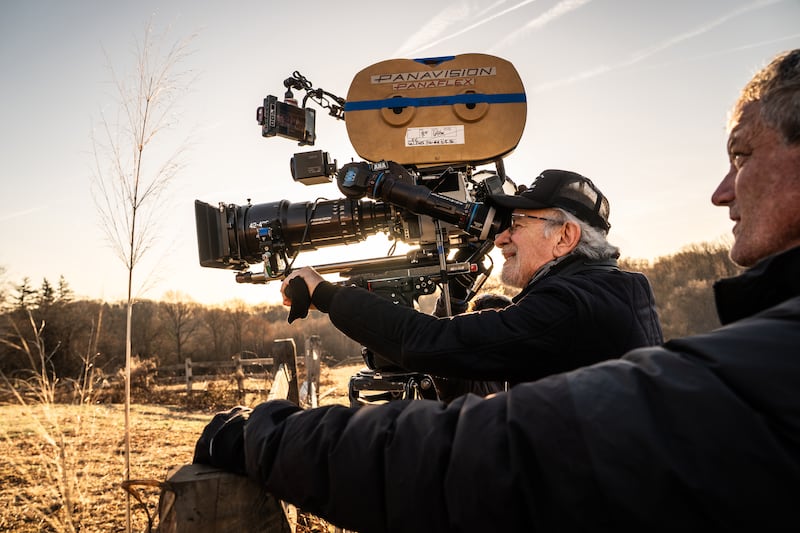
Written by his Jurassic Park and War of the Worlds scribe David Koepp from his own original idea, Disclosure Day finds Spielberg and long-time cinematographer Janusz Kamiński kicking things off with a display of aesthetic showmanship—reflections upon faces, serpentine long takes, bifurcating lens flares—which serves as a reminder that, in terms of blockbuster artistry, few can match the Oscar-winning auteur.
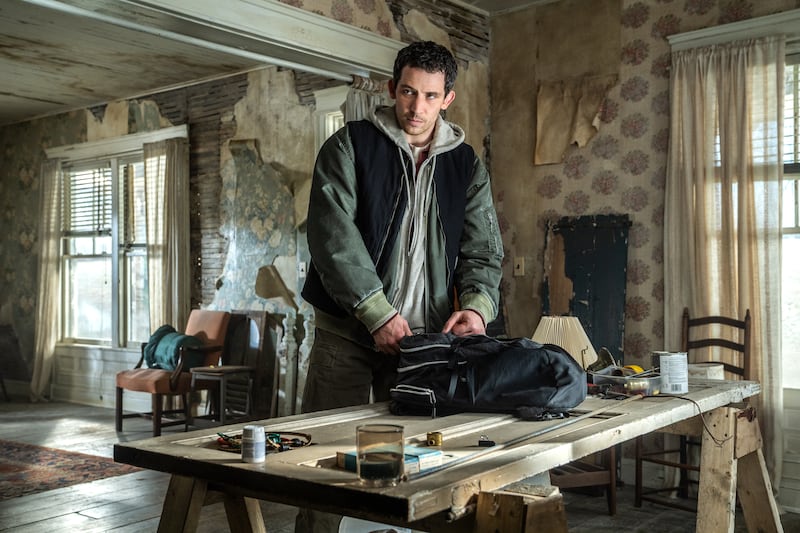
Opening with shots from a professional wrestler’s point of view as he takes a few kicks to the face, the film begins in media res, with Daniel Kellner (Josh O’Connor) attempting to pull off a covert exchange with serious-looking operatives. This goes badly, and during a back-alley meeting with Noah Scanlon (Colin Firth)—whose manicured salt-and-pepper beard screams villainy—it becomes clear that Daniel is trading sensitive stolen data for the release of his girlfriend Jane (Eve Hewson).
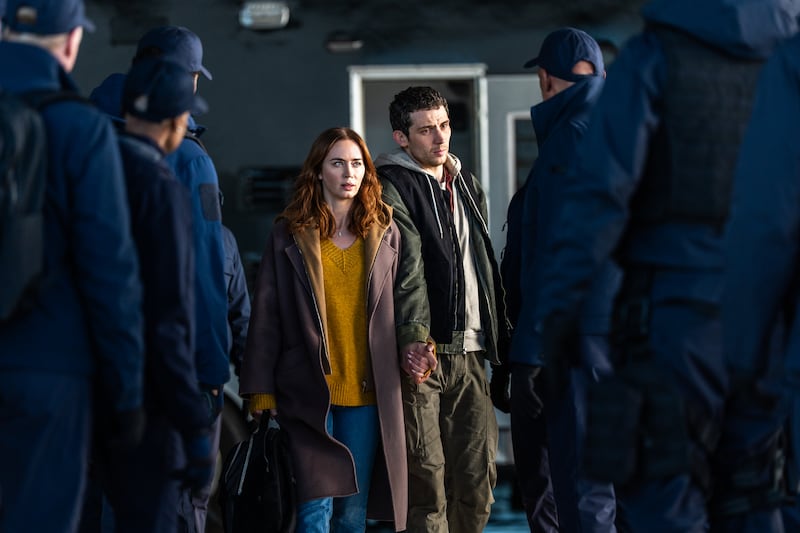
Daniel possesses a seemingly dangerous “device” that resembles an obsidian rod and which Noah covets, and he and Jane abscond with it, taking refuge at the convent where Jane once studied to be a nun. Elder Sister Maura (Elizabeth Marvel) welcomes them in and later informs Jane that the girl abandoned her “calling” because she lost faith not in God but, instead, in people.
Such heavy-handedness frequently weighs down Disclosure Day, which simultaneously focuses on Margaret Fairchild (Emily Blunt), a Kansas City TV meteorologist who likes to embellish her on-air reports with a sexy “weather wiggle.” Margaret has dreams of being a big-league anchor, yet her boyfriend Jackson (Wyatt Russell) is less convinced of her potential.
When a friendly cardinal flies through the couple’s window and stares at Margaret, she unconsciously starts speaking Russian. During a subsequent traffic stop, she avoids a ticket by telling the officer personal details she couldn’t possibly know. Margaret, it appears, has gained the ability to see into others’ hearts and minds—a process that will later be referred to as “dropping in.”

After speaking in an alien dialect on camera, she becomes wanted by Firth’s Noah, the head of a shadowy corporation called Wardex, as well as Hugo Wakefield (Colman Domingo), Noah’s former employee, who’s now guiding Daniel, an ex-Wardex cybersecurity virtuoso, on his whistleblower mission.
Wardex is hiding deep, dark secrets that Daniel and Hugo want to bring to light, and their quest reads as part paranoid ‘70s political thriller, part Minority Report. Big Brother is denying humanity the truth in Disclosure Day, and though this lends the proceedings some of-the-moment resonance (think, the ongoing Epstein Files saga), it comes off as rather old-hat.
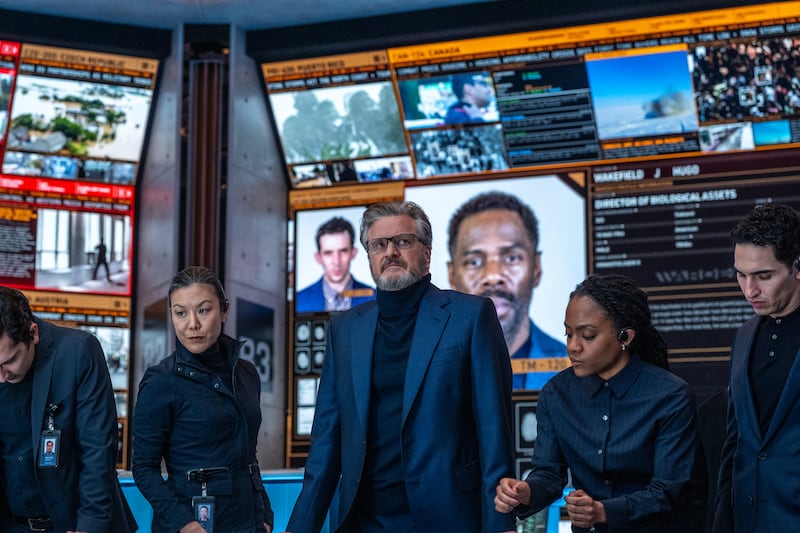
More enticing are the film’s thematic undercurrents about cinematic acting and directing (and the way they provide audiences with insight and clarity), with Hugo figuratively directing Daniel and Margaret from a literal (mysterious) set that he and his cohorts are building in a giant hangar. Those intimations, alas, are too underdeveloped to make an impact, and they’re quickly overwhelmed by oblique plotting and the occasional action-oriented set piece.
Spielberg asks viewers to hold on and keep up during the first half of Disclosure Day, and the sense of being swept along by a maestro is initially invigorating. Unfortunately, it dissipates once Daniel shows Jane what he’s pilfered—it turns out to be run-of-the-mill extraterrestrial footage—and Margaret continues to behave like a befuddled psychic who’s following her holy intuition to a meet-up with Daniel.
The filmmaker strives to energize his latest with razzle-dazzle camerawork and urgent momentum. Yet it rarely materializes, not least because his reliably great musical collaborator John Williams delivers a score that’s almost shockingly half-hearted—and, in one perilous car chase involving a train, is done away with altogether.
Disclosure Day is immaculately mounted on a moment-to-moment basis, so its inability to cohere at any juncture is frustrating. Hansel and Gretel references combine with lousy CG animals and copious religious talk and symbolism to middling effect, and the notion that a civilization on the brink of World War III might not be able to cope with a bombshell about outer-space life (because it would destroy belief in God?) is handled sketchily.
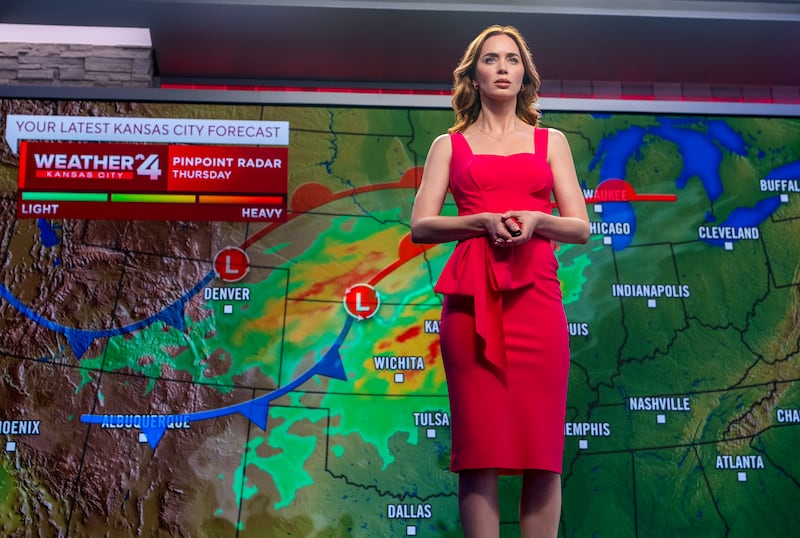
Nonetheless, Spielberg’s svelte stewardship affords intermittent delights, as does Blunt’s whiplash-y performance as Margaret, an ordinary woman turned alien conduit who vacillates between languages and head spaces. Whereas O’Connor is uncharacteristically bland as the righteous Daniel, Blunt has a vivacity to match her director’s inventiveness.
From the get-go, Koepp’s conspiratorial script builds toward the revelatory title day, and when it arrives, it proves a whimper, with Spielberg weakly emphasizing the media’s capacity to enlighten and unite (shades of The Post) via an extended focus on television producers managing their momentous broadcast.
As a hoary “magical” stereotype who knows all the answers and is here for the benefit of his heroic light-skinned compatriots, Domingo gives lots of enigmatic instructions and one painfully clunky speech that underlines the story’s belief in empathy as the core virtue that lifts us up and negates our self-destructive impulses. He does his best, but the clichéd role is beneath him.
All too often, Disclosure Day keeps its wheels turning through random twists that raise additional questions the film isn’t interested in answering. Consequently, its cautionary-tale warnings and feel-good optimism have no real impact, just the impression that the director has tilled this soil far more fruitfully in the past.
At 79 years old, the American icon remains creatively spry behind the camera. However, if he again chooses to revisit the sci-fi realms that helped cement his legacy, one hopes he concocts something a good deal more revelatory.