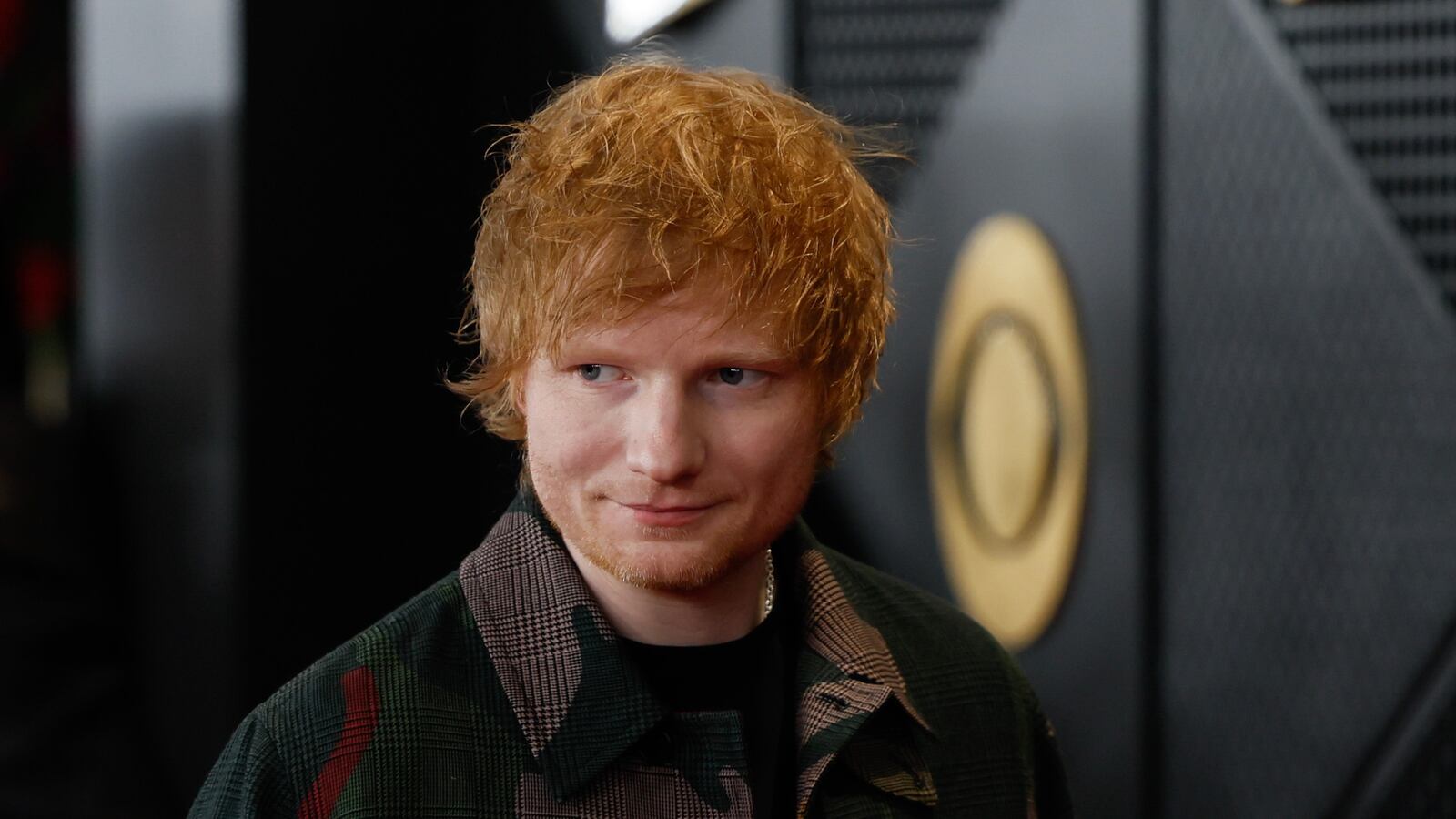
Ed Sheeran’s U.S. tour has been thrown into chaos after all of the support acts—and even his own backing band—quit in protest at rapper Macklemore being dropped for his pro-Palestine comments.
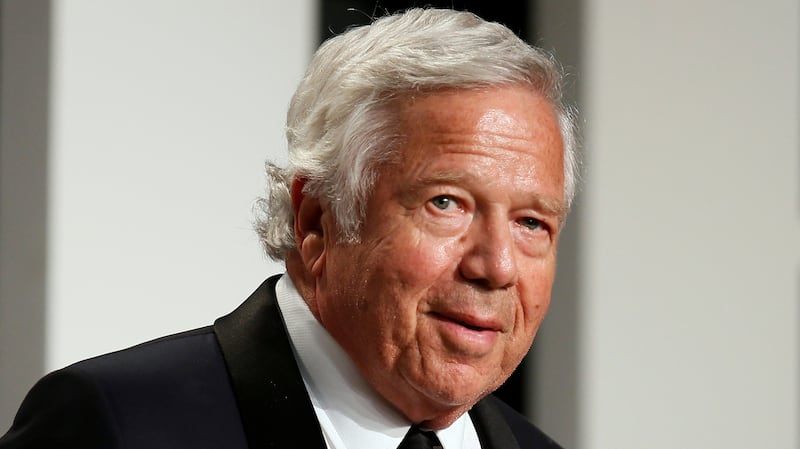
Sheeran is accused of backing down when Robert Kraft, the billionaire owner of the New England Patriots, threatened to cancel his show and organize a wider boycott of the British musician’s American tour unless Macklemore was yanked from the bill.
Macklemore announced on Instagram that he had been dropped and said Kraft, a longtime friend of President Trump, had hit Sheeran with the ultimatum.
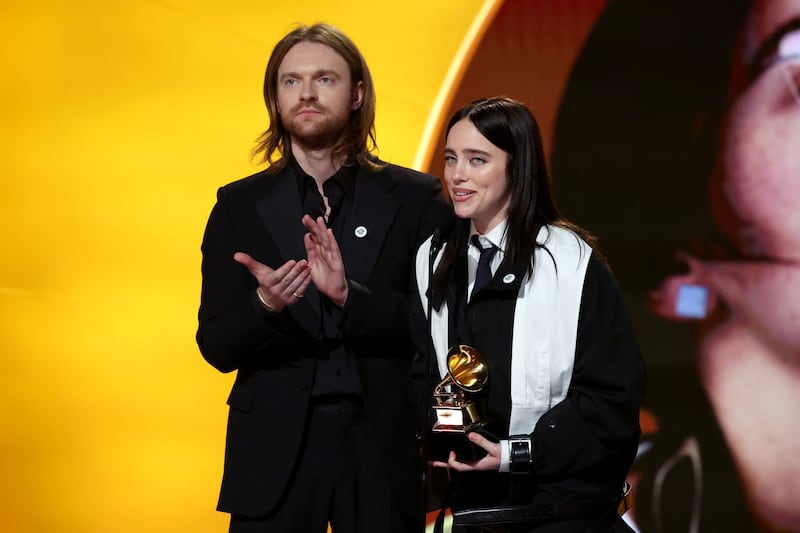
Finneas, Billie Eilish’s brother, was among those to pull out. “Artists must not be silenced when they speak up for the oppressed,” he wrote on social media. “I have decided to withdraw from my upcoming tour dates with Ed Sheeran. I stand with Palestine and its people.”
Beoga, the Irish folk band that regularly performs alongside Sheeran during his live shows, also announced it would no longer take part.
“We are a traditional Irish band who never saw ourselves playing in stadiums of that size and that opportunity is not lost on us,” they wrote on social media. “We have been friends with Ed for over 10 years now and will continue to be. We believe in dialogue as a means of progressing the plight of the Palestinian people.”
They were joined by Irish singer-songwriter Aaron Rowe and Danish pop group Lukas Graham, who also withdrew.
Rowe wrote on Instagram: “I don’t take the decision lightly. Ed has been a friend to me and has changed my life, I could never thank him enough for this.

“But as Irish people we know all too well about genocide, forced famine and violent occupation. I cannot stand by and allow billionaires to use their position of power to silence the rightful voices of those who speak up against Israeli genocide and who highlight the savage murder of children. I would lose all respect for myself to carry on as normal.”
Lead singer of Lukas Graham, Lukas Forchhammer, wrote on social media: “We should be able to speak about war, about civilians being killed, about children who deserve to grow up. Wherever they live. Whatever flag flies over them.”
He added: “Money doesn’t give you the right to own the conversation. Nobody’s bank balance should decide who gets to speak or which suffering we’re allowed to acknowledge.”
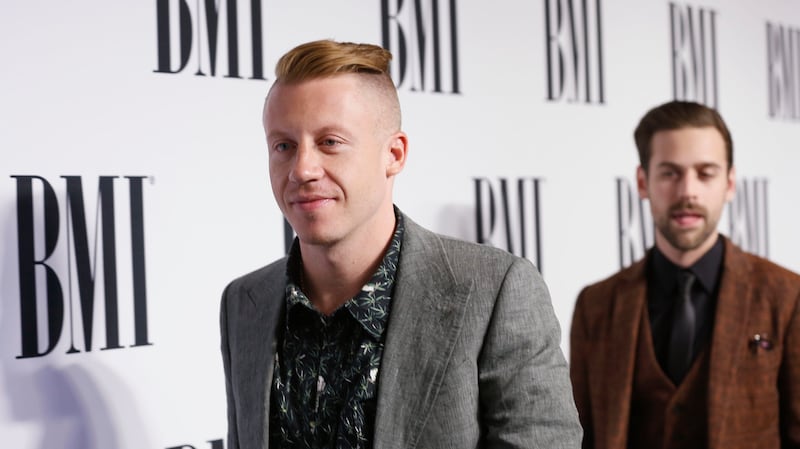
It comes after Macklemore was dropped from Sheeran’s tour after a series of outspoken pro-Palestinian statements earlier this month.
During two concerts in New Jersey, the rapper—whose real name is Benjamin Haggerty—called for a “free Palestine” and displayed footage of devastation in Gaza, where the Hamas-led government says 73,780 people have been killed in Israeli attacks.

“A big part of the reason why I wanted to do this tour in the first place is so that I could stand up in stadiums like this and say two words that are very, very dear to my heart: Free Palestine,” he told the crowd.
He then performed Hind’s Hall, his song dedicated to pro-Palestinian protesters at Columbia University that condemns Israel’s military action in Gaza, as images of the destruction were shown on the venue’s screens.
The performance prompted criticism from Jewish groups. The Israeli American Council launched a petition calling for Macklemore to be removed from the tour, while StopAntisemitism accused him of ambushing fans with propaganda.
Macklemore addressed the backlash at the following show, speaking directly to his “Jewish brothers and sisters” in the audience.
“Criticism of Israel, criticism of apartheid, being against genocide, is in no way a criticism of you,” he said, adding that he wanted people in Gaza and the West Bank to know they had not been forgotten.
In an Instagram post, Macklemore said he was dropped from the tour after Kraft, the billionaire owner of Gillette Stadium and a vocal supporter of Israel, banned him from his venue and organized a boycott of his performances at venues across the tour.
In a statement, Kraft, who once booked Sheeran to perform at his wedding, confirmed he had moved to block Macklemore from appearing at his venue, saying he would not allow it to “provide a platform for hate speech”. He also accused the rapper of a “broader history of antisemitic rhetoric”.
“I agree with Macklemore, too many lives have been lost and there has been too much suffering, but only sharing selective information and ignoring the actions of Hamas is not honest and only advances more divisiveness and hate,” Kraft said.
But Kraft did not respond to Macklemore’s allegation that he had also sought to pressure other venues into banning the rapper.
The dispute escalated when tour promoter Messina Touring Group told Rolling Stone that multiple venues had indicated they would not permit Macklemore to perform—a situation the promoter said could have forced the entire tour to be canceled, affecting hundreds of thousands of fans.
Sheeran said Macklemore’s removal from his tour was not his decision.
“Macklemore coming off tour was the promoter’s decision, it was not mine,” Sheeran wrote on Instagram. “I would never let down the fans who had made plans, nor would I abandon the touring crew and the other support acts and musicians who rely on me for work and to make a living.”
Sheeran said he had spent the week speaking to venues “at length all week to try and build a bridge”, but promoter Messina Touring Group ultimately decided to end Macklemore’s run.
In his statement, he also sought to draw a clear line between his personal views and the political role he believes his platform should play.
The singer said he was “appalled by the conflict between Israel and Palestine” and described the “suffering and pain caused on both sides is a human tragedy,” before explaining why he had chosen not to publicly campaign on the issue.
“I am not complicit,” he wrote. “I have my personal views on this devastating conflict. Just because I choose not to speak publicly, it doesn’t mean I don’t have them, and it doesn’t mean I don’t care. Nor does it mean I don’t support causes in my own, personal way.“
He said his decision was also shaped by the make-up of his audience, writing: “There is a reason I do not use my professional platform for politics - my audience includes young people, often children, of all backgrounds. Those who come to my shows do not expect a political forum. I respect Macklemore’s strength of purpose to stand up and shout for what he believes.“
Rather than using his concerts to take a political position, Sheeran said he wanted them to provide a neutral space for audiences.
“However, there is room for multiple approaches to the same end: Peace.
“I choose to use my fame and platform to be a place of safety and sanctuary, to maintain diplomacy and keep conversations open, not closed. If we only focus on shouting the loudest, nothing will ever change. There are different approaches to being an advocate for change.“
He also stressed that Macklemore, “as with all my support acts,” had been given freedom over his setlist.
Macklemore said he understood the difficult position Sheeran had been placed in, but argued that staying out of the political debate was itself a choice.
“Taking a side can cost you. Money, brand deals, sponsorships, festivals, private shows, relationships and access. I’ve lost all of those things. But there is no neutral position between the oppressor and the oppressed,” he wrote.
Despite being removed after just two shows, Macklemore said he viewed the controversy as worthwhile if it helped refocus attention on the conflict.
“If my words succeeded in “turning the conversation back to Palestine, then it was the most successful tour I’ve ever been on.”