Few filmmakers cut to the core with the concision and precision of Paweł Pawlikowski, whose prior two features—the Oscar-winning Ida (2013) and Oscar-nominated Cold War (2018)—were masterpieces of economy and poignancy.
Earning him his second Best Director prize at the Cannes Film Festival, Fatherland is a similar tour-de-force, capturing in a scant 82 minutes a breathtaking range of heart-rending emotions and tangled themes. A story about the difficulty and necessity of reckoning with yesterday to forge a worthier tomorrow, it’s a gorgeous, gripping drama—led by the reliably phenomenal Sandra Hüller, having a banner year with Project Hail Mary, Digger, and Rose—whose resonance transcends its chosen post-WWII period.
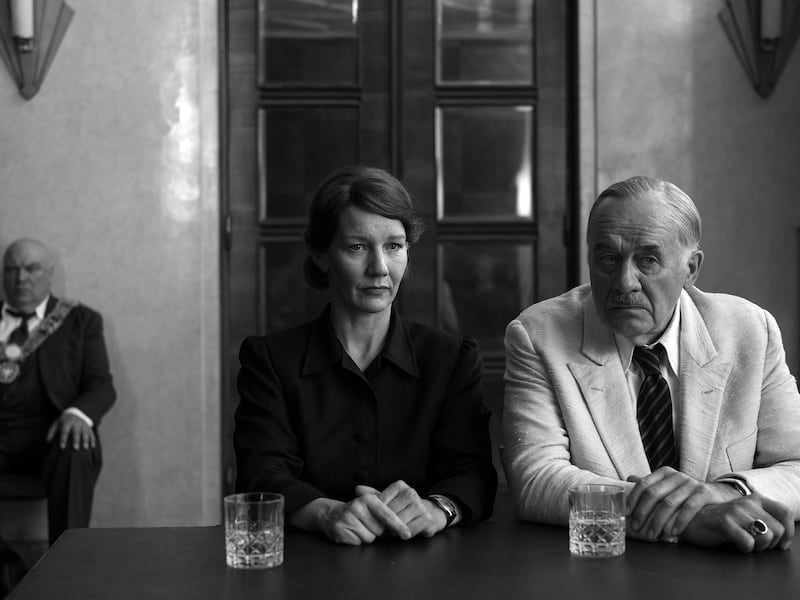
Poland’s submission for this year’s Academy Award for Best International Feature, Fatherland—screening at the New York Film Festival ahead of its Oct. 23 theatrical debut—is a fictionalized version of an event in the life of a real person: Nobel Prize-winning German writer Thomas Mann (Hanns Zischler).
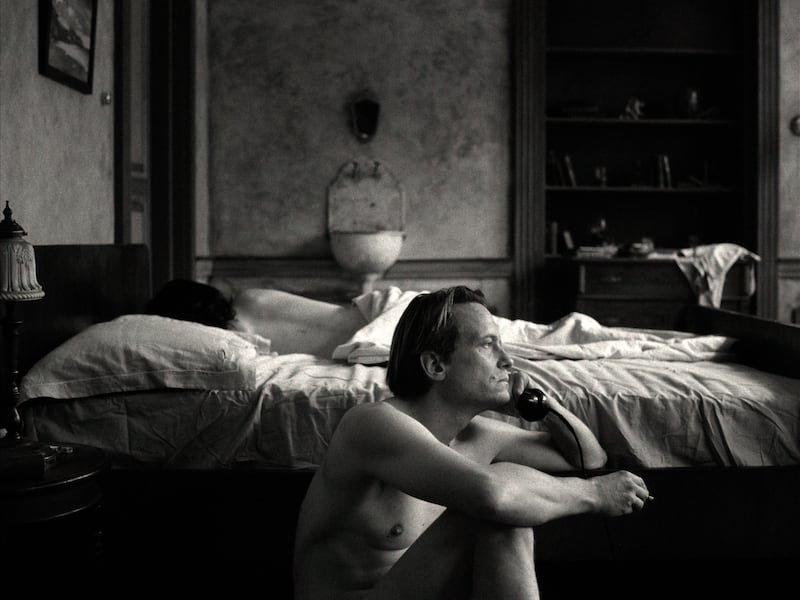
Pawlikowski’s film begins with Thomas’ son Klaus (August Diehl), who answers a call from his sister Erika (Hüller, Oscar-nominated for 2023’s Anatomy of a Fall) as he sits on the floor, his back against a bed that contains a half-dressed, slumbering lover. With the rain whipping outside, a morose Klaus is invited by Erika to join her and their father on a trip to their native Germany. Klaus, however, is as despondent about his family (“We’re trash”) as he is about himself (“I don’t believe in anything anymore”). Though he loves Erika (and vice versa), he refuses to commit.
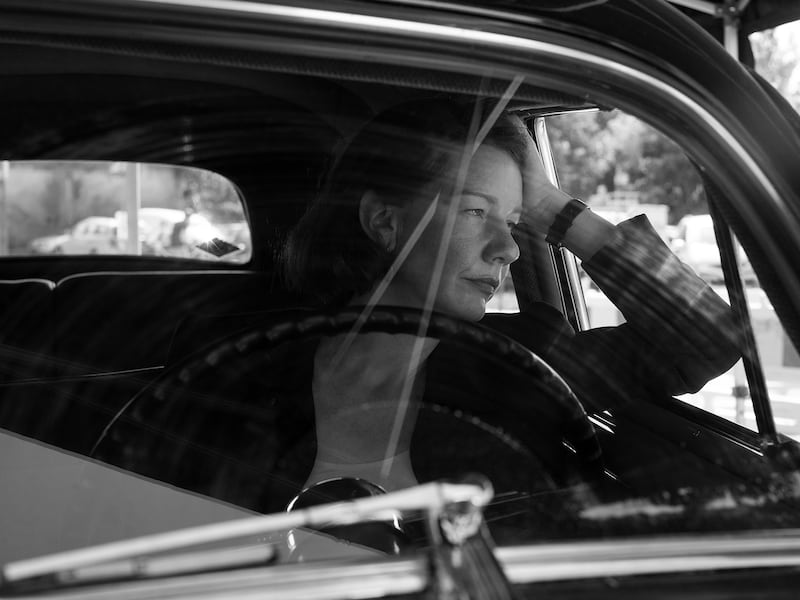
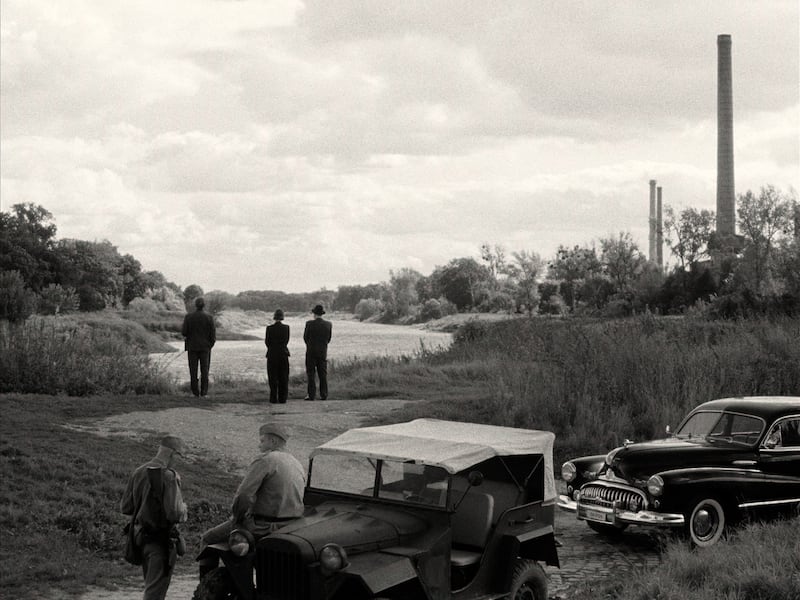
Like Ida and Cold War, Pawlikowski (collaborating with regular cinematographer Łukasz Żal) shoots Fatherland in a 4:3 aspect ratio and in the most lustrous black and white imaginable—its interplay of gloomy dark and revealing light is so stunning that it justly earns the term “painterly.” Such beauty is not, however, simply superficial. The director’s aesthetics piercingly reflect his material’s fraught dynamics, as becomes clear once the film segues to Erika driving her dad through bombed-out 1949 Frankfurt to receive a Goethe Prize.
In the bright sunshine of day, Erika’s stern countenance suggests carefully repressed disgust. Her mood doesn’t brighten upon their arrival, when she learns that Klaus has not checked in and that the mail waiting for Thomas includes death threats—hence the CIA security he’s been provided.
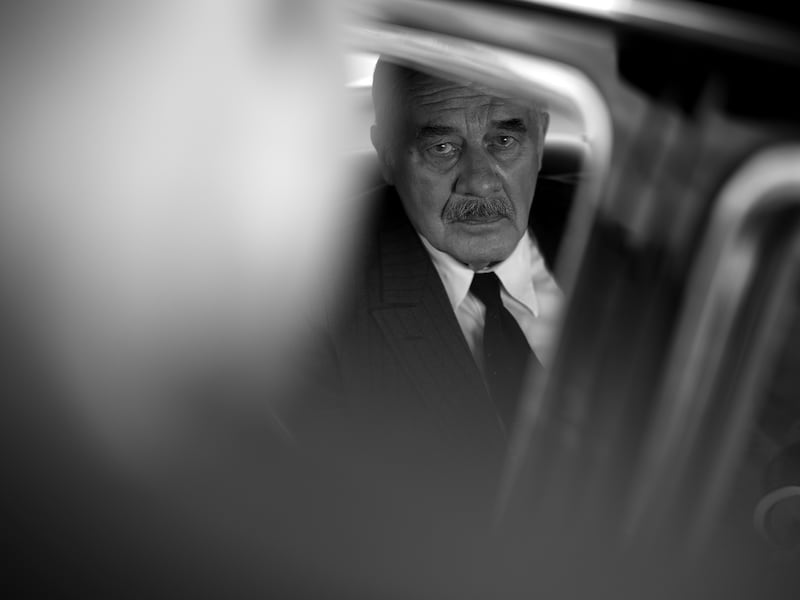
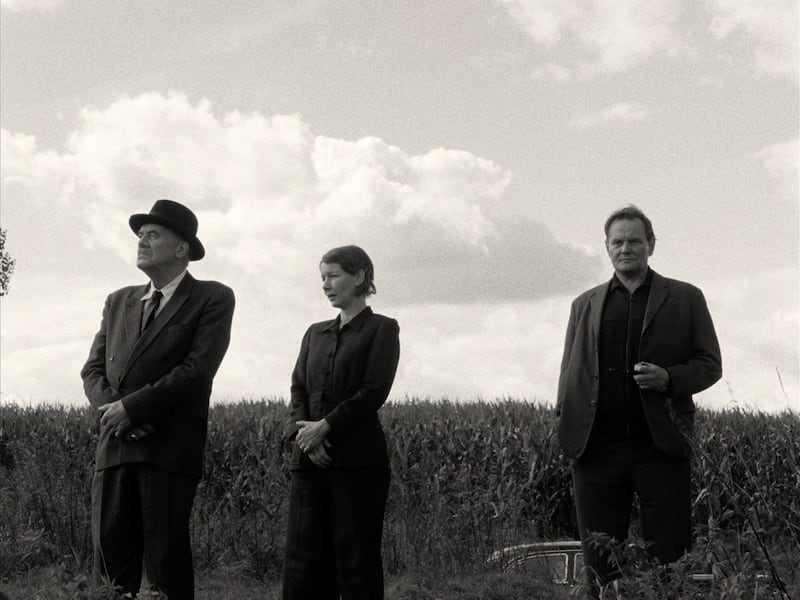
This is Thomas’ first trip back to Germany since his 1933 emigration to America, and when he’s asked at a press conference about his home, he confesses that while it’s technically California, where he “belongs” is “a much more difficult question.” Also thorny is the nature of his journey, as Thomas plans to receive this honor in West Germany and then travel to the occupied East German city of Weimar for a similar celebration.
AP writer Betty Knox (Anna Madeley) cautions Erika that Thomas will make them both pariahs in the U.S. should he visit the Soviet-controlled region. Yet Erika is intent on humoring her paterfamilias’ wishes, even though the look in her eyes says she’s none too pleased about it.
Beneath her composed, austere façade, Erika wrestles with being in a Germany still fresh from its Nazi villainy, and Hüller’s commandingly terse, restrained performance conveys her character’s abundance of internal doubts and fury.
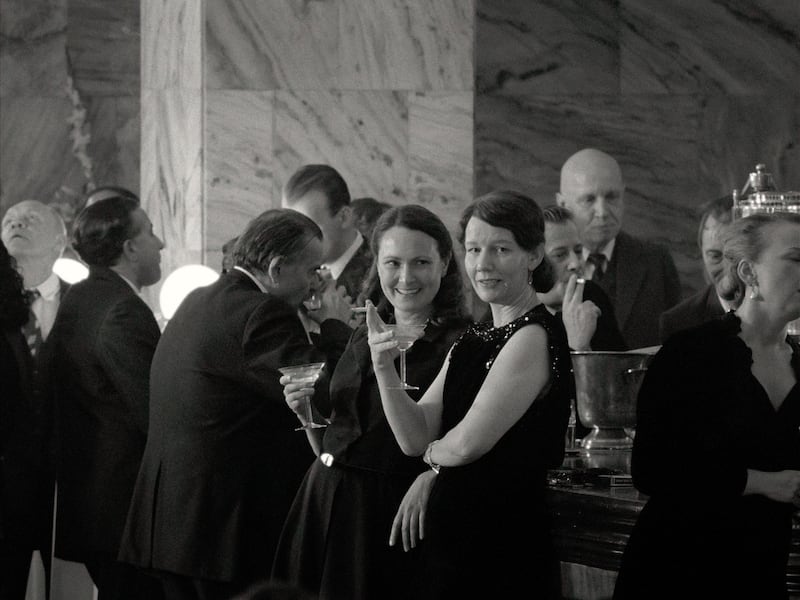
Not that she’s afraid to say what she feels. At a gala dinner populated by the rich and powerful, she not-so-quietly wonders aloud, “Imagine what they were up to four years ago.” Soon after, her ex-husband Gustaf Gründgens (Joachim Meyerhoff)—an actor who, during the prior regime, grew close to Joseph Goebbels—confronts her and ends the conversation with a thunderous slap. Still, she and her father put on brave faces when they receive horrific news: Klaus has committed suicide.
This tragedy creates an additional tortured undercurrent for Thomas and Erika’s excursion—or, rather, it parallels the tensions that were already plaguing it, given that Erika eventually censures Thomas for prizing himself above, and in doing so killing, his son. Thomas’ narcissism blinds him to his own culpability for this familiar disaster, and with a deft touch, Pawlikowski equates that crime to present-day Germany’s unwillingness to wrestle with (or accept responsibility for) its own genocidal offenses.
Fatherland is thus a tale in which the personal and the political, the individual and the national, are inherently interwoven, with Thomas and his homeland so consumed with self-satisfied, ego-boosting pomp and circumstance that they can’t recognize it’s the root cause of their woes.
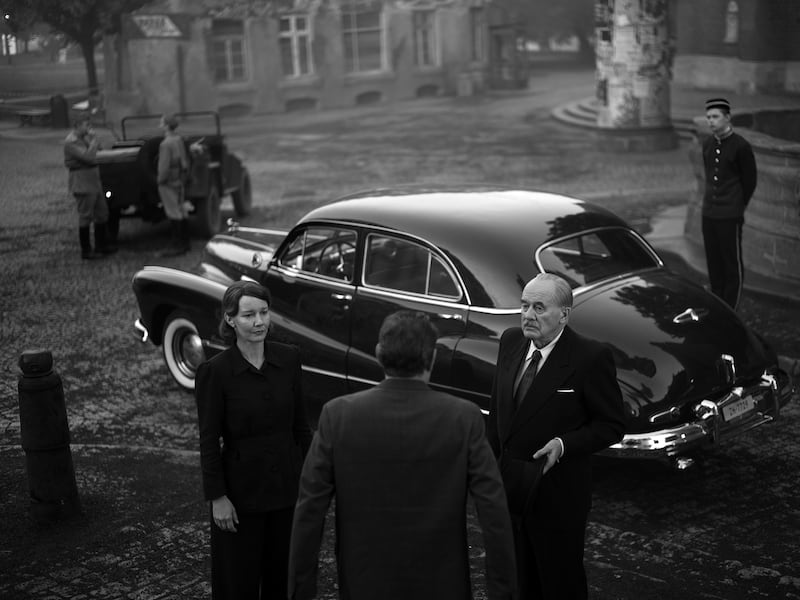
The film moves at a brisk clip, its grander notions emerging from unitalicized action, whether in multiple scenes of Thomas being regaled by nationalistic choirs or in Erika, searching for Klaus (whom she believes she’s spied in a crowd), standing alone and small amid empty church pews. Pawlikowski doesn’t waste a breath or gesture on extraneous matters; even his occasional depictions of seemingly peripheral goings-on—a young soldier shooing children away from Thomas’ regal vehicle; Erika staring out onto a courtyard—contribute to the proceedings’ evocative sense of time and place and directly speak to the protagonists’ states of heart and mind.
Hüller’s Erika is the film’s tormented heart, but Zischler’s Thomas, regardless of his failings, is far from a villain. Fatherland paints him as a man whose steadfast belief in art’s capacity to foster greatness (in this context, to help beget a “New Germany”) is both dubious—since art, and Thomas, are being used by West and East Germany for propagandistic purposes—and a manifestation of an egomania that destroys as much as it creates.
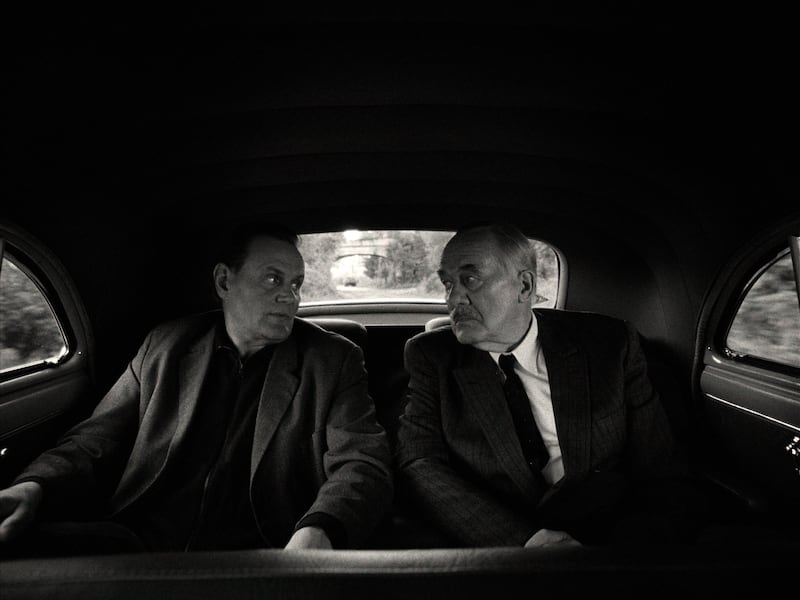
He’s a flawed titan in need of revelation, and when it arrives, courtesy of legendary German composer Johann Sebastian Bach, it lands with sneakily overpowering force, bridging the divide between him and his daughter and offering a way forward that doesn’t require completely abandoning what came before.
Where most “serious” modern films stretch into eternity, Fatherland says much without protracted drama, long-winded diatribes, and excessive flourishes. Pawlikowski’s meticulousness is never fussy, and his performances are equally unmannered, articulating his grander concerns with grace and succinctness.
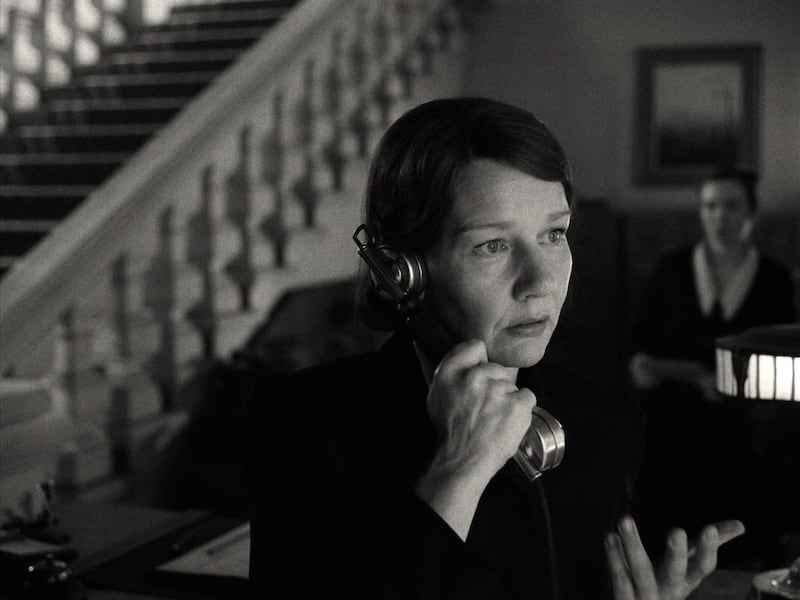
If he’s not the best director working in international cinema today, he’s neck-and-neck for the top spot, and with his latest, he reconfirms his gift for incisively plumbing the post-war era for tales of heartache, guilt, longing, and hope—and, in the process, puts most of 2026’s releases to shame.