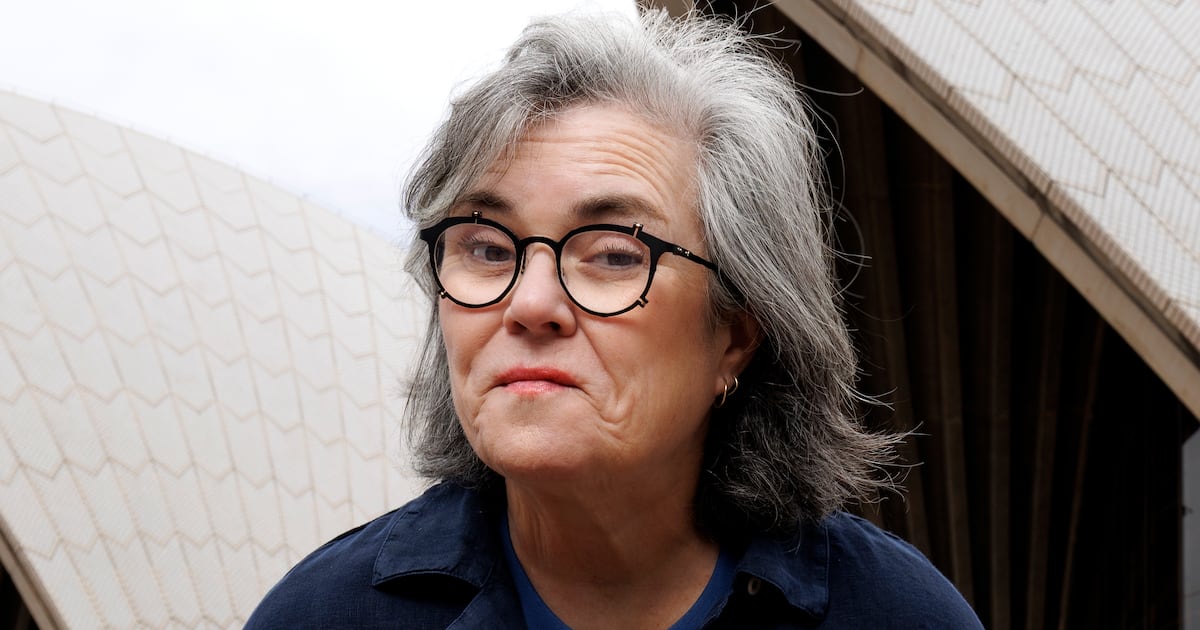
Judd Apatow didn’t realize it at the time, but as a young teenager growing up on Long Island in the ‘70s, he was single-handedly inventing the comedy podcast by doing the first-ever long-form radio interviews with his stand-up heroes. So it’s only fitting that he’s the last guest ever on The Last Laugh podcast.
In his fourth and final appearance on the show—taped before the tragic deaths of Rob Reiner and his wife Michele—Apatow reflects on his early experiences as a proto-comedy podcaster and explains the “lifelong obsession” that inspired his new book, Comedy Nerd. (Proceeds benefit the youth writing charity 826 and the Los Angeles wildfire relief organization Fire Aid.)
The writer, director, and producer also discusses the state of the studio comedy in 2025, and how some of his most beloved films and TV shows took years to find their audiences.
And ahead of his definitive two-part documentary about Mel Brooks coming to HBO in the new year, Apatow breaks down the power of satire to hold the powerful to account. This year, nobody did that better than South Park creators Trey Parker and Matt Stone. And Apatow has a theory for why Donald Trump has stayed conspicuously silent about their humiliating portrayal of him.
“Back in the day, if you wanted a long interview with Richard Pryor or George Carlin, you’d have to look at Playboy magazine,” Apatow says with a laugh. As for how easy those issues were to come by when he was growing up, he jokes, “It depended on how bad your porn addiction was, but usually your dad had a hidden stash. And then you could go, ‘After I’m done looking at these ladies, I’m going to read a very long interview with Groucho Marx.’”
Seeing a hole in the market, Apatow started tracking down his favorite comedians and convincing them to speak with him at length for his high school radio station. He started with original Tonight Show host Steve Allen before moving on to Jerry Seinfeld, Martin Short, Garry Shandling, and dozens of others.
“That became my education, because I would ask them all the questions I had about how open mic nights work, where do you sign up, how do you write a joke, how much time do they give you?” he recalls. “I just started bugging everybody. And a fair amount of people said yes.”
I think that people just were not as busy back then,” Apatow adds. “Right now, everyone’s asked to do 200 podcasts a year. Back then, no one cared, and no one ever wanted to talk to you about anything. So I think people were kind of excited to be interviewed because they weren’t interviewed that often. Especially if you were a road comic. Maybe you did some morning radio here and there, but very few people took you seriously and wanted to do a long question-and-answer session about your thoughts on comedy.”
That is exactly what we have strived to do for the past six and a half years, and over 300 episodes, on The Last Laugh. And while this show may be ending, stay tuned to our podcast feed and YouTube channel for Obsessed: The Podcast, coming soon in January 2026.
Below is an edited excerpt from our conversation. You can listen to the whole thing by following The Last Laugh on Apple Podcasts, Spotify, or wherever you get your podcasts.
The book really captures this golden age of movie comedies that you were such a big part of. And there are movies that you talk about in the book that were huge hits, and then there are ones that didn’t work at first, but then, over time, have become beloved. Did you learn anything going back and thinking about why things worked out the way they did? Why certain movies really connected and others took longer to find an audience?
It’s hard to know how to interpret all of that. Because you make a movie and then you’re instantly judged on two things: reviews and did people pay money to see it? And so you might feel like a failure in the box office, but you’re kind of excited because you got good reviews, and then that’s how you sleep at night. And then other times the box office is good and the reviews are a little clunky, and sometimes they’re both bad or both good. And you have to process it, because it affects your next movie. And every once in a while, a movie would come out and just eat it. And then you realize 20 years later, oh, that’s everyone’s favorite one, and it just kind of kept bubbling up.
Walk Hard is one of those movies that really did not open. We just couldn’t get anyone to think they needed to leave the house to see it. But then once it hit DVD and streaming, it’s maybe one of the most popular movies that we’ve done, which is also a good feeling. Because now, when movies come out, you realize this is the beginning of a long journey for this movie. And a lot of movies I loved as a kid weren’t beloved in the moment. Harold and Maude, one of the great movies of all time, did not do well at the box office and got some brutal reviews. So you have to have those thoughts in the back of your head so you don’t go under the covers when you have a bomb and never make anything ever again. You have to go, maybe this is like Harold and Maude, and then you just try to work up your self-esteem to make another one.
I think there are a lot of factors that have led to the big studio comedy not being what it was. And one piece of the book that really stood out to me is when you talk about the people you were working with in that world drifting apart and projecting your parents’ divorce onto it, and having that feeling of loss. What was that like for you when that started to happen?
When you make a movie, it’s like summer camp for two to five months. And then everyone goes their separate ways. You do a TV show, you get really close, and suddenly you’re canceled. Which always felt to me like someone was just showing up to a friend group and going, “Never hang out ever again!” And I think as a child of divorce and just a sensitive person, that was surprising to me. This is a life of constant separation and abandonment issues. So I always wanted it to be like, let’s create a group and just do this together our whole lives, which doesn’t make any sense at all. And it’s kind of a miracle that we did so much together for so long, and we still do things together just at a different kind of pace. But everyone has their own careers, their own visions for what they want to do. And so, obviously, like a rock band, you know, Sting’s gonna want to go solo at some point. But it’s painful for everyone in the business, because sometimes, when people are together, you realize it’s magic. When we did Freaks and Geeks, it was like, oh my god, this is really special. I could tell every day when we were shooting—the actors, the writers, the directors, the production were in some crazy groove. So when someone says, “Alright, you’re done,” it’s a devastating feeling. The only thing I can compare it to is like if the Beatles were recording Revolver, and in the middle of it, someone just said, “Nah, stop.” You’d like, “Wait, I think it’s coming out good!”
It seems like a lot of your career has been trying to keep those people that you met and who got their start on Freaks and Geeks working in different ways, encouraging them and leading to Knocked Up, and Super Bad, and Forgetting Sarah Marshall, and all of these different projects. Did you feel responsible for those actors? Because a lot of them were kids when you hired them to be on that show.
Well, I definitely felt like, wow, a lot of these people aren’t going to college because we’re doing this show. A lot of them were in 11th or 12th grade, and they were at the moment where they had to decide what they were going to do. And there was certainly a part of me that felt like, I hope they’re OK, I hope they work after this. I believe in them and think they’re incredibly talented and special, but that doesn’t mean showbiz will work out for anyone. But I also thought our work hadn’t been completed. So it was really fun for us all to go, what else can we do together? And to try to break down some walls in terms of who could star in a movie, who could write a movie, who could direct a movie. And so many people really were so talented and put in a massive amount of effort to have the careers that they had, and are having right now. And it’s astounding how much everyone has done. It’s a really special thing to go look at all the movies and TV shows and performances that came out of this one little place where everybody met and had some of their first jobs. It’s like a weird little miracle. I don’t know how it happened.
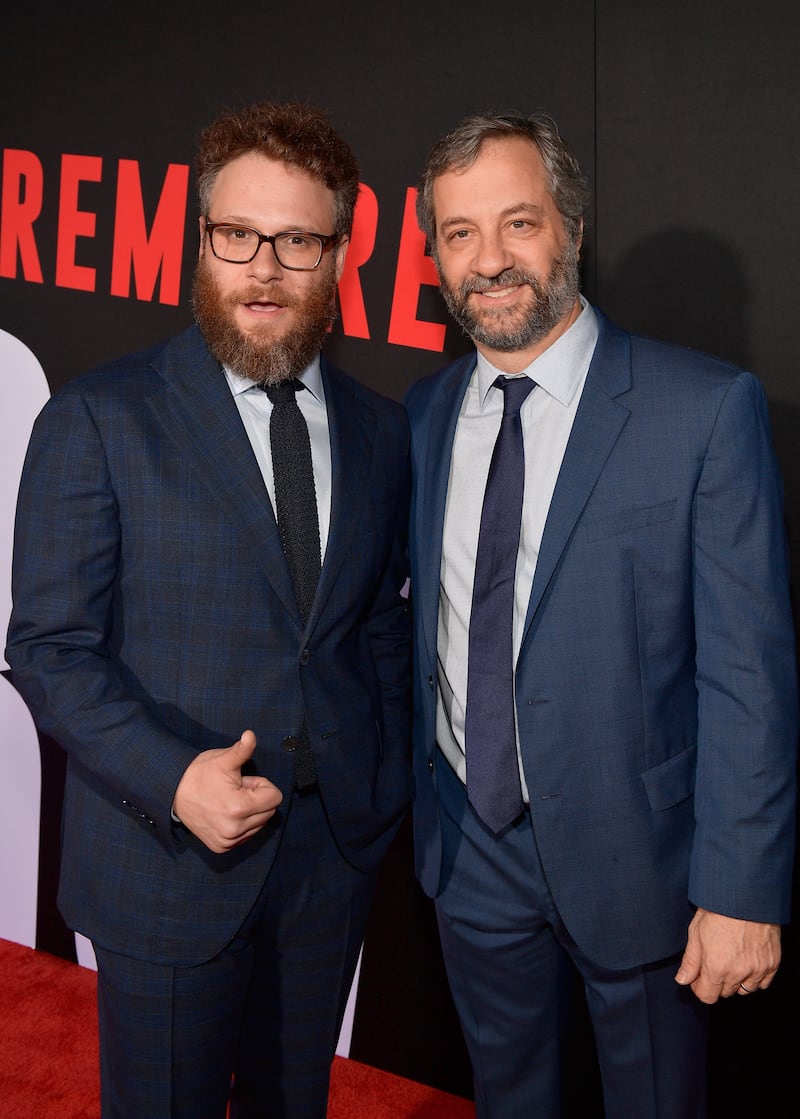
Well, the encouragement they got from you, and Paul Feig, and everybody afterwards has to mean something too. They weren’t just left to their own devices to go start auditioning in Hollywood. They were encouraged to create their own projects, which is something you’ve done throughout your whole career, empowering people to create their own stuff.
I had seen that happen a bunch of times. I interviewed Garry Shandling when I was a kid. This is before he did any TV, but he was talking about his vision of doing a show where he played a version of himself. And that became It’s Garry Shandling’s Show. And then I remember Jim Carrey was trying to figure out how to get his career going. And he and Tom Shadyac found a script, Ace Ventura, and they rewrote it. And that’s how he broke. And then Adam Sandler and Tim Herlihy wrote Billy Madison. I had just seen all these people create their careers by sitting down on the computer and writing a screenplay. So when we did Freaks and Geeks, to me it felt natural to say, “You don’t have to just act in this. Do you have ideas for TV shows? Do you have ideas for movies?” Jason Segel always tells this story where I said to him, “You know, you’re kind of a weird guy, I think you’re gonna need to write for yourself to show people what you can do.” But I meant that [as a compliment], because that’s what I saw Jim Carrey and Sandler do. They had to create a script to make the industry understand what their talents were. Because there wasn’t going be a script laying around that perfectly captured what they were capable of. But those people did the work. Jason Segel sat down and wrote Forgetting Sarah Marshall. That was the first screenplay he ever wrote. It was incredible. And Seth Rogen and Evan Goldberg were writing Superbad since they were 14 years old. So only from their massive efforts did any of those things get accomplished.
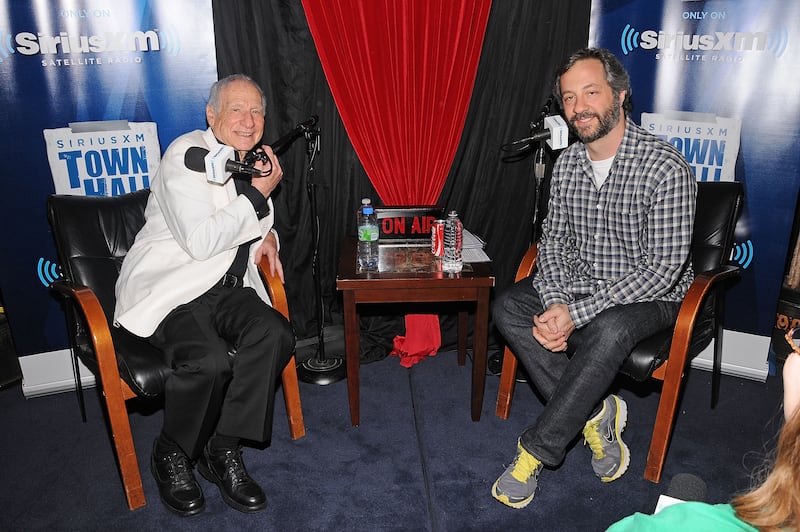
Meanwhile, it’s just been announced that your latest documentary, Mel Brooks: The 99 Year Old Man, is premiering in the new year. Can you talk about putting that one together? It feels like you set out to discover something new behind the public persona of Mel Brooks.
The intention was to do a movie with Mel Brooks that was very personal. There had been some documentaries before, which talked a lot about his career, but Mel didn’t get into his feelings about his life. And I thought, I wonder if I can get a reflective Mel Brooks. So we sat down and did about 10 hours of interviews, and he’s very, very sharp. I mean, I can’t remember anything or anyone’s name. He is never reaching for a name or forgetting a story. He couldn’t have a better memory for his life. But I tried to get him to talk about his relationship with Carl Reiner. Why were they so close? And to talk about [his wife] Anne Bancroft and what she meant to him, about their love and their romance, and her support of him. This is a guy who was in World War II and was traumatized by it. He grew up during the Depression. And so he has a lot to say about how that informed his creativity, because he did have this career where went after power. And if you watch movies like The Producers, and Blazing Saddles. and History of the World, Part 1, he’s making fun of the people that abuse the citizenry. He’s attacking authoritarianism. A lot of it is very applicable to what we’re seeing right now. I mean, he really was the first person to just go so hard against the Nazis. And so we get into these really interesting conversations about what his intentions were for all of that work.
Thinking about The Producers along the lines of what we were talking about with these movies that don’t necessarily hit with an audience when they come out, that was one that we think of as one of the greatest—if not the greatest—comedy film of all time. And it was not an instant hit with audiences either.
It got mixed reviews! That’s always just a good thing to know, that when you do interesting work, sometimes you take the hit for it, and then people are inspired by it. And then sometimes it’s rediscovered, sometimes it’s not. But yeah, that was a movie that he said he went with his family to see it and there was literally no one in this thousand-seat theater. And they all thought, oh no, we’re in trouble.
The satire of that movie is so daring. And the same for Blazing Saddles, which you explore a lot in the film as well. Do you feel like there’s enough of that happening now? Comedy being used to take on powerful forces in the government?
Well, we hope that people continue to find ways to do that. The dynamics of it are so fascinating. Stephen Colbert is suddenly forced to end his show next year, but at the same time, South Park couldn’t go harder against the administration. It’s the same company. [Paramount], and they’ve somehow been grandfathered in because they generate so much money. And it’s the one thing that Trump never talks about out loud.
It’s crazy, right?
And it’s also the one show Republicans watch, because they’ve always attacked the left and the right. So in a lot of ways it’s very important, because I think it’s being seen by people who might look at it and go, yeah, they’re going at them hard, but some of this makes sense, what they’re making fun of and the corruption that they’re pointing out. So you hope that there’s not so much consolidation of all these companies that one by one, they don’t remove all the voices that speak truth to power. Because we need that. But it is a little scary, because people can be quietly diminished on these platforms.
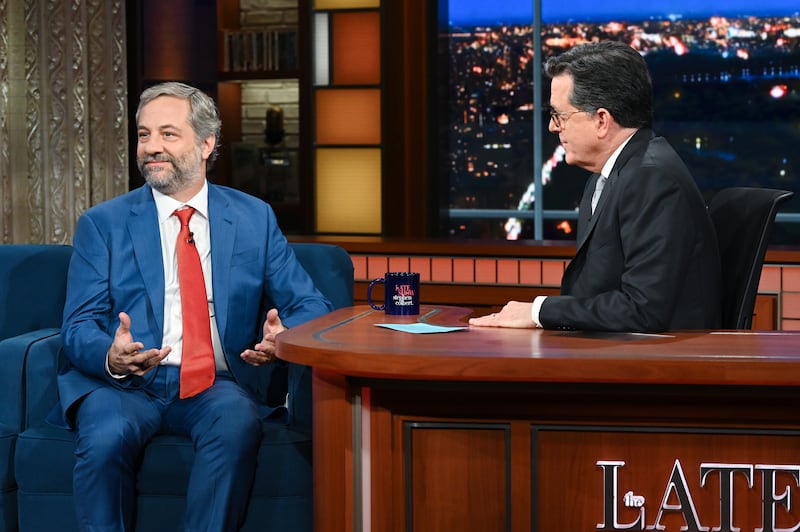
Well, I think it’s encouraging that both Jon Stewart and Jimmy Kimmel have now extended their contracts for another year at least. So they’re not going anywhere quite yet. But there was a moment there where it felt like they all might go away.
Yeah, and I think that the country basically stood up and said, “We really don’t want you to do that.” And that was going to lead to a much larger round of protests.
Why do you think Trump doesn’t go after South Park the way he goes after all of the late-night hosts? Is it not on his radar? Is nobody telling him about it?
Who knows, maybe they have a secret plan of what they’re going to do to South Park. Surely, someone just said, you’re not going to win that one. But that doesn’t mean that they’re not sitting in a room going, what do we do? But the fact that he’s silent about it is interesting, because you always wonder, why does he speak out? And does he even write any of these Truth Social posts? So who’s the person that’s like, “Don’t mess with South Park?” One day, we’ll probably find out about why, when those things aired, they just said, “Be silent.” And the truth is, you should be silent because the second you complain about it, 10 times more people watch it. So it might be that they know how accurate this criticism is, and they really don’t want more people to know about it.
Yeah. It feels so much more dangerous than the jokes that are happening in the late-night monologues, which can be great, but they’re kind of the same night to night. But South Park is really pushing the envelope in ways that I don’t think anyone could have imagined going into this season.
Yeah. And it’s very sophisticated. It is about corruption. Everyone talks about Satan, and all those jokes. But the show has been about crony capitalism and a government that’s not concerned about working people.
Going back to Mel Brooks and these documentaries that you’ve been making about comedians, you’ve done George Carlin, and Garry Shandling. Do you ever think about what the film about you will look like? Maybe when you’re 99 years old?
Some people have asked me about doing something like that, and I’m always like, no. I want everyone else to let me do it about them. But if anyone ever asks me, I’m like, no, there’s nothing interesting there. It’s just a workaholic nerd. There’s no great story there. Once I let this man in France make a documentary about me, but you have to really be French to find it. That was like 10 years ago. And I just thought it would be cool to have a documentary where everyone’s speaking in French. And it just makes me seem fancy. If people are talking in another language about you, then clearly you’re doing something well.
Do you think you’ll direct a comedy feature film again anytime soon?
I think so. I’ve been writing a movie with Glen Powell, a country music comedy that we’re looking to do in the spring. And that all seems like it’s happening. So hopefully in about a year that will come out.
And then are we moving on to “This Is 70” yet, or what’s the status there?
You know, it could be any number, that’s the beauty of it. People think it needs to be in tens, but it could be anything. You know, when you get older, I say this in my stand-up, all your jokes become about decay. All your jokes are like, “Don’t you hate when you get diverticulitis?” But it’s funny, my daughter Maude directed a movie called Poetic License that stars Leslie [Mann] and Cooper Hoffman and Andrew Barth Feldman. And it’s coming out in May. And it’s like an empty-nesting, nervous-breakdown comedy. And it’s really sweet and really, really funny. In a lot of ways, that feels like another [sequel to This Is 40], but from Maude’s perspective. And I’m excited for people to see that.
Listen to the episode now and follow The Last Laugh on Apple Podcasts, Spotify, or wherever you get your podcasts.