
After a rocky start, the DC Universe finally gets a bona fide win with Lanterns—largely because the eight-episode HBO series seems divorced from the fictional comic book-y world in which it exists.
Part True Detective mystery, part Lethal Weapon buddy comedy, and part superhero origin story, Chris Mundy, Damon Lindelof, and Tom King’s Lanterns (August 4) features little of the cartoonishness of its big-screen predecessors Superman and Supergirl, instead taking a somber and realistic approach to its tale of a “space cop” known as a Green Lantern, his protégé, and the strange occurrences that threaten to bring destruction to a small Nebraska town.
Structural unevenness aside, it’s grounded even when its superpowered main characters take flight, thanks primarily to stellar lead performances from Kyle Chandler and Aaron Pierre, which lend this fantastical material its down-to-Earth soul.
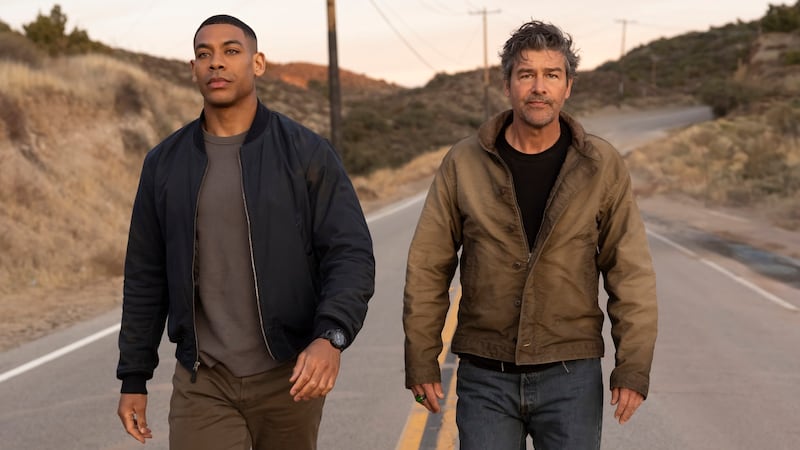
The DCU’s first promising step since its 2024 reboot—and the studio’s best small-screen effort since Peacemaker’s maiden run—Lanterns jumps between time periods but for much of its initial season is set in 2016, where John Stewart (Pierre) is picked up by a running-late Hal Jordan (Chandler). The latter is Earth’s sole Green Lantern, an intergalactic peacekeeper who—following a career as a test pilot—was chosen for the position after answering “no” to a simple question: “Are you afraid?”
Once selected, he was awarded a magic ring (and matching suit) that, when powered by a lantern, grants him the ability to create anything he can imagine. Courtesy of his decades of derring-do, he’s now a national celebrity.
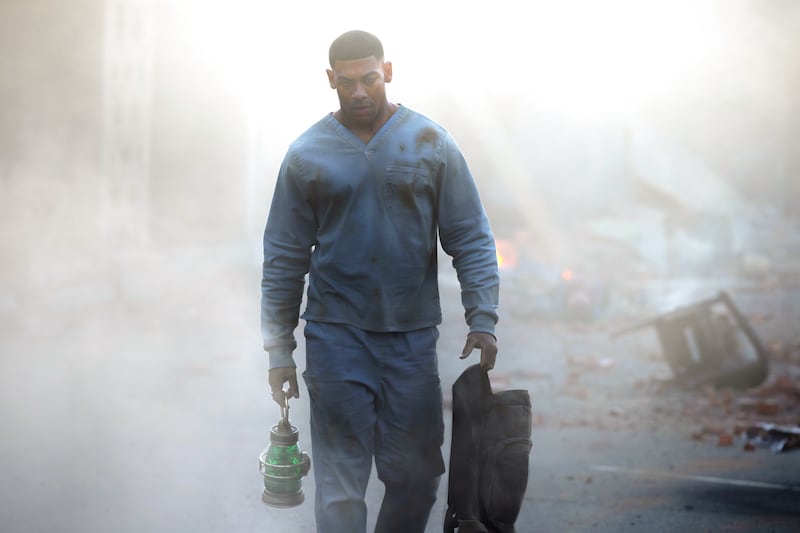
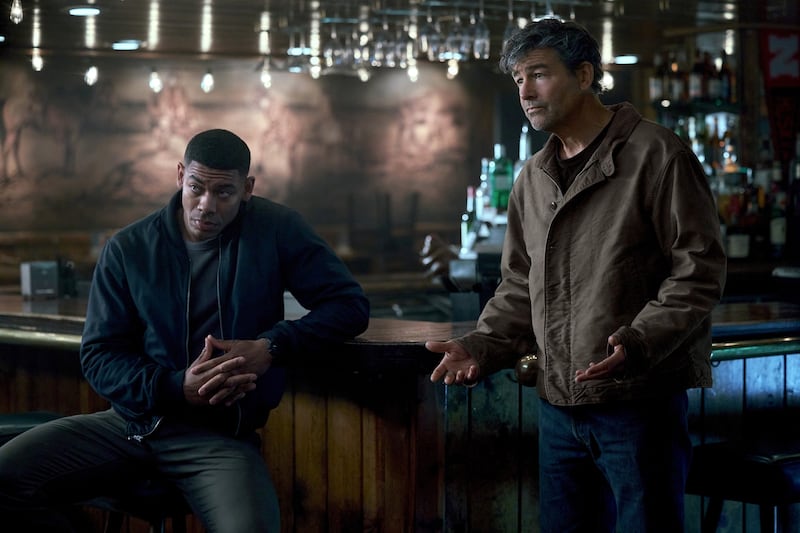
John, however, is far from starstruck, viewing Hal (rightly, it turns out) as a peerlessly arrogant smartass. The tension between them is off the charts at the beginning of Lanterns, and over the ensuing episodes, it grows tauter. Chandler and Pierre are a perfectly mismatched duo, with the Friday Night Lights alum a disheveled, cocky badass who’s none too pleased about having to prepare his “trainee” to eventually take his place (considering that Earth gets a single Green Lantern), and the Rebel Ridge breakout quietly fuming over Hal’s egotistical condescension and his own inferior position in this partnership.
Hal and John are two alphas tasked with working together even as they vie for the same ring, and Lanterns thrums with hostility as it sends its protagonists to the small town of Rushville, Nebraska, where four strangers have been murdered in the high school football stadium. Hal knows this locale well and quickly deduces that the victims are aliens. Why extraterrestrials would be visiting this nondescript hamlet is the big question looming over the early proceedings, and it’s investigated by not just Hal and John but also local Sheriff Kerry (Kelly Macdonald), a tough cookie whose husband Billy Macon (Jason Ritter) is a lawyer and whose father-in-law William (Garret Dillahunt) is a wealthy and powerful businessman whose ranch houses a formidable militia.
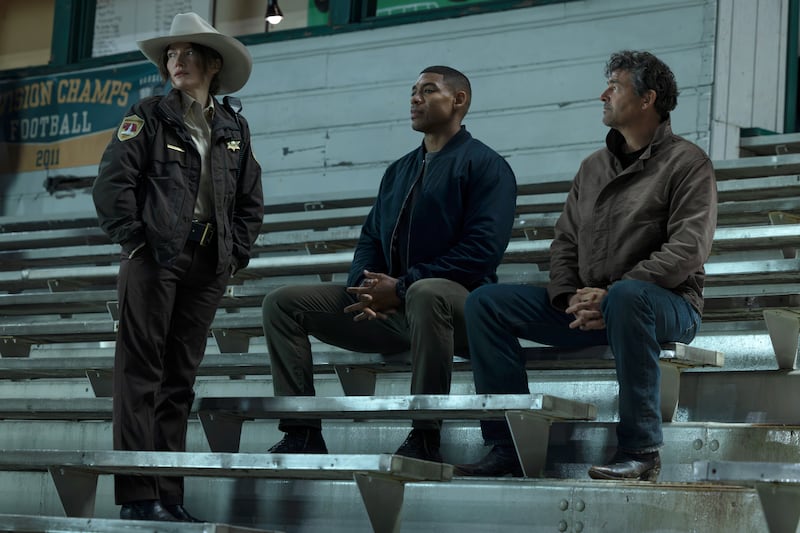
Like just about everyone else who knows him, Kerry hates Hal’s guts, although it’s hard to feel likewise; Chandler makes him a rakish jerk with an irresistible smile, delivering his finest performance since Bloodline. As the polar opposite of John, a stern, determined, and humorless sidekick who loathes playing second fiddle,
Pierre is equally compelling, and as flashbacks detail the crazy route he took to arrive at his current station, John is slowly revealed to be the heart of the series. Without giving anything away, that path has much to do with the Guardians of the Universe, a council of E.T.s who hand-picked the ex-Marine sniper for this duty, and whose Earth emissary (Laura Linney) is a coolly rational and enigmatic puppet master.
While Lindelof interjects some Watchmen-style racial elements into Lanterns, its chief focus is the macho friction between Hal and John, which escalates once they deduce that more than one of this remote enclave’s residents has ties to non-humans. Before long, they’re caught in the middle of a grave calamity that forces them to put on their detective hats at the same time that they suspiciously side-eye each other, sure that betrayal is right around the corner.
Those on-the-ground dynamics shrewdly take precedence over superhero spectacle, allowing Hal and John to come across as complex individuals rather than shallow comic-book clowns—and yes, that’s a dig at the DCU’s reigning Green Lantern, the grating Guy Gardner (Nathan Fillion), who was introduced in Superman.
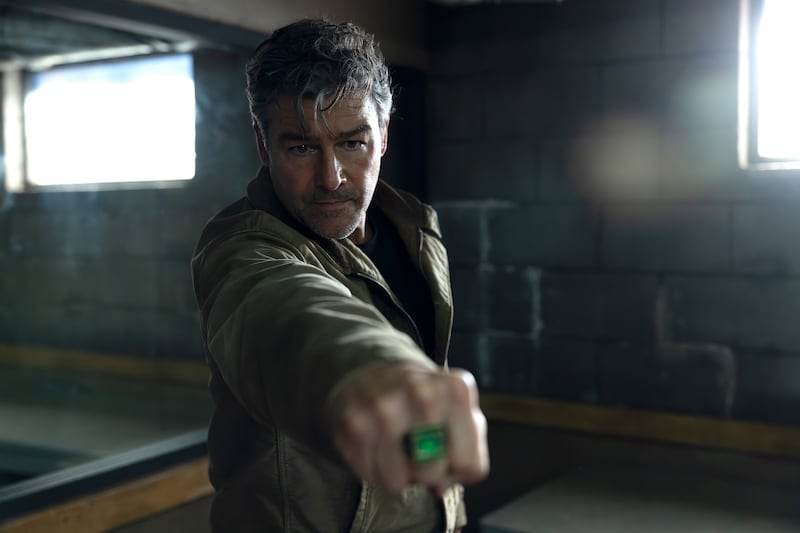
Lanterns boasts its fair share of ring-enabled action but, on the whole, tempers pageantry in favor of character drama. Aiding that cause is Macdonald, whose turn as the feisty and frustrated Sheriff Kerry is a welcome counterbalance to the manliness at the show’s core. Macdonald’s rapport with Chandler is particularly inspired, and thankfully it isn’t abandoned even after the series makes a couple of abrupt left turns, one of which is hinted at in the premiere.
Surprises are a constant, and though the season’s narrative configuration is a tad jagged, it never falls apart, given that regardless of what they’re up to, Hal and John remain an appealingly antagonistic pair.
The most refreshing aspect of Lanterns is that despite its references to larger DCU events, figures, and locales (shout-out, Gotham City!), it’s a self-contained endeavor that doesn’t exert undue energy on mythology integration. Of course, since HBO didn’t provide critics with the finale, there’s a chance that the show is biding its time before revealing its true nature as simply a cog in the franchise machine, designed to bridge the gap between its movie chapters.
Still, there’s reason to hope that there’s more to this affair than just brand extension, if only because Mundy, Lindelof, and King treat Hal and John as unique three-dimensional characters whose plight is less about big-picture concerns than about themselves, and each other.
Occasional bumpiness aside, Lanterns suggests an auspicious direction for DC, one in which high-flying, slam-bang insanity serves as mere embellishment for tales about complicated people grappling with relatable (and extraordinary) circumstances. Yet even if it’s just an outlier, it’s evidence that there’s more than one way to craft a superhero adventure—as well as a showcase for two great actors operating at the top of their game.