Based on Laura Ingalls Wilder’s experiences growing up on the Midwest frontier in the late 1880s, the original Little House on the Prairie book series—and its classic ‘70s-‘80s TV adaptation starring Michael Landon and Melissa Gilbert—was a coming-of-age tale that doubled as a wholesome American origin story.
Celebrating life in the developing country while plumbing its multifaceted conflicts, injustices, and hardships, it rightfully became a classic historical drama, teeming with personality, insight, and heart. For those who grew up with the novels and/or the television show, it was a window into the past that resonated with universal themes of family, community, tolerance, love, and individual and national maturation.
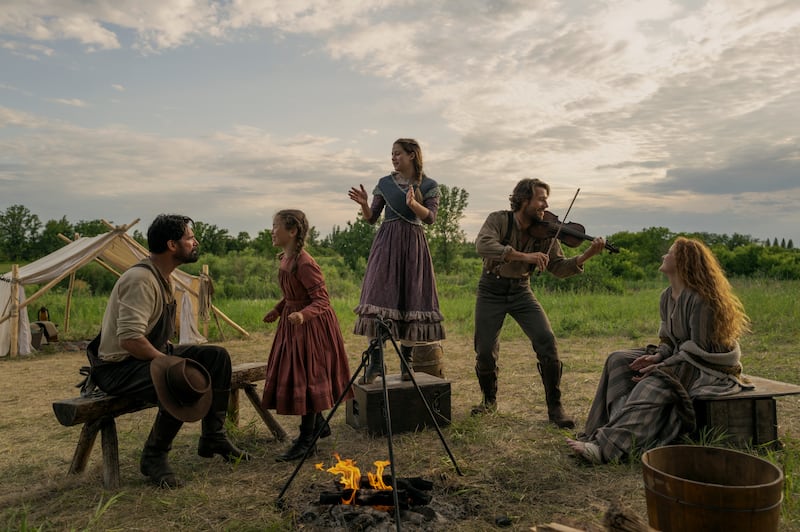
NBC’s small-screen hit (which continued until 1984) captured the spirit of Wilder’s novels, so Netflix has set itself a high bar to clear with its own version of Little House on the Prairie (July 9).
Unfortunately, it falls very short.
At once more faithful to Wilder’s third book and yet plagued by all sorts of modernizing touches that render it inauthentic and facile, it offers a cardboard-cutout vision of Americans’ westward migration, full of picturesque panoramas and uplifting platitudes but with precious few moments that resound as real.
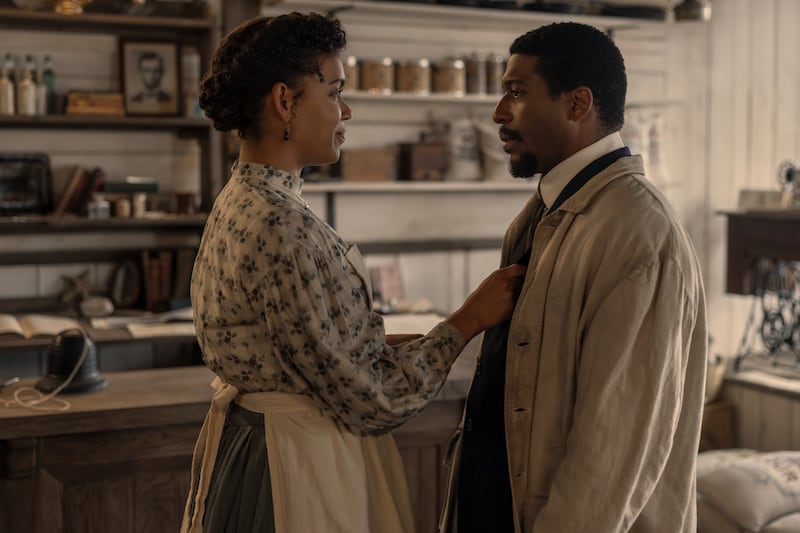
Aesthetically speaking, Little House on the Prairie resembles a cross between a polished advertising spread (with models posing as rugged frontiersmen) and a synthetic AI video. From brilliant sunshine and terrible snowstorms to the cozy, bustling interiors of homes, hotels, and businesses, nothing in Rebecca Sonnenshine’s series looks genuine.
That falseness extends to Luke Bracey’s Pa, who is fashion-magazine handsome and consistently wooden. A far cry from his illustrious predecessor, Landon, Bracey makes for a phony picture-postcard Charles Ingalls.
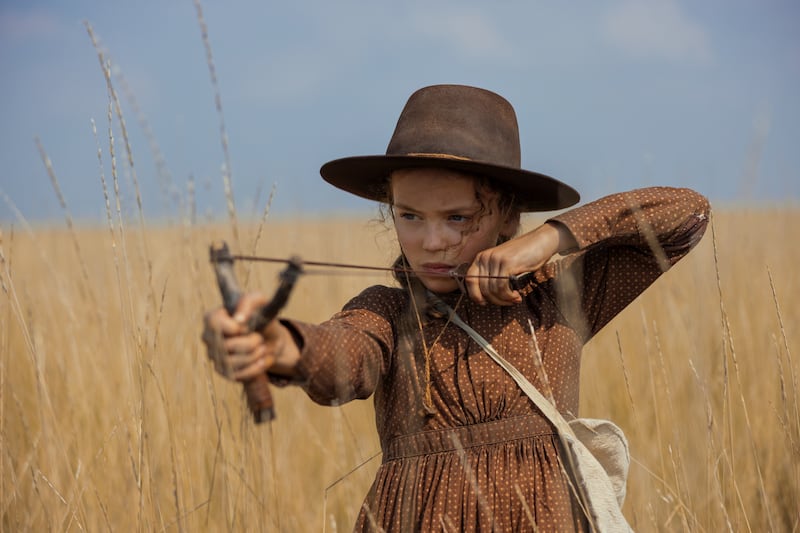
Not much better is the show’s Laura, Alice Halsey, whose theater-kid expressiveness, unconvincing spunkiness, and old-soul pronouncements are persistent central shortcomings.
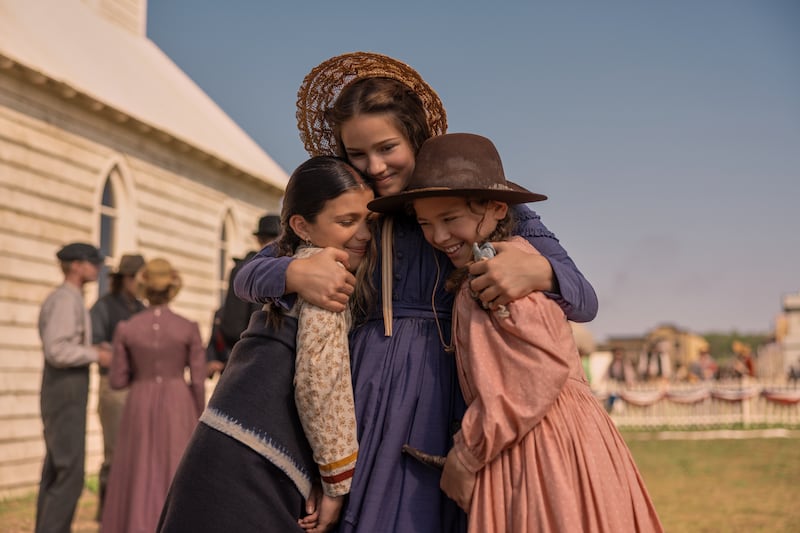
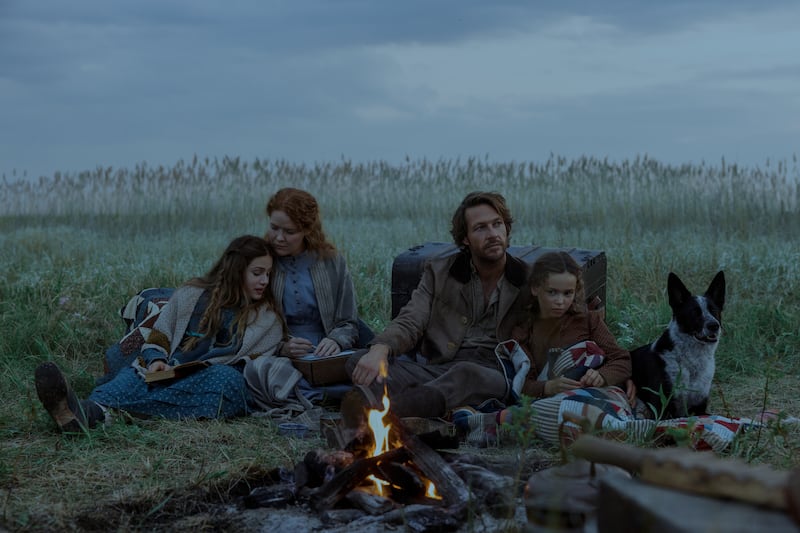
Mother Caroline (Crosby Fitzgerald) and older child Mary (Skywalker Hughes) round out this spic-and-span Ingalls clan, who, at the outset, have left their native Wisconsin under mysterious circumstances to start anew in Independence, Kansas, where—according to fliers—there’s bountiful land available.
During a perilous river crossing, the family dog, Jack, is swept away by the current, after which they’re fortuitously cared for by Dr. George Tann (Jocko Sims).
Despite the time and place, the Ingalls don’t bat an eyelash at being treated by an African-American physician. That sort of general color-blindness is emblematic of Little House on the Prairie, whose subsequent action boasts a couple of underlined white racists but softens racial and ethnic frictions whenever possible. It’s determined to imagine a tolerant, tempered yesteryear in which most people were totally cool with Blacks and Native Americans—and, in big-picture terms, vice versa.
Once they reach Independence, a Caroline foot injury leads Charles to enlist the services of widower John Edwards (Warren Christie) to finish building his home. The grief-stricken John has a drinking problem and has compassion for the local Osage, and it’s not long before Charles learns that this land isn’t really up for grabs, as the local tribes still own it—thereby putting his claim (upon which he’s staked his future) in question.
Moreover, some young indigenous men have no interest in playing nice with interlopers like Charles, though their hostility is confined to one suspense-free scene. Otherwise, the primary Native American character, William Mitchell (Meegwun Fairbrother), is a reasonable man who believes in co-existence and is cast as a caring Charles-like father and husband.
The Osage’s willingness to strike a deal with the federal government is a source of much concern throughout Little House on the Prairie, whose story awkwardly tries to straddle a line between rooting for the Ingalls to succeed and recognizing that their dream is predicated on others’ misfortune.
Charles and company’s blanket progressivism—which includes uncomplicated friendships with the likes of French loner Lacey (Rebecca Amzallag) and Black general store owner Emily (Barrett Doss)—seems transplanted from another era, and the story works hard to make sure that the only person who’s really bad is the railroad scoundrel responsible for sparking tensions between settlers and Native Americans. Sonnenshine wants to have it all ways and flops, leaving everything feeling compromised.
Risk, courage, perseverance, loyalty, adversity, and togetherness are all natural components of Little House on the Prairie. Yet without fail, it tackles such issues glibly. That’s most notable when it comes to Laura, whose endless stream of wise-beyond-her-years truisms—“This will be our new forever,” she intones about Independence; “I’ll take a piece of you with me in your heart,” she says on the eve of leaving a dear friend behind— reduces her to an inspirational meme come to cornball life.
Her compatriots are no better, what with Laura’s Native American BFF Good Eagle (Wren Zhawenim Gotts) stating, “I like the way you see the world,” and Charles cautioning his “half-pint” daughter, “You have a curious heart. An open heart’s a good thing. Just remember to be careful with it.”
Little House on the Prairie never misses an opportunity to put a cheesy button on a scene, thereby undermining its intermittent poignancy, most of which stems from its snapshots of people putting everything on the line to create a better future for themselves and their loved ones.
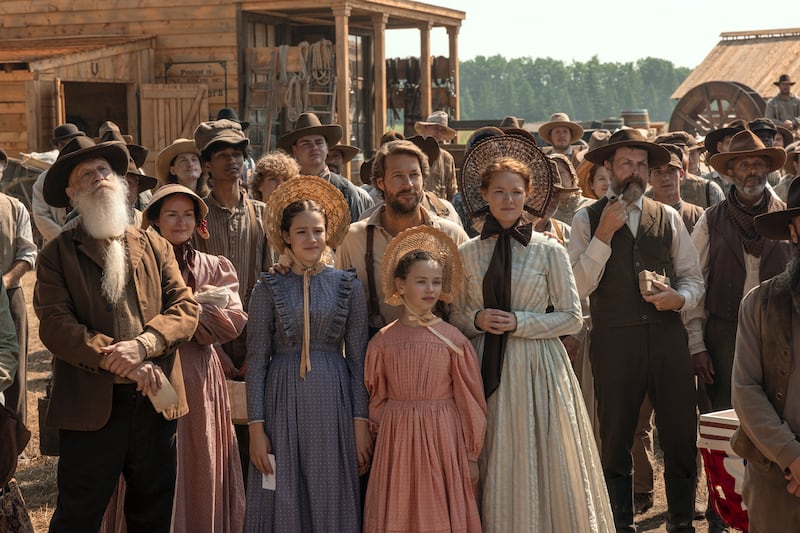
The show persistently gets in its own way, and it stumbles badly in its final two episodes, twisting itself in knots in a vain attempt to beget a hopeful (if bittersweet) conclusion. Its intentions are noble, but its execution is messy, with situations and dynamics resolved via the most even-handed and comforting solutions available—a process akin to smoothing out a tablecloth’s creases.
Those who’ve read Ingalls’ books know that these characters’ fates are destined to evolve, and given that it’s already been renewed, there’s always a chance that Little House on the Prairie will likewise transform in its second season, which, according to its source material, will be set in a different part of the post-Civil War United States.
To do that, however, would mean ditching the affected glossiness, stilted writing, and acting that mark this reboot—a task that’s almost as tall as the American West was wild.