Second acts are tough, especially when you’ve reached the pinnacle of your profession. For Paul McCartney, learning to be his own man and artist in the wake of the Beatles’ break-up was anything but an easy process.
Man on the Run is a snapshot of that tumultuous period in the icon’s life and career, and if director Morgan Neville crafts it as a story about the difficulty of reinvention, it’s also an uplifting portrait of the possibility of rebirth—even for the most famous person on Earth.
The question that hounded McCartney throughout the 1970s was whether the Beatles would reunite, and in Man on the Run, the singer-songwriter—via present-day narration—states that in the latter part of the decade, the foursome discussed getting the band back together for a surprise appearance on the small screen’s newest sensation, Saturday Night Live.
It was not to be, however, as he admits that they bandied about the idea, only to think, “But then it was like, why? It would be great for them—would it be great for us? We’ve come full circle, and now we’re off on another journey. So we just decided to just have another cup of tea and forget the whole idea.”

The feeling of having moved on did not come easily for McCartney, who in Man on the Run (Feb. 27 on Prime Video), has an employee hand out post-Beatles press releases stating, “my only plan is to grow up.” To do so, he had to first weather a storm of negative publicity in which he was blamed for the collapse of the Fab Four. This, despite the fact that it was John who had covertly left the group in 1969 and simply refused to make a formal announcement about it.
In some of the copious archival material featured in Neville’s doc, Lennon confesses that it was McCartney who most cherished the band—a situation that few recognized at the time, to the point that a London stage show (clips of which are seen here) imagined him as a de facto traitor.
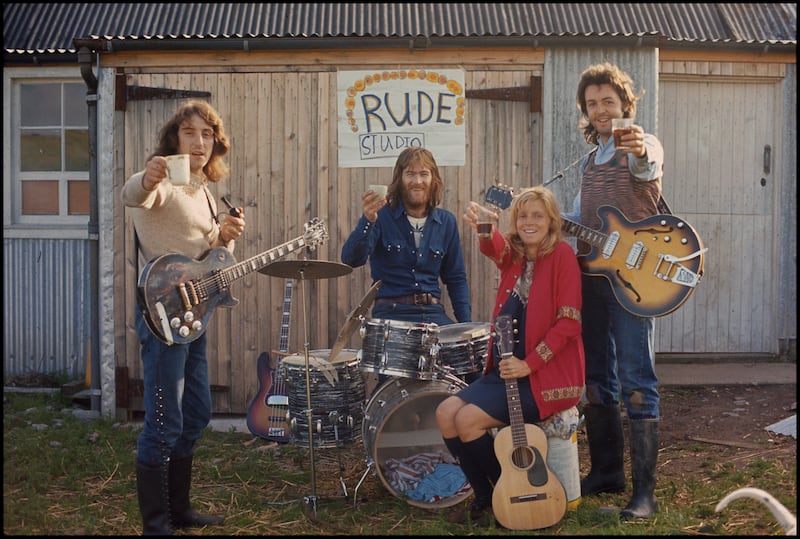
In response, McCartney retreated from the public eye, fueling “Paul is dead” rumors until he finally revealed that he was living on a remote Scottish farm with wife Linda. Man on the Run revisits this reclusive moment through photographs and home movies that depict McCartney as scruffy, good-natured, wracked with doubts, and in search of inspiration, direction, and purpose.
Convinced that Beatles manager Allen Klein (with whom Lennon was close) was set to bilk them dry, he engaged in litigation that formally dissolved the band. After that, he self-produced a solo album, McCartney, that was met with little enthusiasm but which boasted the classic “Maybe I’m Amazed” and which author Peter Doggett now heralds as a pioneering work of low-fi alternative rock—suggesting that McCartney hadn’t lost his mojo.

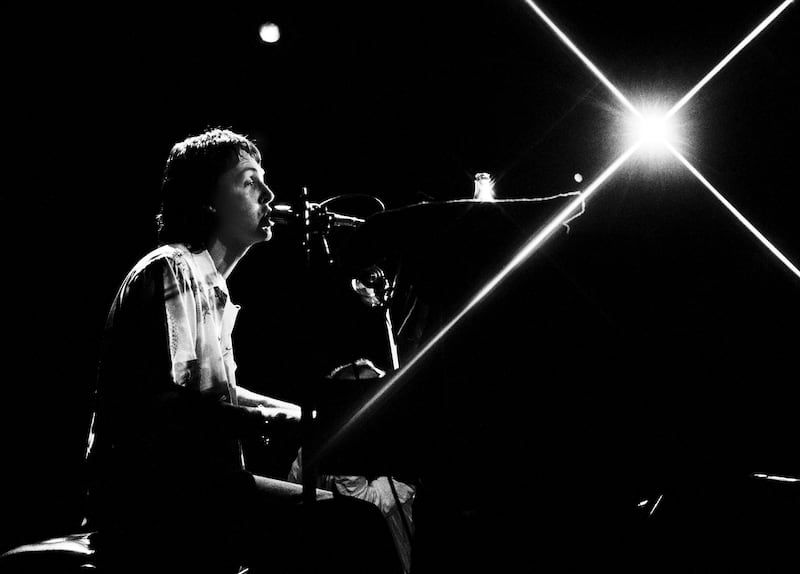
Following the more divisive Ram (made with Linda), McCartney formed a new band with Moody Blues guitarist Denny Laine called Wings, whose baby steps into the world were recorded in a Scottish barn.
Neville presents clips from Wings’ initial 1972 rehearsal, as well as their subsequent tour of small venues in a van filled with the McCartney kids, furthering the sense of Wings as a “family.” It was also an act destined to exist in the long shadow of the Beatles. And in Man on the Run, one can see (and hear) McCartney struggling to pull off an immensely difficult trick: Craft a new image, persona, and sound that comes wholly, distinctly from him.
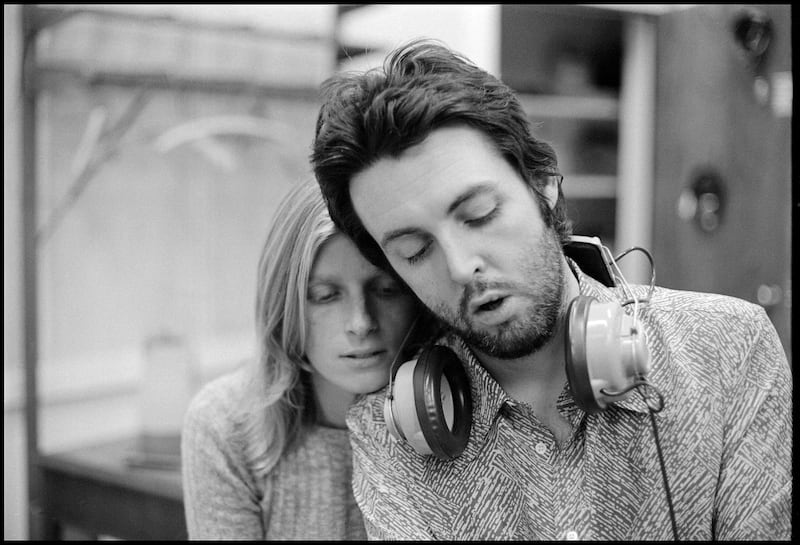
Man on the Run touches on the dissonance between the musician’s desire for another true band and Wings’ inevitable, inescapable identity as a Paul McCartney project. It also covers the eventual revolving-door line-up changes that led to Wings’ varying output, and the occasional public contentiousness between McCartney and Lennon, both of whom were trying to redefine themselves.
Neville, however, doesn’t belabor any of these tensions, since for the most part, McCartney—despite being seen as somewhat over the hill (in his 30s) and uncool (compared to a rising crop of ‘70s rock gods like Led Zeppelin)—never lost faith in himself or his talents. By the middle of the decade, Wings was flying high, embarking on a world tour and landing on the cover of Time magazine.
Neville’s decision to present contemporary interviews with his subject and others solely in voiceover can be a bit distracting and distancing, and Man on the Run doesn’t have much in the way of urgent drama—instead functioning as merely an up-close-and-personal peek into this unique phase in McCartney’s musical odyssey.
Most interesting are its passages about Linda, who was unfairly (if predictably) slammed for being the cause of the Beatles’ split and a nobody who didn’t deserve to share the stage with her husband. The film works hard to dispel those characterizations, and to celebrate her (notably through comments by her daughter Stella) as a gifted photographer and trailblazing fashionista who managed to raise a brood while on the road with one of the era’s biggest bands and married to the planet’s most beloved rocker.
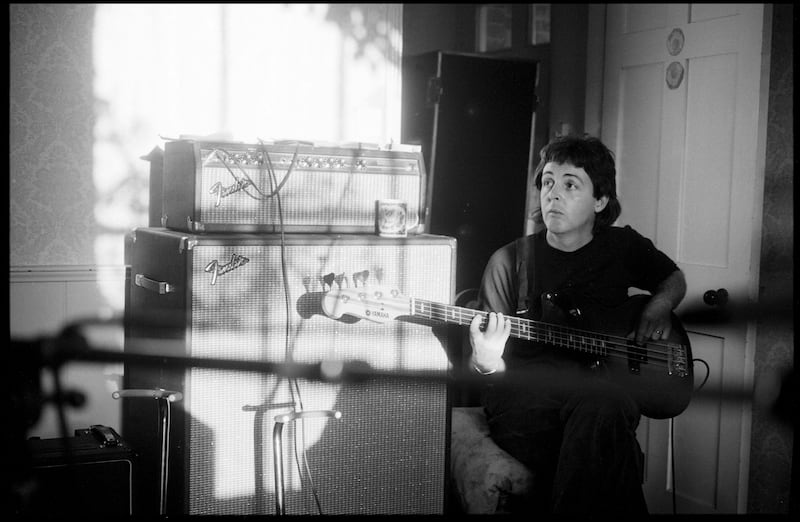
As McCartney learned with his original group, nothing lasts forever, and by 1980, he knew that “the enthusiasm had peaked” with Wings. Man on the Run understands that it’s merely a middle chapter in a much larger tale.
Still, it finds a measure of narrative closure in the shocking, sobering death of Lennon, which his son Sean thinks was the real catalyst for McCartney’s transition into adulthood. For his part, McCartney reveals that he reconciled with his best friend before his murder, and “one of the great blessings in my life is that we made up.”
“It’s beautiful, and it’s sad at the same time,” McCartney adds. “You know, we’d loved each other all our lives.”

Man on the Run is ultimately a study of artistic—and, by extension, personal—courage and resilience, capturing McCartney’s triumphant resurrection as an individual who could stand on his own apart from a collective, even as he embraced his role as a family man and bandmate.
“I doubted whether it was possible to follow the Beatles,” he muses at the film’s conclusion. “But looking back on it now, we made what seemed like an impossible dream come true. That was the magic of it.”