Oscar Winner Finally Gets Apology After Awards Show Debacle
A top executive reached out to the Oscar-winner in the aftermath of the controversy.

Oscar-winner Michael B. Jordan received an official apology after a shocking N-word incident involving the star was broadcast to the world.
Since February, the BBC and the BAFTAs, Britain’s equivalent of the Oscars, have been embroiled in a controversy. The incident took place at the 79th BAFTA Awards, when an attendee with Tourette’s, John Davidson, involuntarily yelled out a racial slur at Sinners stars Michael B. Jordan and Delroy Lindo while they took the stage to present an award.

In the aftermath of the incident, the BBC came under fire for failing to cut out the N-word from its broadcast of the award ceremony. The broadcast was aired on BBC One on a two-hour delay after the event, adding to concerns and condemnation.

Michael B. Jordan and Delroy Lindo were presenting an award onstage when the incident occurred.
Stuart Wilson/BAFTA/Getty Images for BAFTA
The BBC’s executive complaints unit (ECU) found on Wednesday that the organization breached its editorial standards.
The organization’s chief content officer, Kate Phillips, said that the breach “was not intentional.” Phillips revealed that she personally wrote to Jordan and Lindo to apologize on behalf of the BBC.
Get the best of Obsessed delivered right to your inbox
By clicking “SUBSCRIBE” you agree to our Terms of Use and Privacy Policy.
Phillips, who has held the position since June 2025, said that the ECU “found this should not have made it to air and it was a clear breach of our editorial standards.” However, she said the unit “found the breach was not intentional.”
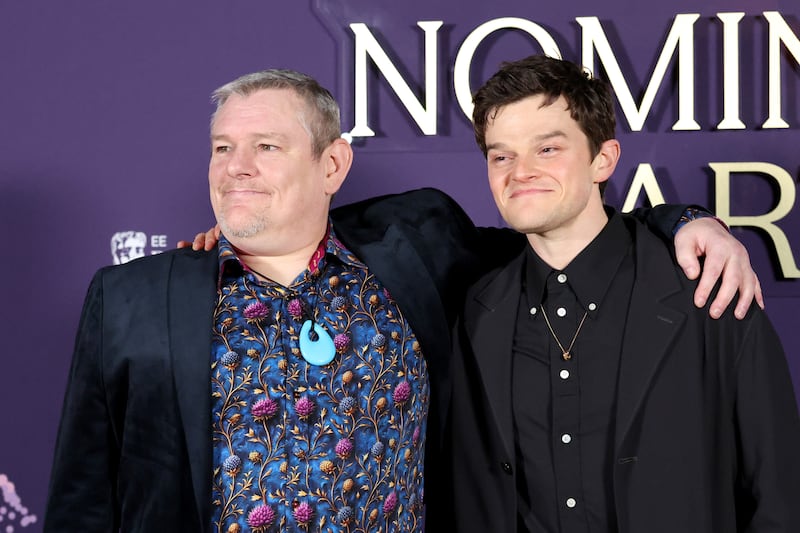
John Davidson, a Tourettes campaigner, was portrayed by Robert Aramayo in a BAFTA-winning performance in "I Swear."
Aurore Marechal/Getty Images
The BBC executive explained that “the production team did not hear the N-word at the time it was said and therefore no decision was taken to leave the word within the broadcast.”
The event’s coverage remained available on BBC iPlayer until the morning after the BAFTAs aired, a move the ECU’s report slammed as a “serious mistake.”
“The fact that the unedited recording remained available for so long aggravated the offense caused by the inadvertent inclusion of the N-word in the broadcast,” the report stated.
Phillips said that the BBC “must learn from our mistakes.” She also shared that she wrote to Sinners co-star Wunmi Mosaku, who slammed the organization after the ceremony.
Mosaku won the award for Best Actress in a Supporting Role that night, but said that the incident tainted her win. The actress said that while she holds “no hard feelings towards John Davidson at all,” she couldn’t get past the BBC leaving the N-word included when airing the event.
“That’s the bit that really kind of kept me awake at night and brought tears to my eyes. I was like, ‘you really chose to keep that in’. I can’t understand it. And I’m not sure if I can forgive it,” Mosaku told Entertainment Tonight.

Michael B. Jordan was offered a direct apology by the BBC’s Chief Content Officer.
Patrick T. Fallon/AFP via Getty Images
Jordan did not speak publicly about the incident, but his co-star Lindo thanked people for “the support and love” shown to both of them.
The Daily Beast has reached out to Jordan’s representatives for comment.
Several apologies were delivered in the days following the broadcast. The BBC apologized for not editing its coverage, saying in a statement issued the morning after the BAFTAs, “We apologise that this was not edited out prior to broadcast and it will now be removed from the version on BBC iPlayer.”

Davidson, a Tourettes campaigner, was present at the BAFTAs to celebrate I Swear, the film inspired by his life. He was portrayed by actor Robert Aramayo, who bagged the BAFTA award for Best Leading Actor.
The BAFTAs officially apologized to Jordan, Lindo, and Davidson in the wake of the incident. “We would like to thank Michael and Delroy for their incredible dignity and professionalism,” the statement read, adding “we apologise unreservedly to them.”

The BAFTAs thanked Michael B. Jordan and Delroy Lindo for their "incredible dignity and professionalism."
Iona Wolff/BAFTA via Getty Images
Of Davidson, the BAFTAs said, “During the ceremony, John chose to leave the auditorium and watch the rest of the ceremony from a screen, and we would like to thank him for his dignity and consideration of others, on what should have been a night of celebration for him.”
Davidson contacted Warner Bros. Studio to apologize to Jordan, Lindo, and Sinners’ production designer Hannah Beachler, who was also exposed to a racial slur.
The campaigner additionally issued a statement, explaining how “upset and distraught” he felt after the BAFTAs and saying, “I want people to know and understand that my tics have absolutely nothing to do with what I think, feel or believe. It’s an involuntary neurological misfire. My tics are not an intention, not a choice and not a reflection of my values.”

“Whilst I will never apologise for having Tourette syndrome,” Davidson wrote in another public statement, “I will apologise for any pain, upset and misunderstanding that it may create.”
Obsessed with pop culture and entertainment? Follow us on Substack and YouTube for even more coverage.

Got a tip? Send it to The Daily Beast here.
Register below to read this article for free or subscribe
to unlock unlimited access to The Daily Beast.
Monthly
$1
First month then $5.99/month
Annual
$35
First year then $59.99/year
Premium
$79
First year then $119.99/year
*Substack access provided by the next business day, using your subscription email. Choosing the Premium plan constitutes your permission to share your subscription email with Substack and your agreement to Substack’s Privacy Policy.
Already have an account? Sign In
Looks like you already have a subscription!
You're all set!
Thanks for subscribing.
Sign in or create an account
Login dialog
Loading comments…