My Undesirable Friends: Part II—Exile, Julia Loktev’s follow-up to 2024’s My Undesirable Friends: Part I—Last Air in Moscow, runs just under six hours—a length many will find prohibitively daunting.
Yet such length is central to this gripping and heartbreaking documentary, conveying the excruciating arduousness of its subjects’ persecution and the rootlessness, loneliness, and fear it begets. Continuing the intertwined stories of several young, independent female Russian reporters as they attempt to survive (and maintain their careers) after fleeing their native country in the wake of its invasion of Ukraine, it’s an in-depth portrait of courageous journalism under fire, tyrannical fascism on the warpath, and the human lives caught in the crossfire.
Beginning two days after its predecessor concluded in March 2022, Exile—executive-produced by Meryl Streep and Laura Poitras, and screening at the New York Film Festival before arriving in theaters on Oct. 9—once again charts the travails of numerous reporters forced to high-tail it out of their homeland for safer pastures.
Thanks to their critical coverage of the war and Vladimir Putin at non-state-sanctioned outlets like Rain TV, they’re now the targets of a crackdown that’s labeled them “foreign agents,” and their flights are traumatizing not only because of their hastiness but because of their injustice.
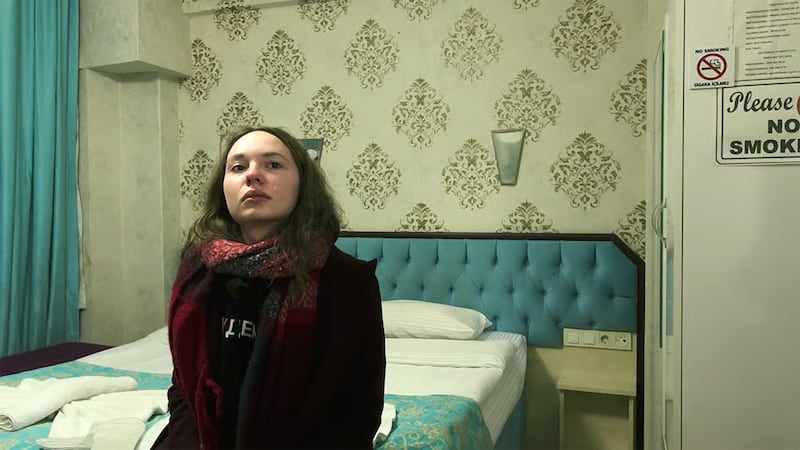
For Rain TV veterans Ksyusha, Lera and Sonya, sanctuary is initially sought in Istanbul, and Loktev’s camera stays close as they navigate unfamiliar streets, testy encounters, and onerous obstacles, her jagged camerawork reflecting their terrified, destabilized, itinerant condition.
Moreover, the director’s cinematographic form is artless, as are her protagonists, whose unguarded raw-nerve candidness is the film’s soul. Tears and fury are both in copious supply throughout Exile. That’s with good reason, since as they roam European locales in search of asylum and, with it, an opportunity to keep shining a spotlight (from afar) on Russia’s crimes, they’re beset by one difficulty after another, all of which they confront with inspiring bravery.
TV Rain eventually finds a new (temporary) home in Latvia, where it can broadcast censorious reports about the ugliness of Russia’s campaign—some with the help of people still living in and around Moscow—and Lera ultimately joins them there to resume her fight for truth and transparency. Before she reaches that destination, however, she and Ksyusha settle in Tbilisi, Turkey, as does seasoned Anya (and her husband and daughter) following a stop in Tel Aviv courtesy of a handy backup foreign passport.
With many of their bank accounts frozen and Russian agents keeping tabs on airports and train stations, travel is perilous, even for Ira and Alesya, who keep working from Prague for the Important Stories platform.
Not everyone stays that far from the battlefield. Newspaper journalist Lena tries to write about her horrifying discoveries from inside Ukraine, but her endeavor is cut short, pushing her to consider penning a book about this nightmare. Petya, who splits time with wife Natalka between Moscow and Kyiv, opts to permanently live in the latter to provide similar first-hand reports of the conflict.
However, while Natalka remains resolutely committed to combatting what she dubs Putin’s “war crimes and crimes against humanity,” her spouse opts to alter his role from chronicler to participant, enlisting in the Ukrainian military in order to affect more meaningful change.
Exile lets its scenes play out without intrusive editorial abbreviation, conveying a warm, palpable sense of its multiple protagonists’ personalities. Sarcastic quips, silly jokes, agonized laments, and tortured confessions—about the guilt, fury, longing, confusion, and sorrow their circumstances elicit—bring these (largely female) individuals into clear, empathetic focus.
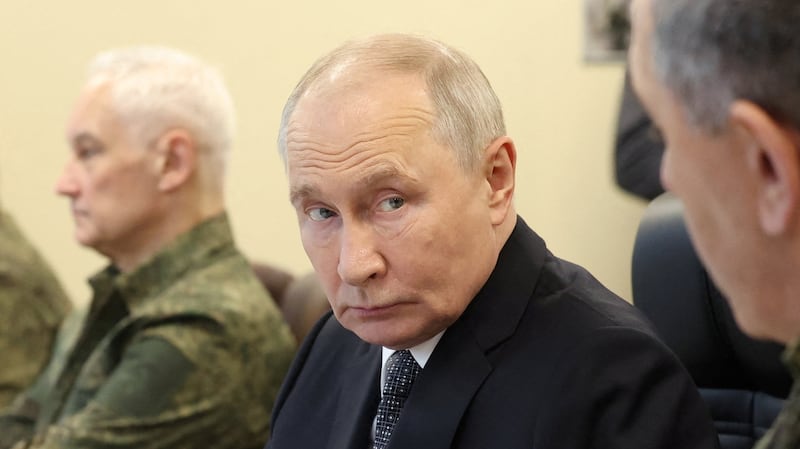
Unsurprisingly, the constant topic on everyone’s mind is Putin’s authoritarian villainy, and through their conversations and declarations, the film damns the Russian regime for both its military atrocities and, more personally for journalists, its harassment and oppression of those dedicated to speaking out about it.

Joy is never totally squashed by subjugation and cruelty in Exile, and in that regard, Loktev’s sequel is a testament to the fortitude of its reporters, who are repeatedly forced to sacrifice what they most cherish—and risk their own careers and lives—in service of a greater cause. In its latter passages, Rain TV’s residence in Latvia is undone by a tiny mistake (used as an excuse for booting them from the country); Lera is convicted in absentia for spreading “fake news” and sentenced to 7.5 years in prison (should she return to Russia); and Lena is almost fatally poisoned in Germany.
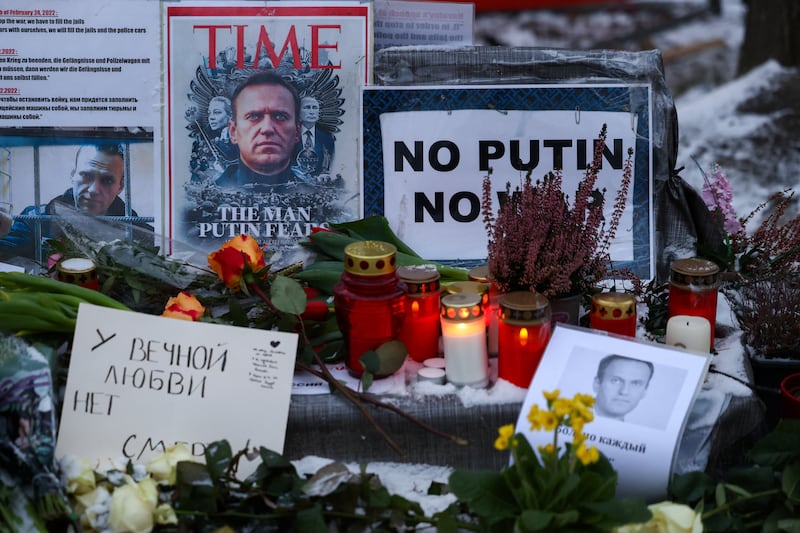
Fortunately, she recovers and embarks on a book tour of the U.S. with her fiancé Yana, but her plight underscores the danger these women are in—as does, of course, the 2024 murder of famous dissident Alexei Navalny.
Disconnection, disillusionment, and despair are additional threats to Russia’s exiled correspondents. Yet their resilience in the face of seemingly insurmountable odds—and a motherland that’s eager to silence them—is unswerving, and Loktev documents their ordeals with engaging fly-on-the-wall attentiveness.
Lena’s belief that journalists should be activists is wholly understandable given her harrowing situation. Exile subtly embraces it, amplifying its subjects as everyday heroes putting themselves on the line for the betterment of their countrymen (and the world), and so refusing to give voice to Russia’s propaganda that, when a Rain TV personality puts the network in jeopardy by espousing a somewhat pro-Putin opinion, the director avoids airing the actual clip.
In a climactic scene in which Ksyusha reports from the streets of Washington, D.C. on the day of Donald Trump’s January 2024 inauguration, Exile contends that America is making the same mistakes that led Russia into fascism, and while that sentiment isn’t fully investigated by Loktev, it’s hard not to consider the director’s latest a cautionary tale about the evolution and mechanisms of despotism.
More memorable than any one scary calamity or gallant act, though, are simply the faces of Lera, Lena, Ksyusha, Sonya, Ira, and Alesya, whose weeping is wrenching and whose determination is uplifting, especially as their circumstances take turns for the better and the worse.
Urgent and universal, Exile (and its preceding companion piece) is both a celebration and example of vital journalism as a force for freedom. It’s as must-see as they get.