
Films tend to set up and solve mysteries. But in Peter Weir’s Picnic at Hanging Rock (1975), based on Joan Lindsay’s 1967 novel and evocatively orchestrated with Gheorghe Zamfir’s maddeningly entrancing panpipes, the mystery is laid out and never solved. Its stubborn, convention-shredding strangeness is one of the reasons it has been so long considered a classic.
The 50th anniversary re-release of Weir’s unsettling masterpiece earlier this year reminded cinema audiences of its skillful interweaving of supernatural eeriness and larger bubbling themes of gender and sexuality in Victorian-era Australia.
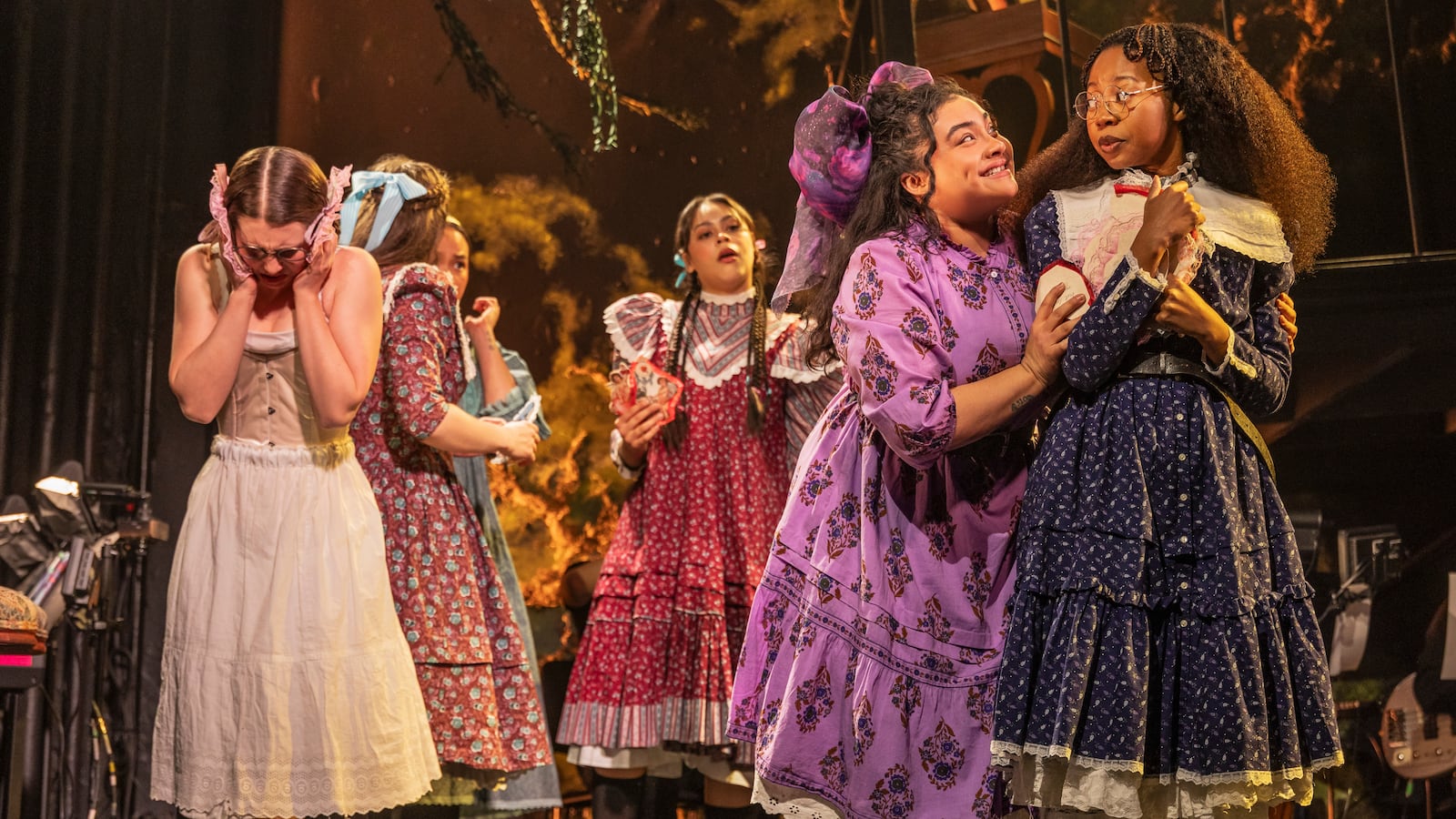
The premiere of a musical version, then, may reasonably elicit a mixture of anticipation and nerves. Sadly, the production, which just opened at Greenwich House Theater (booking to Jan. 17, 2026), is an ill-conceived, unfocused show that sends you running straight back to the panpipes.
On stage as on screen, it is St. Valentine’s Day, 1900. Three pupils and one of their teachers from Appleyard College for Young Ladies, a rural girls-only private school, go missing during an afternoon sojourn to a doom-emanating huge rock. (One of the pupils is later found.)
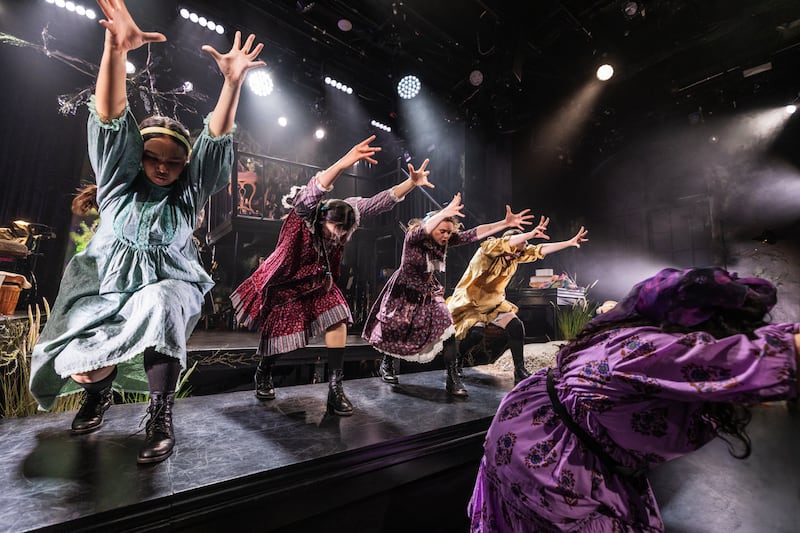
A stew of repressed passions and bigger themes—the nature of time, childhood, love, marriage, same-sex desire, and female destiny—marinate in the stifling heat surrounding the corseted young women as they head into the wilderness. The film poses a central question—“What happened?”—with the added tease of so much being left unknown.
At the rock, all the worn wrist-watches mysteriously stop at noon, leaving the group unmoored from time (in the first year of a new century, on a day dedicated to love and passion). It’s a film of gauzily long looks, gloves and corsets being loosened, and then the glassy weirdness of the girls’ disappearance—as if pre-ordained or willed by unseen forces and almost embraced by its victims who disappear off the face of the earth. So much is left unclear and unsaid: Picnic at Hanging Rock is a wonderfully bizarre, multi-interpretive canvas.
The stage show takes an uncertain sledgehammer to all that ambiguity, featuring endless songs about feelings that cannot be named, events that can never be known, and passions that can never be voiced and reciprocated. It’s all very unspecific and repetitive. One song sees the rock itself pondered as an annoyingly silent participant. Why can’t it speak? (Well, as some of the girls note, y’know, it’s a rock.)
Speaking of the rock: where is it? Sure, a big rock might be hard to configure on a compact off-Broadway stage, but equally its scale and implacable grandeur—and the story it is central to—is inadequately conveyed by some little stony outcrops on the stage, with badly lit trees and branches as a dull background.
On occasion, characters stare out into a starkly-lit audience as if the rock were among us or we ourselves were it. The rock in Picnic at Hanging Rock may not speak—although it could, there’s a wild Little Shop of Horrors-esque idea, you’re welcome!—but it is a major character. Opting for total rock-invisibility is a bizarre choice.
The plot and characters are equally muddled, with a run-here, run-there, run-anywhere brand of direction that reveals the show hasn’t quite figured out what to do after the girls disappear, or how to recast or progress the film’s open frame of reference. Instead, it hits the main plot points while frustratedly banging its head against all of Picnic’s familiar mysteries. (Important note: this was the show’s second New York performance, so maybe it will evolve over time.)
Some positives: Gillian Han brings a composed poise to the inscrutable, universally desired Miranda, while Sarah Walsh as Sara embodies the intense, futilely-directed desire her character feels for Miranda. The wry, commanding Kaye Tuckerman is excellent as lesbian-coded maths teacher Miss McGraw, whose languorous butch charisma could power her own show. Erin Davie as head teacher Mrs. Appleyard is an appropriately stiff-backed rules enforcer, and Marina Pires the school’s beatifically kind French/dancing teacher.
One of the show’s better songs, “Doom,” lays out the narrow marital and professional destinies girls in that era might expect as they progress to adulthood.
The musical, directed by Portia Krieger, stays mostly faithful to the source material, bar the significant conversion of the character of Albert (Bradley Lewis) to an indigenous character, who—still paired with the English male character of Michael (Reese Sebastian Diaz) as two mysterious male interlopers—talks about the presence and absence of indigenous people, and pointedly calls Hanging Rock “Ngannelong,” as it is known by its traditional language groups.
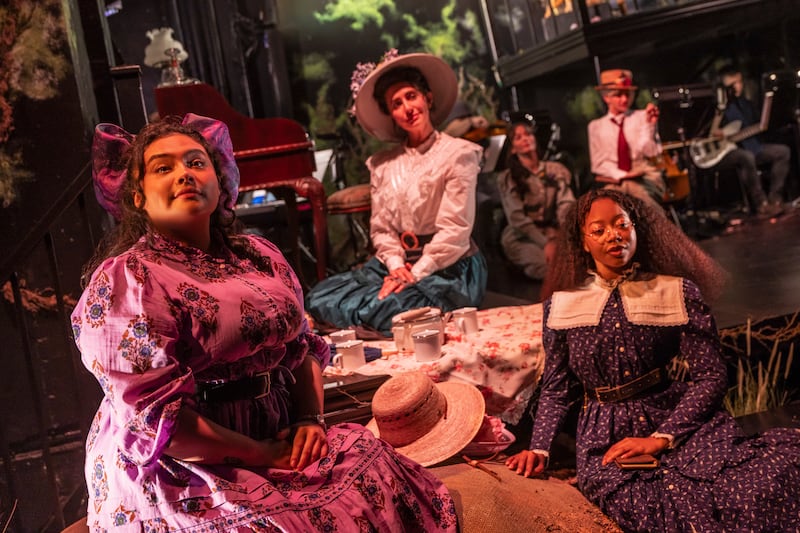
But Albert and Michael are oddly positioned and plotted in the show (indeed for a minute I thought we were headed down a “Brokeback Hanging Rock” road with them both).
The musical becomes even weirder when confusingly illustrating significant story moments, in what later happens to Sara and Mrs. Appleyard; and how the men become enmeshed in the girls’ search. The book and film’s juiciest material is variously siphoned away and blurred in the staging.
With something as distinctive as Weir’s Australian New Wave classic as such a persistent shadow, adapting Picnic at Hanging Rock is an inevitably challenging proposition, and this musical seems unsure how to meet it. So it’s surprising—in a good way—that a concluding company number led by Han’s Miranda is the best in the show, indeed a standout of the theater year.
That it fires up so impressively and unexpectedly right at the end of such a disappointing musical is yet another mystery we can attach to Picnic at Hanging Rock.