“It’s really hard for me to remember specific stories to tell you,” Ringo Starr said as he examined the back cover of The Beatles’ revolutionary 1965 album, Rubber Soul. Eyeing the photographs and list of songs—“Drive My Car,” “Nowhere Man,” “Michelle,” “If I Needed Someone,” “In My Life”—he paused.
“Well, what I do remember is that we’d just come back from America,” Starr added. “We only had a few weeks to make this. I don’t remember the music being different, at least at the time, but we were different.”
By October 1965, the Beatles had been on a three-year, non-stop rollercoaster of fame unlike anything that had come before. They’d conquered the U.K. and Europe, Australia and, of course, America, made two blockbuster films and released five albums and a stack of hit singles that had already taken them from “Love Me Do” and “She Loves You” to “Yesterday” and “Help!”
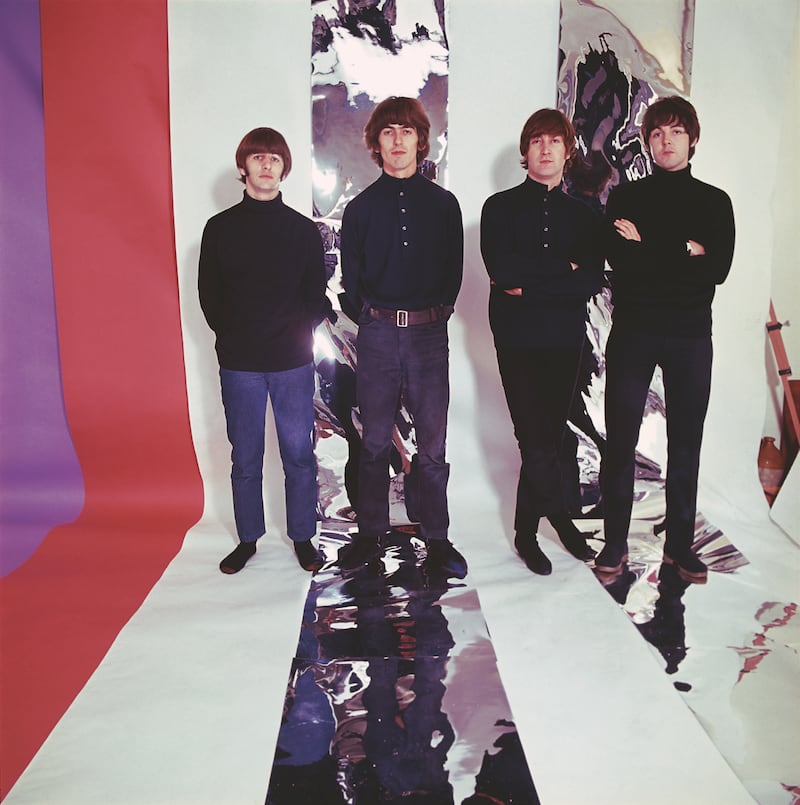
But Starr is right, everything they’d experienced had changed them as people. Remarkably, with Rubber Soul, which they began recording that October, they seemed to pour it all back into their music.
The creative evolution—from “Love Me Do” to what was to come on Rubber Soul—was remarkable. And on top of it all, the album and double Number One single (“Day Tripper” and “We Can Work It Out”) were made as a contractual obligation.
“I loved that Rubber Soul album a lot,” The Beach Boys’ Brian Wilson told me in 2016. “I thought it was fantastic. When I heard it, it made me want to write an album. I thought, ‘I want to write an album just as good as Rubber Soul.’ So, I walked to the piano and started writing ‘God Only Knows’, and then Tony Asher came over the next day and wrote the lyrics with me.”
The Byrds’ Roger McGuinn was equally inspired.
“I loved it, it was wonderful music,” McGuinn told me in 2019. “It sounded kind of Byrds-y, and I just went, ‘Wow. This is really cool.’ I loved what they were doing. It was after they’d talked to Dylan, and he’d kind of scolded them about not saying anything [with their songs]. So, I think these songs had to say a little more than they had been with, like, ‘I Want to Hold Your Hand’ and ‘She Loves You’.”
“Rubber Soul inspired Pet Sounds,” Wilson added. “It was quite exciting. I got into it and really produced my head off.”
In fact, more than 60 years later, it’s clear that Rubber Soul, now available in remixed and expanded editions on a new box set, was a sea change in popular music.
Although 1966’s Revolver, and of course Sgt. Pepper’s the following year, made the pop album a respectable art form, Rubber Soul first kicked down the door and ushered in serious discussion about the album as a proper listening experience.
The Beatles’ sound had evolved, too.
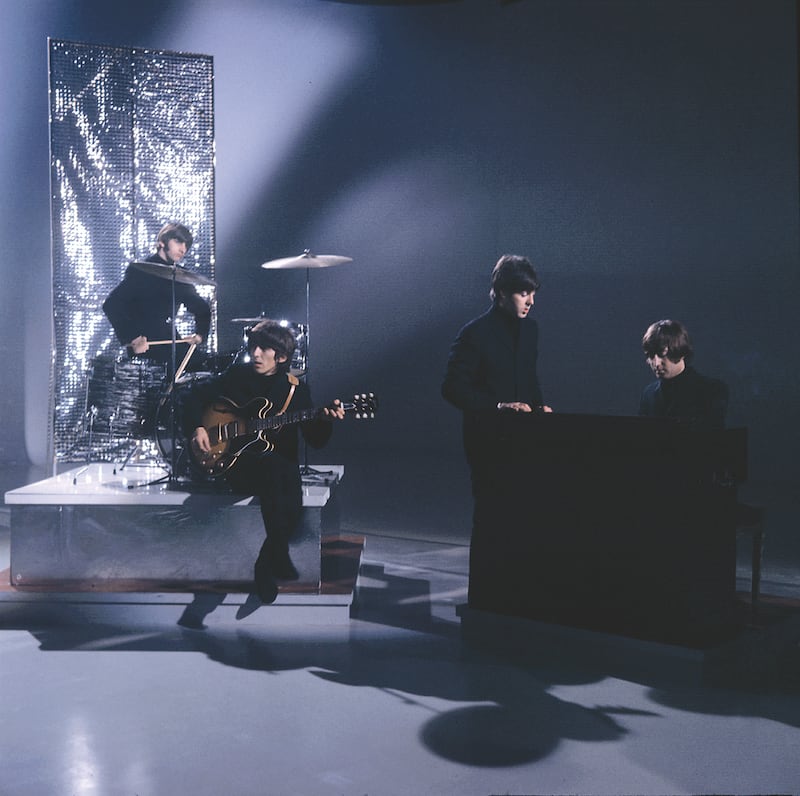
As McGuinn noted, meeting Bob Dylan, whom all four Beatles regarded highly, and his challenge to up their game with regard to the subject matter of their songs, had a profound impact on Paul McCartney and George Harrison, but most especially on John Lennon, whose writing turned sharper, more introspective and funnier on Rubber Soul, perhaps most notably on “Norwegian Wood (This Bird Has Flown).”
They’d also moved away from the Motown-influenced R&B that had energized their early records and had embraced the cooler, harder-edged soul music coming out of STAX Records in Memphis.
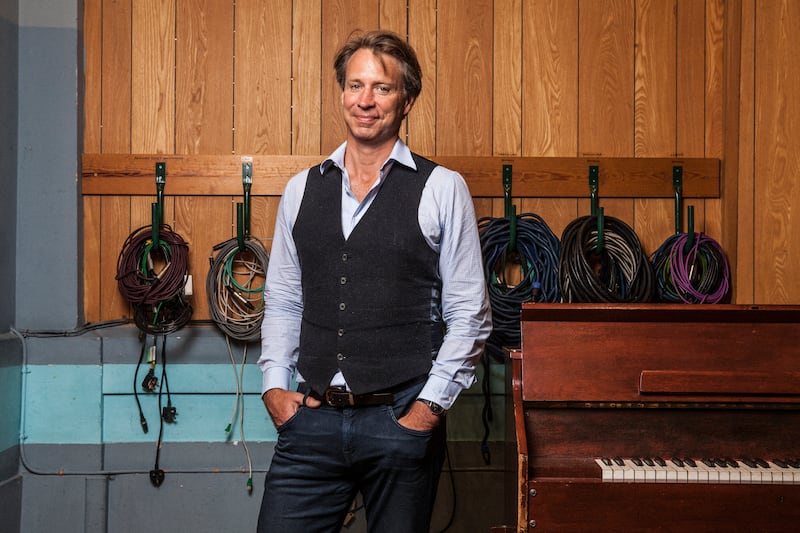
“They were re-outfitting themselves, in a way,” explained historian Kenneth Womack, who has written several Beatles-related books, including the must-have, two-volume biography of producer George Martin. “Listen to ‘Drive My Car’. The input may be Memphis and STAX, but the output is Paul McCartney creating a new voice to sing the song with, and then easily reverting back later to the sweet voice we’re all familiar with on ‘Michelle.’”
“Meanwhile, on ‘Drive My Car’, George Harrison’s lead guitar is both mimicking those STAX records and extending forward,” he continued. “It’s just absolutely remarkable how chameleonic they are and how unbelievable their chemistry is. Plus, their playing is rarely better than it is on Rubber Soul.”
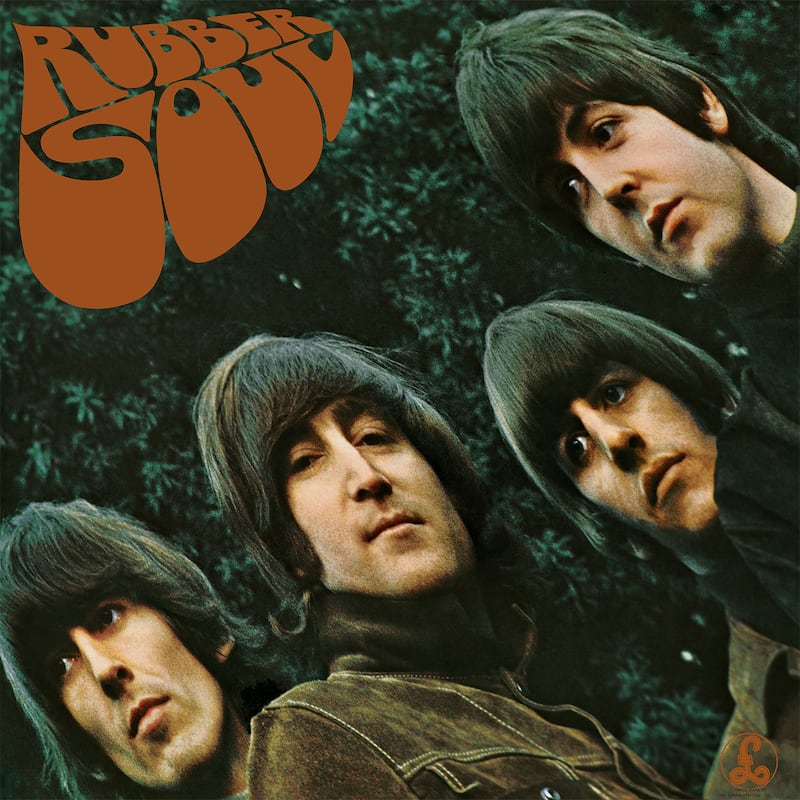
It boggles the mind, too, to think that the Beatles were all between 23 and 25 years old at the time.
“It’s staggering in the sense that they made this virtually during their time off; their vacation before they went out on the road again,” said Womack.
Earlier in 1965, after filming and recording the album that accompanied the film Help!, the Beatles undertook a massive tour of the United States that kicked off at Shea Stadium in New York in front of nearly 56,000 fans. The band had taken a few weeks off—to relax, but also to come up with material—before recording Rubber Soul in a month, just in time for the Christmas market.
“If you look at the diary of the Beatles, it’s just fascinating,” added Giles Martin, the Beatles’ go-to producer for their archival releases. “You just look at it and think, ‘When did they record?’ I remember looking at it and thinking that it was just completely bonkers.”
“And they managed to fit in one of the greatest albums ever made,” Womack emphasized. “It’s a testament to how good they were, because they made it at breakneck speed, in just 17 sessions.”
“It didn’t matter what was going on, because once the count-in happened, we all gave everything,” Starr recalled. “We could read each other’s minds. And being in the studio, being in a band, things can happen.”
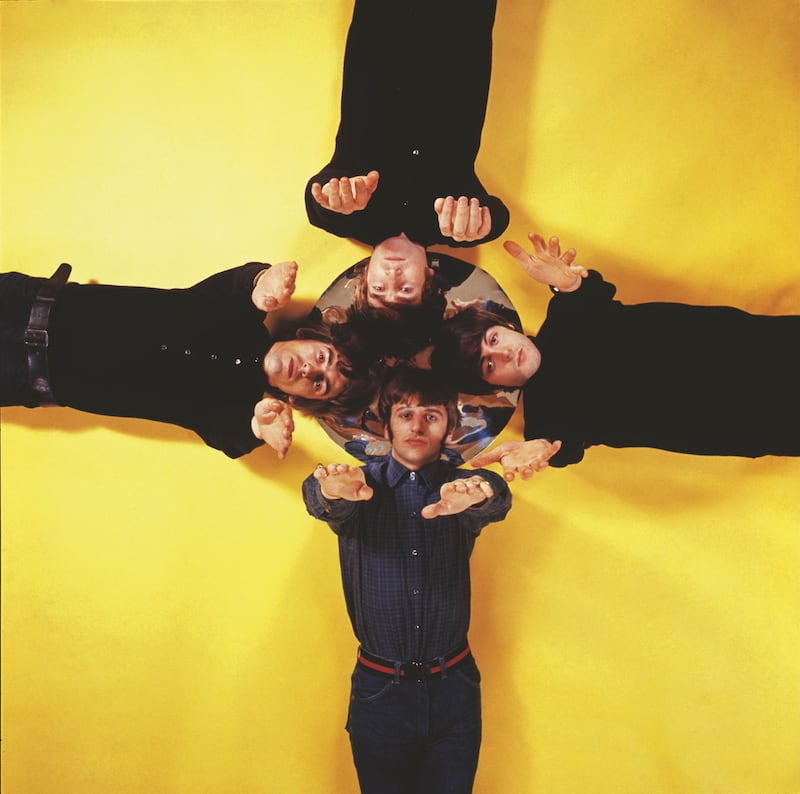
Rubber Soul also has one of the first truly great rock ’n’ roll album covers, a happy accident that happened when photographer Robert Freeman showed the Beatles slides of the album photo shoot on a 12”x12” placard, and it tipped, elongating the image in an almost unsettling way.
“It opened the floodgates,” John Kosh, the legendary album designer, who also worked with the Beatles, says. “When we saw it—and later Revolver and Sgt. Pepper’s—we knew that now it was the recording artists who had control rather than the art departments at the record companies. Because before that, you might be getting a classic album, like the Beach Boys’ Pet Sounds, but what a dreadful cover. After that cover, we knew we had control, and we could demand things like a glossing here or an insert there.”
But of course, most of all, the new box set is an excuse to experience the Beatles’ timeless music anew, and it delves remarkably deep into the Rubber Soul sessions, especially considering that most rehearsals and unused takes were recorded over back in 1965, and even includes Lennon and McCartney writing demos, including “Little Girl,” a song sketch discovered decades later by Sean Ono Lennon.
“It really begs the question,” said Womack, “when are we gonna get everything? Because that’s what that’s what we need at this point, is the whole kit and caboodle. I think Apple Corps needs to start moving towards some kind of online repository that people pay for that allows the diehards to hear everything, and for young people to really be able to explore their creative process, and hearing how these albums were made, because that clearly interests them, and this album just begs that question.”