The Bonkers Horror Movie Set to Smash Melania’s Box Office Flop
“Evil Dead” and “Spider-Man” director Sam Raimi’s latest is a Rachel McAdams-led thrill ride.

Welcome to UNMISSABLE, the Daily Beast’s Obsessed’s guide to the one thing you need to watch today. Whether it’s the most gripping streaming show, the most hilarious comedy, the movie which you’ll never forget, or the deliciously catty reality TV meltdown, we bring you the real must-see of the day—every day. Sign up for our daily UNMISSABLE newsletter now.
That Sam Raimi hasn’t made a non-franchise film in seventeen years isn’t just a sorry commentary on the IP-infatuated state of the industry—it’s a criminal waste of one of Hollywood’s most singularly dynamic directors.
Consequently, it’s a major victory and thrill to have him back at the helm of an original gonzo affair with Send Help.
A tale of misogyny, survival, and rebirth through vicious individualism, it’s a joyous return to form for the Evil Dead auteur, whose no-holds-barred verve is equaled by that of Rachel McAdams as a put-upon cog in the corporate machine who gets the chance to prove her rugged worth.

Rachel McAdams.
Brook Rushton/20th Century Studios
The story of a calamity (and its aftermath) is debuting on the same weekend as an all-but-guaranteed cinematic disaster. Namely, Melania: the Brett Ratner-directed Trump propaganda piece that Jimmy Kimmel joked would have been better off with this film’s title.
Send Help (in theaters now) holds a knife to the throat of big-business boys’ clubs through the plight of Linda Liddle (McAdams). An awkward, dorky employee in the “strategy and planning” department, Linda lives alone with her bird, compulsively eats tuna fish sandwiches, and has credit for her work stolen by Donovan (Xavier Samuel), a smarmy suit who immediately hits it off with their new boss Bradley Preston (Dylan O’Brien), a nepo baby assuming CEO duties from his father.
Sign Up for Our Obsessed Newsletter
By clicking “SUBSCRIBE” you agree to our Terms of Use and Privacy Policy.
Since Bradley’s dad had promised her a promotion, Linda eagerly strikes up a conversation with O’Brien’s bigwig. Yet the gob of tuna in the corner of her mouth repulses the executive—a sequence shot in exaggerated ultra-close-up for maximum queasy hilarity—and he promptly decides to pass her over and hand the position to Donovan.
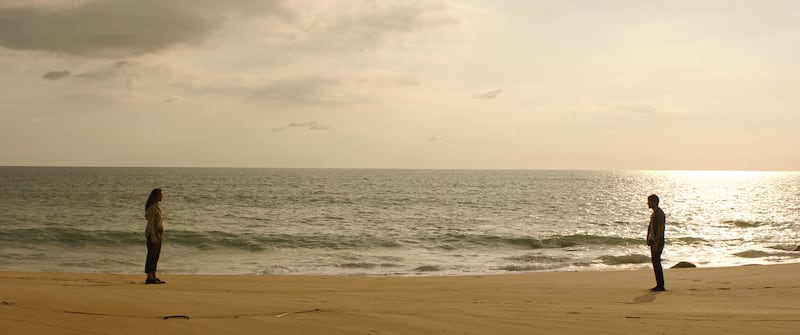
Rachel McAdams and Dylan O'Brien.
20th Century Studios
In spite of her outrage, Linda is placated by an offer to join her male colleagues on a trip to Bangkok, and that winds up being fortuitous when their private jet flies headfirst into a horrific storm that puts everyone’s lives in jeopardy. Raimi has great fun throwing his cretinous characters around the cabin, and after they demonstrate their unabashed sexism, he gives them their comeuppance with droll R-rated flair.
Linda survives the ensuing ocean crash and washes ashore on a deserted island, shaken but uninjured. The only other person to make it out alive is Bradley, whose leg is badly hurt and who’s cared for by Linda, a Survivor enthusiast who’s preternaturally cut out for these circumstances.
Quickly smashing a rock to fashion a blade with which she cuts down trees, shears palms, and halves coconuts in order to construct a shelter and a rainwater-collecting apparatus, Linda is a nerd with outdoors-y skills and spirit, and her ingenuity keeps the two fed, hydrated, and safe on the beach.
McAdams has always been a deft actress whose fierceness and sly sense of humor make her a comfortable fit in any genre, and from moment one, her Linda is an endearingly empathetic punching bag. Once her protagonist’s life takes a Cast Away turn, however, the star expertly evokes her gradual transformation from doormat to badass—a blossoming that peaks with her discovery of a refreshing waterfall.
Even in a career full of superlative performances, McAdams is at her best as Linda, her goofiness belying her cleverness and proficiency, and her cheeriness colored by a no-nonsense streak that mounts as she realizes she’s no longer constrained by the real world’s unfair rules.
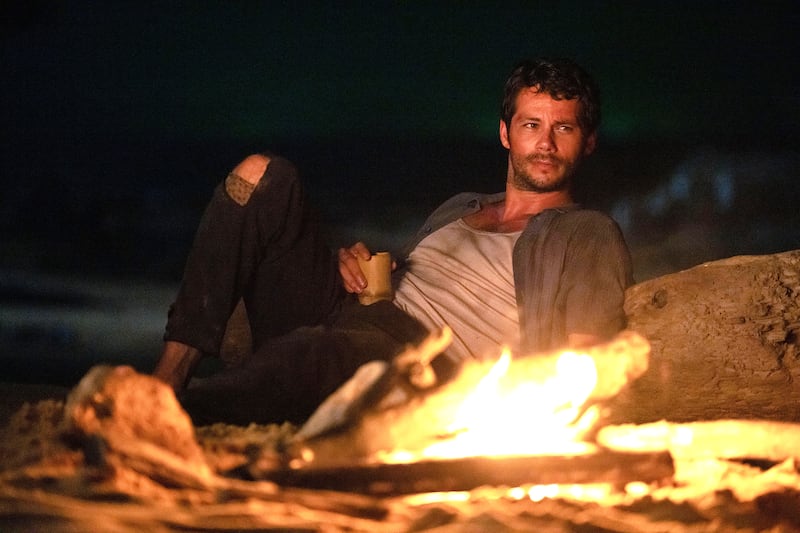
Dylan O'Brien.
Brook Rushton/20th Century Studios
O’Brien is a suitably repugnant adversary in Send Help, his Donovan an unabashed chauvinist whose condescension and cruelty are matched by his entitled arrogance. Those qualities don’t get him very far on his new island home, and after Linda demonstrates that she’s in charge—by leaving him alone, immobile and helpless, for a day—he attempts to change.
Or, at least, he pretends to, as Damian Shannon and Mark Swift’s cunning, character-driven script initially leans into expectations about the duo’s relationship before dropping various hints that these two may not be what they appear. Suggesting, on multiple occasions, that its audience’s sympathies are misplaced, the film is a cagey beast that consistently keeps one on their toes.
Raimi loves whipping his camera this way and that and indulging in comically over-the-top gore, and Send Help provides him with numerous opportunities to do both, whether it’s a boar-hunting sequence featuring shots from the beast’s POV and a pitch-perfectly gross conclusion, or a tense showdown between underling and superior in which the former threatens to get downright nasty with a knife.
At the same time, though, the director never prioritizes style over content; his focus remains, throughout, on Linda’s frustration and fury at her marginalization, and euphoria over her newfound situation—and, with it, her desire to stay put, no matter the potential objections of her island-mate.
McAdams and O’Brien’s yin-yang chemistry energizes the proceedings, and regardless of a temporary détente rooted in Donovan’s apparent admiration for Linda’s capabilities, the material grows more volatile with each passing day.
Courtesy of ace cinematographer (and frequent Raimi collaborator) Bill Pope, Send Help resembles an honest-to-goodness movie, its clean, evocative, and beautiful compositions—when compared to most current theatrical offerings—striking the eyeballs like veritable rays of sunshine. Bob Murawski’s prickly editing and Danny Elfman’s brisk score are additional components of the film’s craftsmanship, lending the action its amusing intensity.
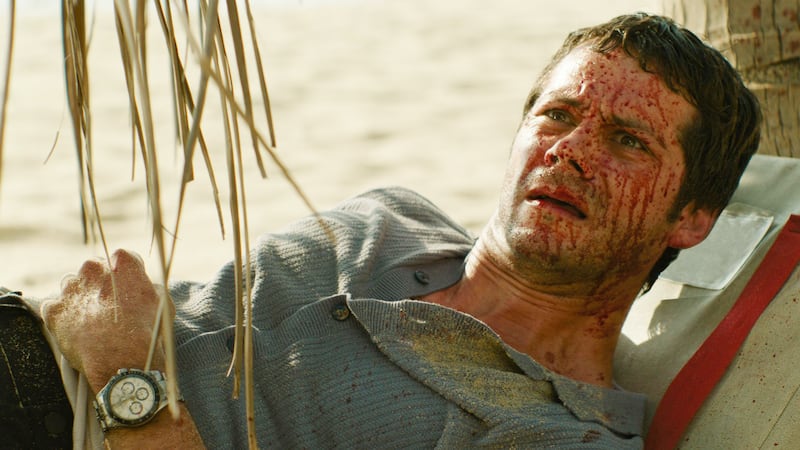
Dylan O'Brien.
20th Century Studios
Send Help follows in the footsteps of countless B-movies with social issues on their minds and blood on their hands—the differentiating factors being Raimi’s exceptional behind-the-camera artistry and McAdams’ ferocious and nuanced lead turn. Between its constant physical and emotional violence—and the recurring sight of its characters stained in crimson—there’s little doubt that things are destined to end in gnarly fashion.
Shannon and Swift’s confident and canny writing, however, ensures that the mayhem surprises right up to its climactic confrontation, which takes place in an unexpected location and underlines the narrative’s perspective on contemporary gender warfare.
A two-hander that plays like a clenched fist and boasts a wicked wit, Send Help is a January revelation—or, rather, it would be if not for Raimi’s superlative track record with such down-and-dirty undertakings. An antidote to the usual mainstream mush, and a particularly odious political “documentary,” it’s an ideal reason to venture out into the cold and to the nearest multiplex.

Got a tip? Send it to The Daily Beast here.
Register below to read this article for free or subscribe
to unlock unlimited access to The Daily Beast.
Monthly
$1
First month then $5.99/month
Annual
$35
First year then $59.99/year
Premium
$79
First year then $119.99/year
*Substack access provided by the next business day, using your subscription email. Choosing the Premium plan constitutes your permission to share your subscription email with Substack and your agreement to Substack’s Privacy Policy.
Already have an account? Sign In
Looks like you already have a subscription!
You're all set!
Thanks for subscribing.
Sign in or create an account
Login dialog
Loading comments…