Sugar’s first season hinged on the inanest of twists. However, with that cat now out of the bag, Apple TV’s series proves a far more confident and coherent sci-fi noir in its sophomore outing (June 19), using its loopy conceit to generate forlorn romanticism with a distinctly eccentric edge.
As far as rebounds go, it’s a shockingly successful one, thanks in no small part to its Oscar-nominated star Colin Farrell, who—freed from having to play coy about his character’s true nature—delivers a uniquely charismatic performance as a hard-boiled detective whose lonely alienation and existential fears are enhanced by his out-of-this-world origins.
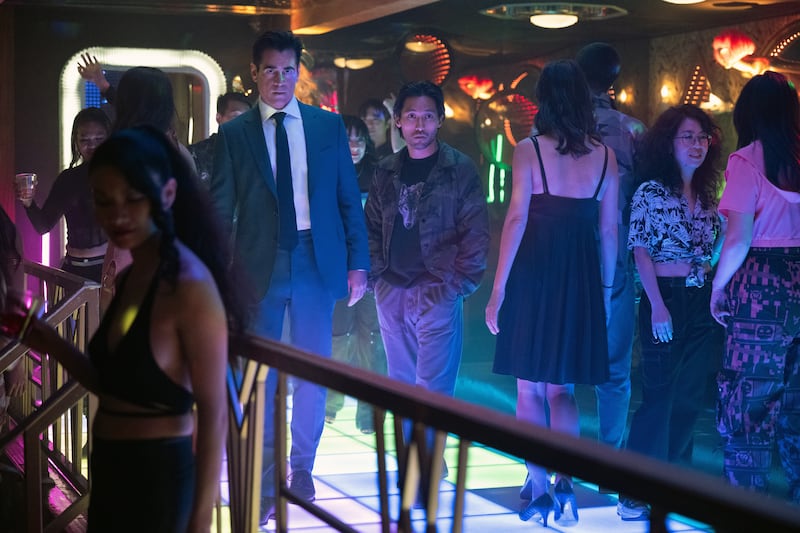
For those unfamiliar with its initial 2024 run, Sugar is about Los Angeles private investigator John Sugar (Farrell), who wears a collection of identical black-and-white suits, drives a swoon-worthy ’66 Corvette Stingray, adores classic crime cinema (which he bases his life and personality on), and works on missing persons cases because of his lingering trauma over the abduction (and possible murder) of his sister.
He’s also, as Mark Protosevich’s show revealed way too late in its first season, a blue-skinned alien operating clandestinely alongside fellow extraterrestrials. By the conclusion of its maiden chapter, however, they were all forced to flee the planet after their cover was blown.
So much of Sugar’s debut was based around concealing this extraterrestrial secret that it played as a laughable gimmick. Now capable of fully owning up to its protagonist’s interstellar backstory, the series is a considerably more comfortable genre hybrid, with Sugar’s outsider-dom cast as a byproduct of both his solo profession and galactic “immigrant” status.
Moreover, the private eye of-two-worlds condition is wholly in tune with a narrative rooted in dichotomies: the old and the new; the rich and the poor; movies and reality; and the Earthbound and the cosmic.
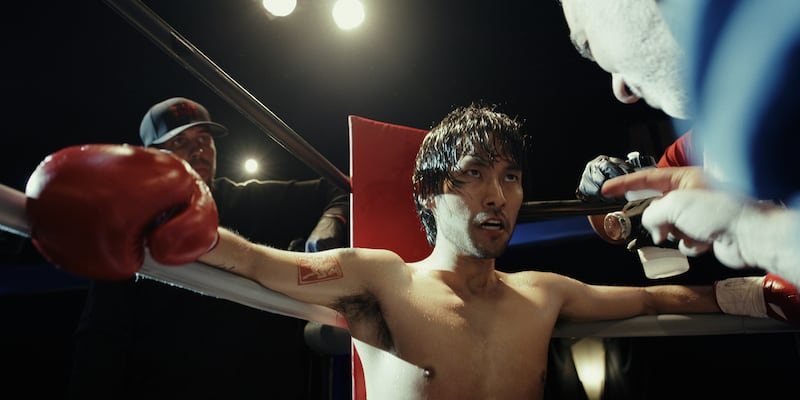
Having failed to acquire additional leads about his sister’s fate from comrade Henry (Jason Butler Harner), who implied that he murdered her during the course of a serial-killer spree, Sugar retreats to Los Angeles and promptly picks up a gig via Danny Moon (Pachinko’s Jin Ha), a professional boxer who wants his wayward brother Ji (Raymond Lee) tracked down.
Ji is a drug addict who’s been MIA for three days, and as befitting a show that self-consciously links its hero and his plight to that of TCM favorites—clips of which are constantly interspersed throughout the action proper—Sugar admits that searching for another lost sibling is “a bit on the nose.” Nonetheless, he takes on the assignment, even as he begins surveilling the home of a senator whom he thinks had a hand in outing his E.T. mates.
Early evidence indicates that on the night of Ji’s disappearance, he was at a local hospital, and Sugar’s snooping uncovers that he was wrapped up in criminal activity that may have gone south.
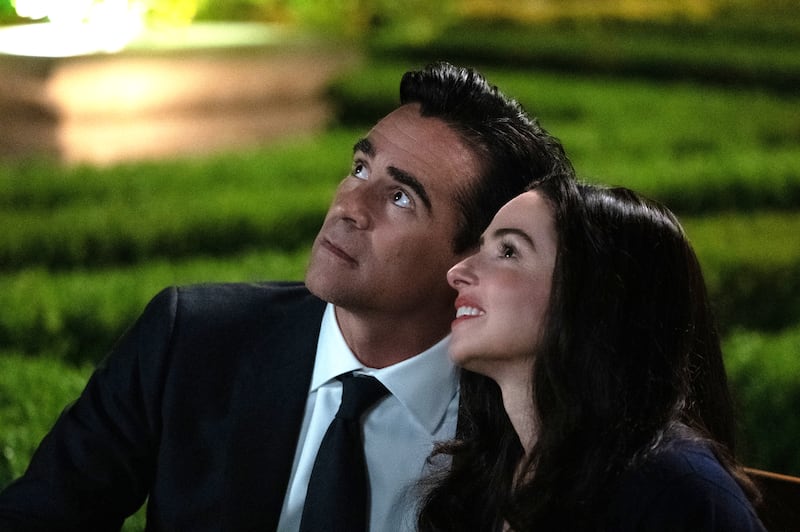
Sugar doesn’t waste time establishing this mystery, which is the catalyst for a much larger conspiracy, and by its conclusion, Protosevich’s tale turns out to be a rather clever science fiction spin on Chinatown and its natural resources-related plot. Before it divulges anything substantial, however, it follows Sugar as he hunts for clues, watches relevant black-and-white features in the hotel room where he lives, and strikes up a tentative relationship with fellow resident Charlotte Fischer (Laura Donnelly), whose sensual confidence marks her as a potential femme fatale.

Shadowy forces are conducting dastardly business behind the scenes in Sugar. Yet the most pressing thorn in Sugar’s side is Ray Vega (Tony Dalton), a sheriff’s deputy who appears to be knee-deep in a scheme involving illicit drugs and a hospital patient’s sudden death.
Dalton is all the more menacing for being so calm, cool, and collected, and he serves as an excellent antagonist for Sugar, whose similar composure and style make him a dapper throwback. Farrell and Dalton’s scenes together are the high points of this second season, infusing it with a moody tension that was frequently missing from last year’s Shyamalan-ish story.
Considering that Sugar has imagined himself in Humphrey Bogart-ish terms, and the show incessantly cops to its classic-cinema ancestry, it’s too bad that Sugar doesn’t do more with the idea that Farrell’s sleuth is actively engaged in acting. Still, its jazzy crosscutting, transitional fades, iris shots, and vistas of L.A. palm trees and glittering cityscapes give it a sorrowful SoCal dreaminess that gets under the skin.
Moreover, its focus on Sugar’s concern that his tenure on Earth is altering him—a fear of assimilation and transformation—taps directly into noir’s foundational fatalistic notion that inevitable doom comes from changing oneself and, also, from staying the same.
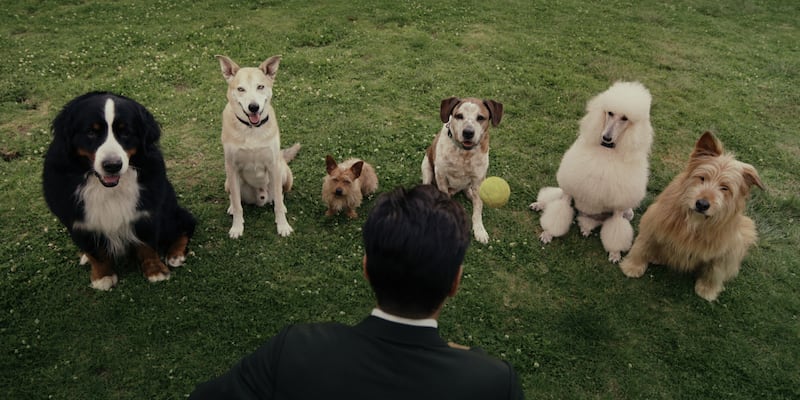
Protosevich’s series creates natural links between its alien-visitor conceit and its crime-movie inspirations, all while saddling Sugar with predicaments that call his mission, purpose, and identity into question. Without the need to hide his character’s true self, and with a soft, even-keeled voice that boasts just the right touch of childishness—suggesting that, for all his poise, he’s still a babe in these woods—Farrell is more at ease as the detective this time around.
Sugar helps its A-list headliner by underscoring his nagging estrangement in a variety of ways (such as having him repeatedly try to contact his outer-space brethren via an alien CB radio) while simultaneously granting him a sidekick in streetwise hustler Val (Sasha Calle).
Sugar’s formal devices can be over-employed, and there’s no escaping the fact that, as stand-alone figures, Danny and Ji are an underwhelming pair, with the former’s boxing career mainly designed to afford shout-outs to The Harder They Fall and its ilk. Even so, the material has an enticing wistfulness that’s enhanced by its cinephilia. And in its closing episodes, it proffers tantalizing answers to its biggest questions and, in the process, promises future mysteries that will further examine Sugar’s inner conflict between who he thinks he is and what he’s slowly becoming.
With its contrivances now out in the open where they can be evocatively and cannily exploited, there’s reason to be hopeful that this genre-bending affair has an even brighter future on the horizon—even if its protagonist seems preternaturally enticed by the darker side of his sunshiny milieu.