The Bear’s final season opens with rumbling thunder. Then comes a shot of green purée being gently smoothed out across a clean plate. That defining contrast between looming danger and calm, composed artistry remains omnipresent to the end in Christopher Storer’s Emmy-winning FX hit.
Set over the course of one momentous day and night, the show’s swan song (all episodes stream June 26) again revolves around the struggle for triumph in the face of catastrophe. And with a masterfulness that puts most of its small-screen compatriots to shame, it achieves a poignant grace that’s completely in tune with all that came before.
The zeitgeist may have slightly shifted its attention elsewhere, but this inimitable gem goes out on top.
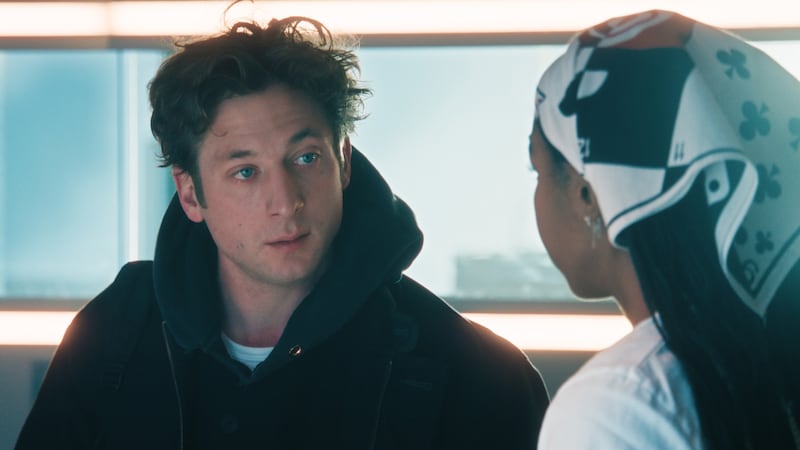
“No middle ground,” says Sydney (Ayo Edebiri) to Carmy (Jeremy Allen White) regarding the fate of their restaurant, The Bear, and all its inhabitants. That’s also been true of people’s feelings about The Bear, whose series-long transition from chaos and madness to tentative, difficult maturation has elicited divergent feelings from the faithful.
Storer’s culinary masterpiece embraces Sydney’s ethos in its conclusion, which picks up with its protagonists immediately after its preceding finale, in which Carmy announced his sudden retirement from the restaurant business and handed the keys to The Bear to Sydney and Richie (Ebon Moss-Bachrach), all as their benefactor Uncle Jimmy’s (Oliver Platt) doomsday clock reached zero, spelling the eatery’s apparent doom.
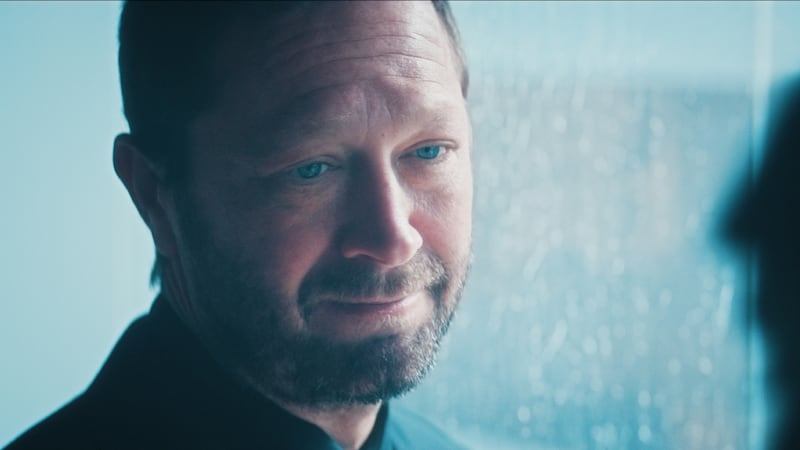
Things are no more serene as The Bear resumes, with a storm causing massive flooding and Richie, on the way to work, getting so distracted by thoughts of Mikey (Jon Bernthal)—cue brief flashbacks to last month’s stand-alone episode “Gary”—that he winds up in a car accident.
Aided by Christian Lundberg’s edgy electronic score, tension builds inexorably, with Sugar (Abby Elliott) dropping her infant off with her unstable mother Donna (Jamie Lee Curtis)—begging her for “zero weird”—and Tina (Liza Colón-Zayas) and Carmy converging at their on-the-ropes place of employment.
All the while, Jimmy frets to Computer (Brian Koppelman) and his right-hand man’s niece Cheese (Elsie Fisher) about his dire financial straits and the necessity of offloading The Bear, and Marcus (Lionel Boyce) and Luca (Will Poulter) drive through the morning rain, extolling the virtues of the McGriddle and, more generally, McDonald’s ability to make its food always taste the same.
“Consistency” is a virtue that’s persistently eluded these characters, and it’s seemingly no closer to being attained as they assemble, given that Sydney and Richie have decided to open for one last night. This despite the fact that they’re woefully low on ingredients, staff, money, and even cutlery and plates.
If that weren’t enough, the storm provides them with an additional migraine courtesy of burst pipes and massive leaks. Things are once more headed for disaster, and Carmy’s secret departure (he’s waiting for the right time to announce it to his compatriots) hovers over the proceedings like an additional calamity, destined to shatter this group at the moment they must stay connected.
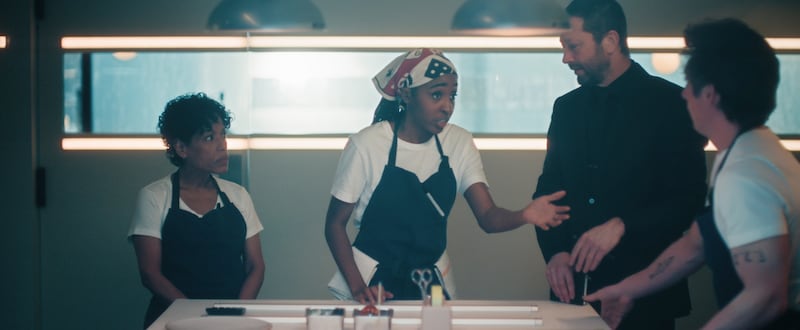
The Bear’s fifth go-round is a confined affair, taking place almost exclusively in and around the restaurant as Carmy and company wrestle with one setback after another. Storer piles on the obstacles, including power outages and a reservation app that perilously overbooks The Bear.
At the same time, though, he doggedly investigates his characters’ knotty individual and interpersonal hang-ups and frictions, all of which stem from insecurity, instability, grief, confusion, and longing. By now, we know these men and women inside and out—their failings, grievances, fears, talents, and hopes—and as it races through its last-hurrah tale, the series never loses sight of them as screwy, self-destructive, lovable people.
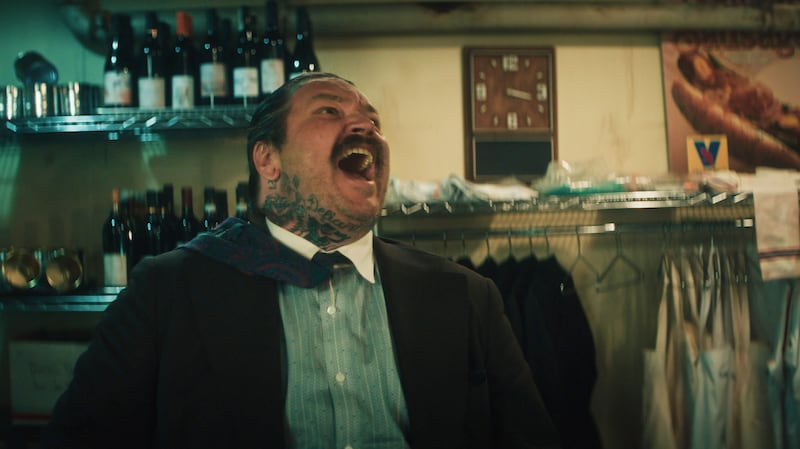
The quest for harmony, coherence, and control continues to be at the heart of The Bear, and Storer imagines it as a gauntlet that requires patience, understanding, and camaraderie that Carmy and his comrades desperately covet and yet can’t quite seize.
Storer is the rare writer/director/creator who approaches TV as an auteur would a film, his form not simply functional but evocatively wedded to the material at hand. As Carmy, Sydney, Richie, and the rest endeavor to pull off the impossible, his trademark anxious cutting and lens flare-embellished compositions capture their mania, fury, and deep, abiding love—for each other, the restaurant, and their shared dream—with restless beauty and exhilarating unease.
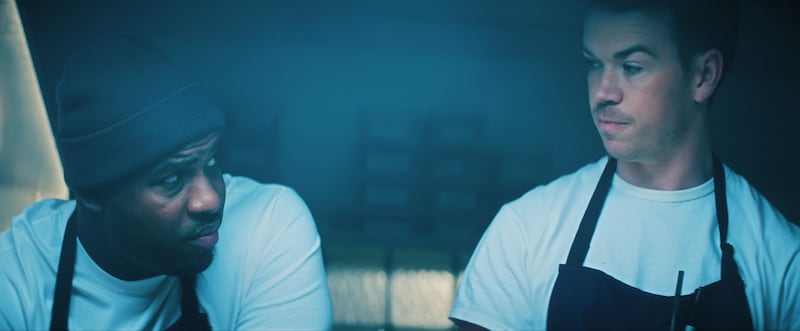
There’s a particular sort of euphoria that comes from a dining experience in which food, atmosphere, and presentation coalesce perfectly. The pursuit of that synchronicity is echoed by The Bear’s employees, who in myriad ways—be it Carmy and Sydney developing a new, healthier kitchen dynamic, or Marcus coping with his father’s attendance at the restaurant this evening—seek, above all else, unity.
That the show’s performances are top-notch is to be expected from a television cast that has no equals. Their nuanced and affecting turns are in total lockstep with the action’s simultaneously brash and intimate atmosphere, here epitomized by Richie’s command that, in order to succeed, they have to pursue not “stabilization” but “maximation”—a go-big-or-go-home attitude that’s fused with their need for inner and outer peace.
FX only provided critics with seven of The Bear’s closing eight episodes, so the question of how it ultimately wraps up is, for now, unknown. Nonetheless, with its penultimate installment, it hits the very high notes to which it’s long been building.
For all his story’s rage, passion, and anarchy, Storer has a fundamentally optimistic view of his misfit characters, who strive with tremendous effort to overcome the personal and professional hurdles in their path. While the series initially garnered fame and accolades by miring itself in a tiny, self-contained hell, it’s always been scratching and clawing its way into the light. And thanks to both expertly drawn characters and direction that’s as adept as anything on TV, it has charted that process with invigorating edginess and moving tenderness.
Regardless of its fictional namesake’s fate in the as-yet-unseen finale, The Bear has been one of the medium’s true 21st-century tour de forces. It may be closing up shop, but it won’t soon be forgotten.