
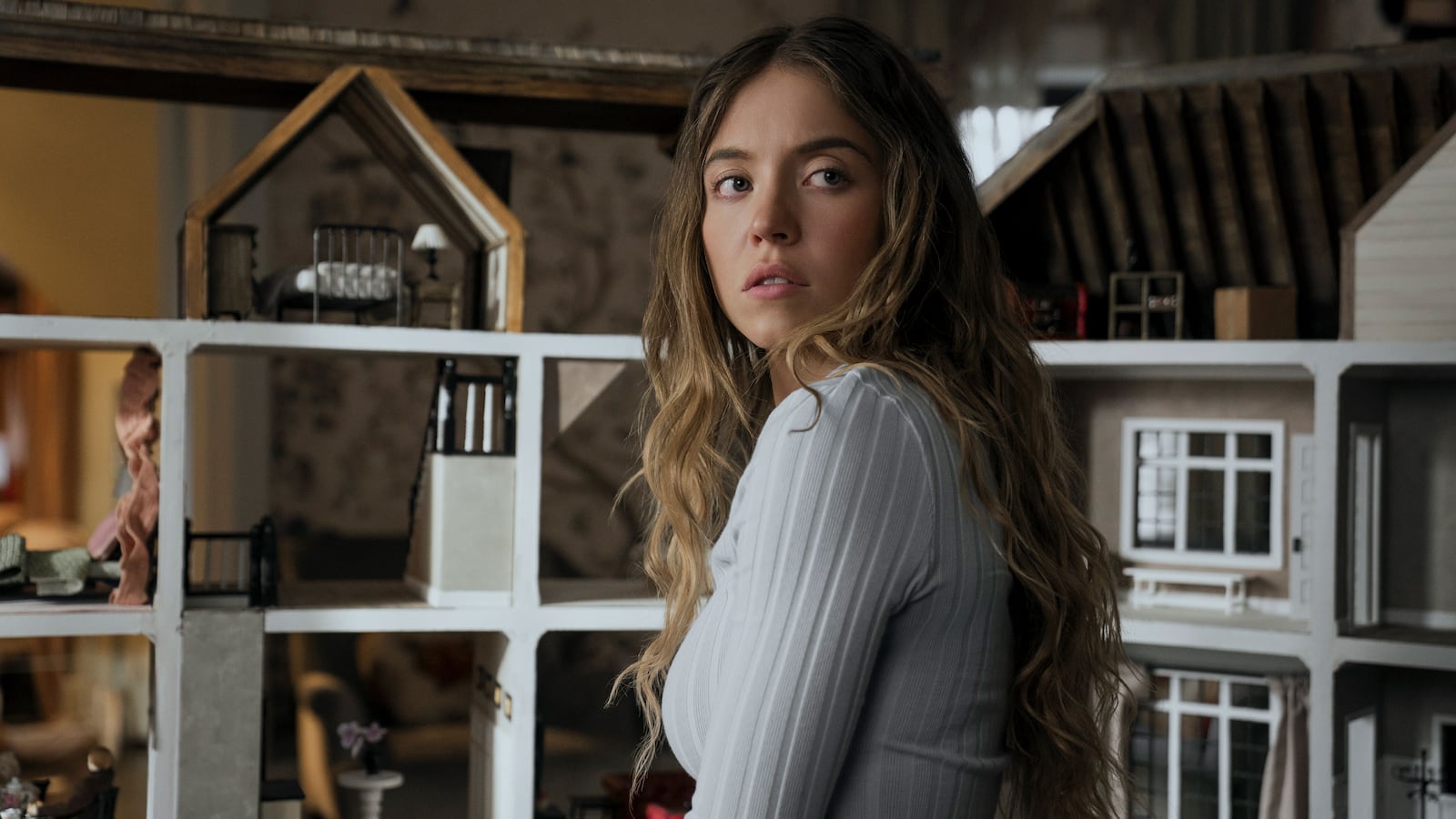
Thanks to a combination of ceaseless red carpet photos, magazine profiles, and ad campaign controversies, Sydney Sweeney is arguably the year’s most ubiquitous media presence. Yet since 2023’s Anything but You, she’s more or less fizzled out on-screen, courtesy of misfires like Madame Web, Echo Valley, and her wannabe-Oscar contender Christy.
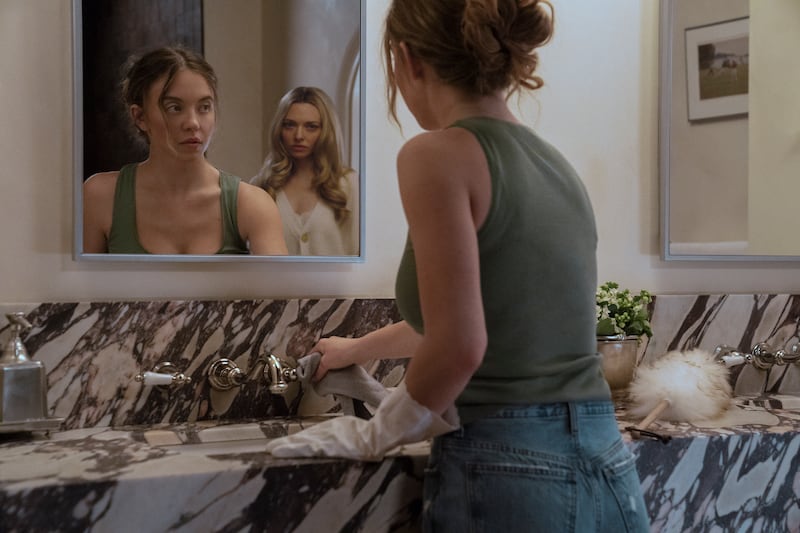
The Housemaid (Dec. 19, in theaters), her latest attempt at rekindling some cinematic heat, pairs her with Amanda Seyfried (herself currently vying for award-season huzzahs with The Testament of Ann Lee) in a story about two women engaged in a bonkers bout of suburban warfare. Fortunately, it proves a deliriously amusing vehicle for both glamorous, charismatic actresses. It won’t win Sweeney or Seyfried any prizes, but it’s the sort of hysterical thriller that, in the ’80s and ’90s, was a theatrical staple.
Millie (Sweeney) arrives at a gated estate to apply for a job as a full-time housemaid, and she’s immediately greeted by the woman of the house, Nina Winchester (Seyfried), with cheery, disarming enthusiasm. Touring the palatial estate, Millie is wowed, such that when she’s shown the cramped attic room that would be her living quarters, she doesn’t balk, dubbing it (and, by extension, the gig as a whole) “perfect.”
That’s a wholly reasonable assessment by Millie, whom director Paul Feig (Another Simple Favor) reveals is sleeping in her car and washing herself in public bathrooms. As Sweeney’s protagonist explains in voiceover, her impressive résumé and the bookish eyeglasses she wore during her interview were lies, designed to obscure a dark past she’d prefer to keep hidden.
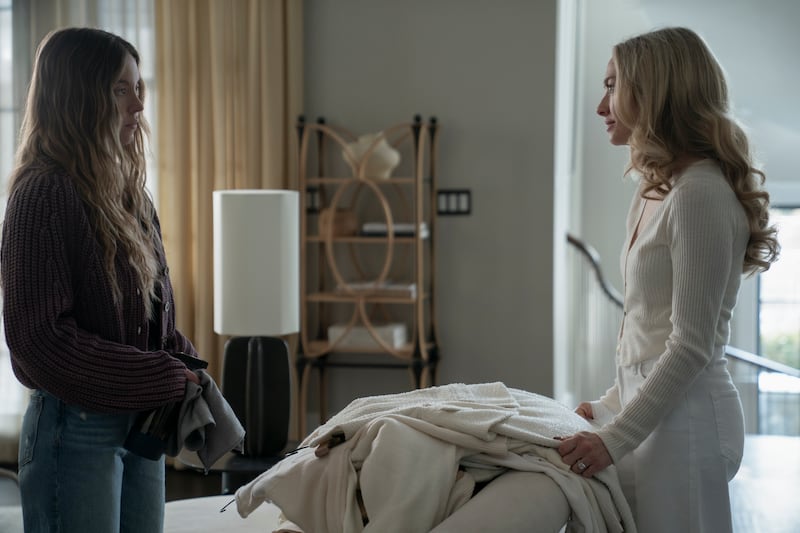
Despite assuming she’ll never hear from Nina again, Millie is promptly hired and moves in the following afternoon. Later that evening, she meets Nina’s frosty young daughter Cecilia (Indiana Elle), and her hunky husband, Andrew (Brandon Sklenar), a tech mogul with a linebacker’s frame and a mega-watt smile.
It’s no shock that Millie begins dreaming about being taken into Andrew’s strapping arms. Though she does her best to push those thoughts away, they’re consuming enough to make her ignore the fact that her room boasts merely a tiny triangular window that doesn’t unlock and a single door with a deadbolt. Additionally distracting her from thinking too hard about her circumstances is Nina, who welcomes her with open arms and then instantly starts acting like a loon, as when she tears her kitchen apart—smashing plates and slamming drawers and cabinets in a screaming-mad frenzy—because she can’t find her notes for a PTA speech and blames Millie for the mishap.

Something is amiss in the Winchester residence, and The Housemaid—written by Rebecca Sonnenshine, based on Freida McFadden’s book—isn’t subtle about establishing an ultra-ominous mood, such that the sudden appearance of groundskeeper Enzo (Michele Morrone) in Millie’s path is as apt to garner a laugh as a gasp.
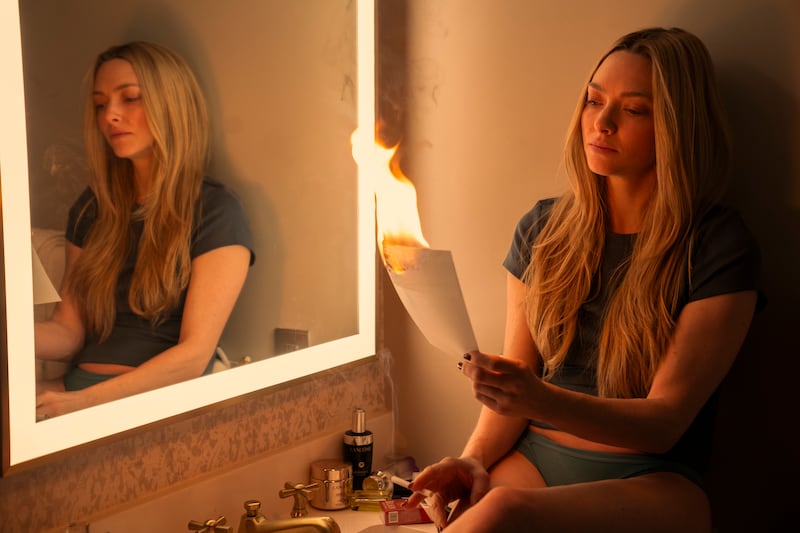
The more Millie ingratiates herself in the family’s life, the less normal things seem, be it Cecilia saying at the dinner table that “juice is a privilege” and playing with a creepy miniature dollhouse version of their mansion, or Nina ordering Millie to pick up the tween from ballet class (without providing an address), only to be told that Cecilia is actually having a sleepover with a friend—and being denigrated to her face by a fellow haughty mother.
Feig laces his malevolent vibe with hints of underlying madness, most of it emanating from Nina, who quickly transforms into a balls-to-the-wall psycho, playing head games with Millie that involve scoldings, punishments, and threats of termination. Seyfried is a hoot as the schizophrenic Nina, whose frightening and bewildering behavior only makes sense to Millie after a fellow housemaid informs her that her unhinged employer spent considerable time in a psych ward.
Just as perplexing is Andrew’s almost superhuman patience with, and compassion for, his tantrum-throwing, vitriol-spewing wife—qualities which have earned him, in the eyes of Nina’s bitchy and covetous friends, a reputation as a “hot saint.”

Sklenar plays Andrew as a marital ideal straight out of a romance novel, and The Housemaid underscores his perfection by noting that his most annoying trait is (correctly) talking people’s ears off about the greatness of Stanley Kubrick’s Barry Lyndon.

Nonetheless, there are secrets galore lurking below The Housemaid’s surface. While the first of those concerns Millie, it’s not difficult to ascertain that everyone has a skeleton or two in their closet. The nature of those surprises, however, isn’t completely easy to predict, as Sonnenshine’s melodramatic script teases playfully, especially in a first half that lights multiple fuses with pyromaniac-grade gusto until everything is primed to explode.
Discussing further plot specifics would kill the lunatic joys of The Housemaid, which works itself into a lather (complete with sultry eroticism) that’s compelling precisely because it’s a touch goofy. Feig’s film shares DNA with Single White Female, Fatal Attraction, and 50 Shades of Grey. Yet it charts its own twisty-turny course, stacking up bombshells about its three main characters—whose warped personalities and conduct are the byproduct of their distinctive histories—and giving its leads plentiful opportunities to go over-the-top, albeit in different colorful registers.

The Housemaid’s early going is wild pulp, so it’s somewhat disheartening that, in its third act, it takes a detour into noble, you-go-girl territory. There’s nothing wrong with what Feig and Sonnenshine have to say about male-female dynamics, but there’s a dragginess to a late key sequence that casts the material in simpler and more straightforward rah-rah terms.

Having commenced with off-the-wall bedlam, the director’s latest succumbs to easy-bake answers that are designed to comfort (and inspire) rather than confound and unsettle. It becomes a movie that wants to make its audience feel good, which is far removed from what its cuckoo opening initially suggests.
Still, if its conclusion is unduly neat and tidy (as well as distended, compromising some of its deranged energy), The Housemaid ends on a hilariously corny note that indicates it might spawn sequels juiced with Ms. 45-via-I Spit on Your Grave-style righteous fury. That alone makes it a sinister holiday sweet.