Christopher Nolan’s cinema has been one of escalating enormity, and that evolution reaches its apex with The Odyssey, an adaptation of Homer’s iconic adventure classic that’s epic in every way.
A rousingly gargantuan action extravaganza that was shot entirely in IMAX (the first of its kind) and boasts a mournful and self-critical soul, Nolan’s follow-up to Oppenheimer is in many respects a kindred spirit to that Oscar-winning predecessor, even though its arresting blend of might and magic provides far more visceral, larger-than-life thrills.
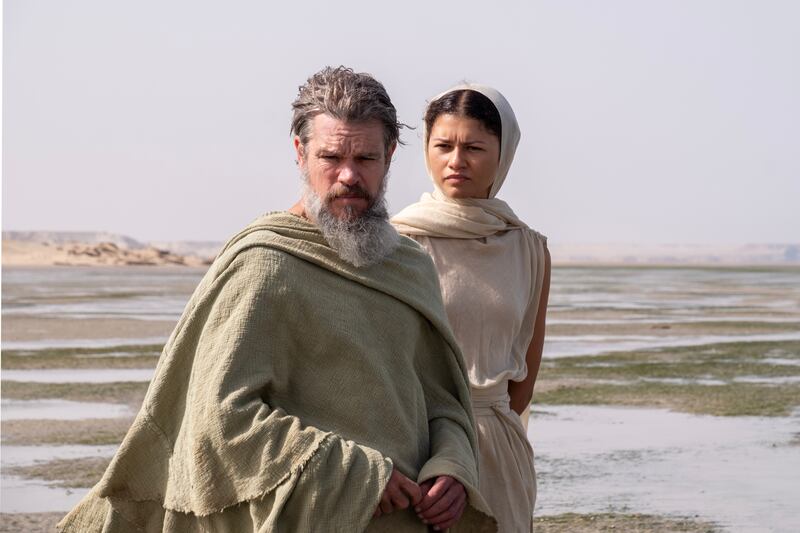
The Odyssey (July 17, in theaters) evokes many of the themes Nolan returns to again and again. Like Interstellar and Dunkirk, the film focuses on communing with the past, reuniting with family, and returning home.
But Oppenheimer is its greatest thematic touchstone, given its interest in the regret and guilt born from necessary if catastrophic wartime ingenuity and slaughter. The Trojan Horse is to Greek king and military hero Odysseus (Matt Damon) as the atomic bomb is to physicist J. Robert Oppenheimer, and a mixture of awe and horror, pride and revulsion, defines the director’s stirring take on his legendary source material.
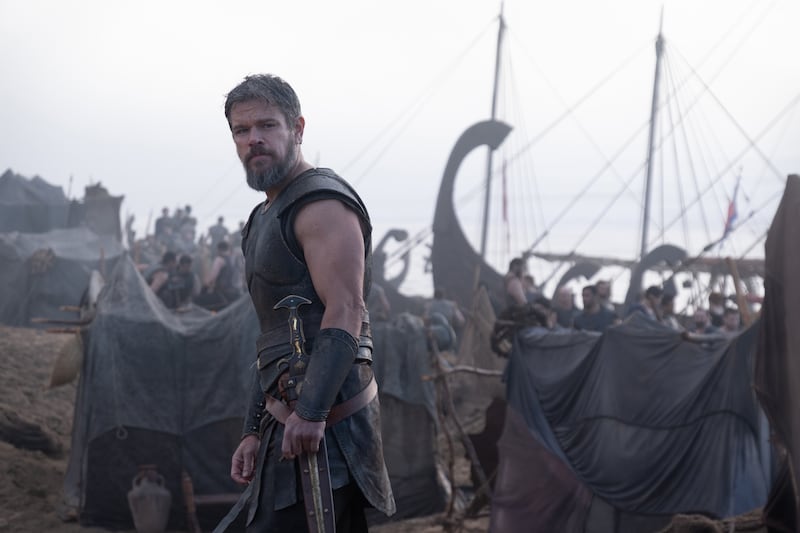
Unsurprisingly, Nolan fragments his narrative, moving freely between the past and the present, reality and memory, in order to echo both the back-and-forth nature of The Odyssey’s story and its patchy origins (it was passed down through centuries via first oral and then written traditions) and the splintered psyche of his protagonist.
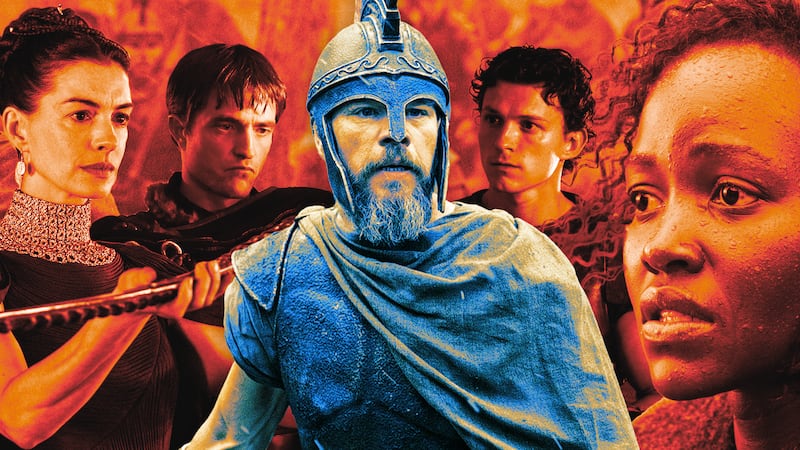
Damon’s Odysseus is a stern and resolute commander who’s prone to flights of hubris that jeopardize his and his men’s welfare. His occasional recklessness, however, never quite tips into selfishness, as he remains committed to bringing everyone safely back to their native Ithaca. And Damon’s furrowed-brow performance casts the character’s severity as an outgrowth of his strength of purpose and, additionally, his internalized grief and remorse.
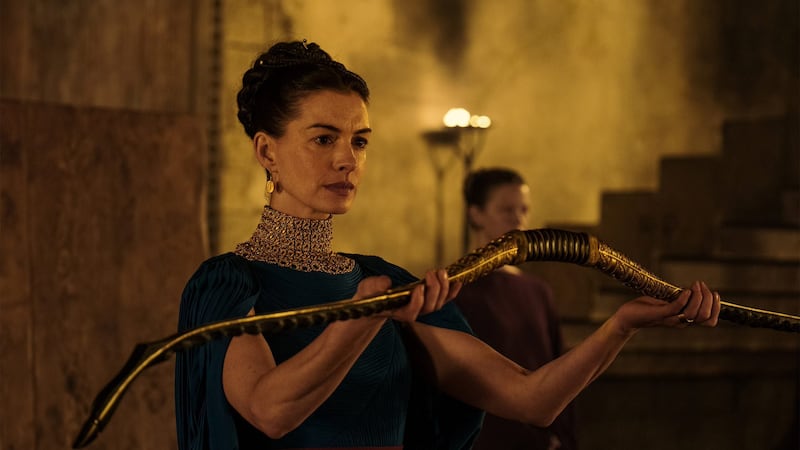
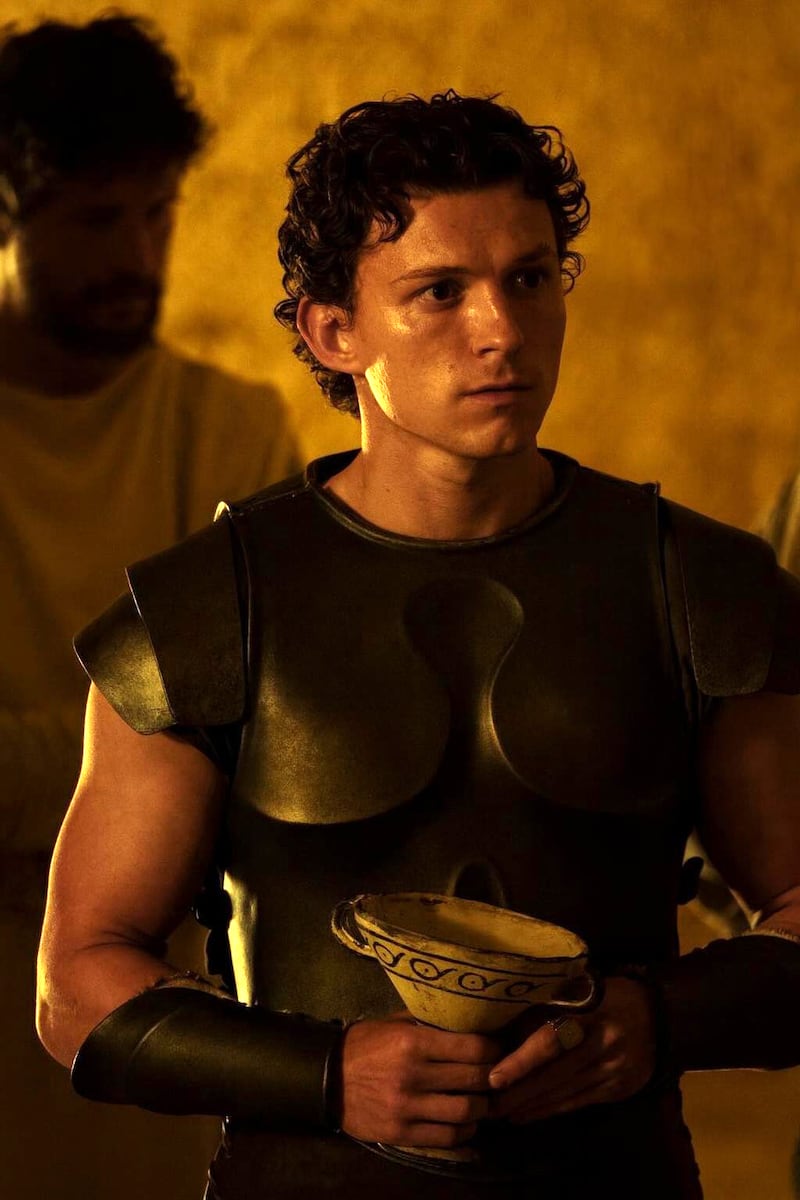
The Odyssey begins not with Odysseus but, instead, with his wife Queen Penelope (Anne Hathaway), who’s dealing with a son, Prince Telemachus (Tom Holland), who wants to know the fate of his father eight years after the conclusion of the Trojan War and bristles at being considered unfit for the throne.
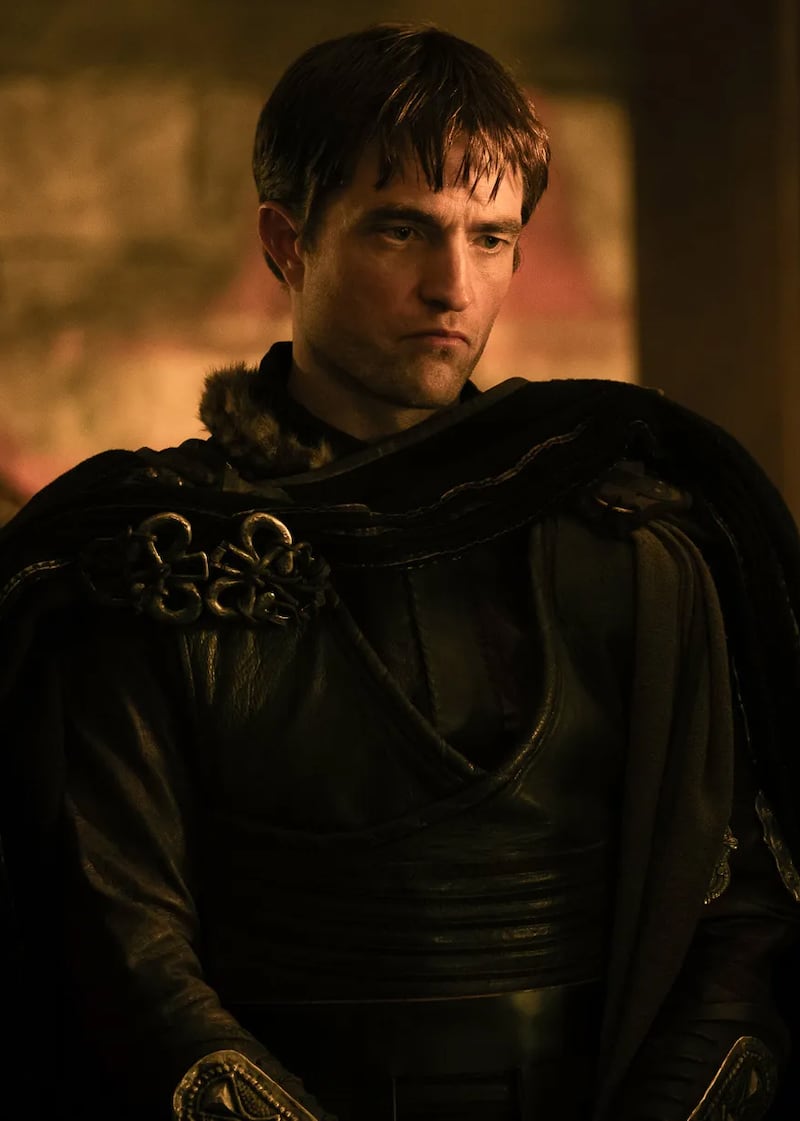
An additional headache is a gaggle of suitors—led by conniving Antinous (Robert Pattinson)—who have taken over her palace, eager to be chosen as her new husband and monarch. Penelope and Telemachus yearn for Odysseus’ homecoming, as does blind servant Eumaeus (John Leguizamo), whose abuse at the suitors’ hands illustrates that Ithaca has lost sight of Zeus’ Law, which states that men should treat others with kindness and respect.
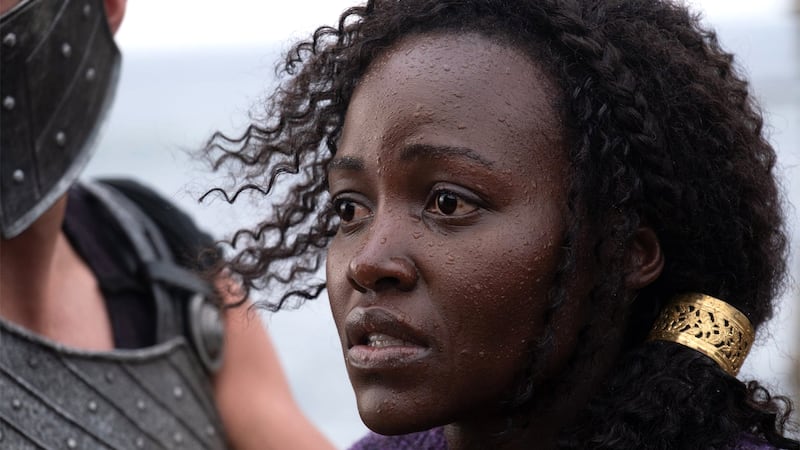
As Penelope fends off her predatory suitors and Telemachus secretly sets sail for Sparta to seek word of Odysseus from his former comrade, King Menelaus (Jon Bernthal), who’s married to Helen of Troy (Lupita Nyong’o), The Odyssey picks up its main narrative with Odysseus.
He’s being held captive on an island by Calypso (Charlize Theron), who’s using the lotus flower to make him forget where he came from. Odysseus is to some extent willingly brainwashing himself, driven by the wounds of the past to retreat into blissful oblivion. Even so, his struggle to recollect what brought him to Calypso makes him one of the film’s numerous narrators (which include Travis Scott’s bard), who together help piece together this fractured tale.
Glimpses of the Trojan Horse ruse and the massacre it facilitated are peppered throughout The Odyssey, whose images—aided by IMAX cinematography from regular Nolan DP Hoyte van Hoytema—strike an invigorating balance between the immense and the intimate.
Shots of men and boats dwarfed by land and sea coexist with intense close-ups of haggard and steadfast faces illuminated in darkness by candlelight and battered by wind, rain, and surf. Whether it’s a chaotic battle against an army of silver-armored goliaths (featuring the director’s finest hand-to-hand skirmishes to date) or a serene panorama of a sun setting over a vast expanse of ocean, The Odyssey is moviemaking on a grand David Lean-style scale.
With Ludwig Göransson’s score roaring with unearthly, drumbeat-of-doom power, The Odyssey is the third straight Nolan effort that’s an overwhelming sensory experience, with an A-list cast that excels at every turn.
While Damon’s staunch Odysseus is the proceedings’ epicenter, it’s a collection of supporting turns that enlivens its portrait of loyalty and treachery, bravery and cowardice, arrogance and altruism.
An imposing, agonized Hathaway proves the film’s emotional core as Penelope, and Holland—in his most assured screen work yet—captures Telemachus’ need, anger, and insecurity with affecting candor. Leguizamo is similarly exceptional as the faithful Eumaeus, and in smaller parts, Zendaya (as the goddess Athena, who’s Odysseus’ de facto conscience), Himesh Patel (as Odysseus’ right-hand man Eurylochus), and Benny Safdie (as Greek king Agamemnon, whose face is never seen) all shine.
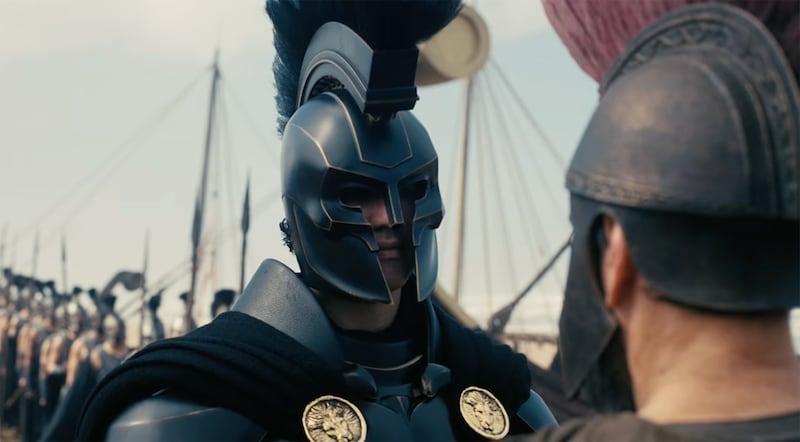
There isn’t a scene in The Odyssey that’s lacking in superlative acting, and an argument can be made that its true scene-stealer is Samantha Morton as Circe, a reclusive and cynical witch with animalistic designs on Odysseus and his men.
For all the spectacle he deploys, Nolan cares deeply about his story’s human element, and there’s rarely a moment when the former overshadows the latter. Only a bit too much familiarity holds it back, be it repeated sights of men striving to escape beaches and suffering while holed up in dank seaside cabins (Dunkirk) or crosscutting between time periods and external mayhem and internal thoughts (Oppenheimer), there is occasionally a sense of the auteur replaying the hits.
Still, The Odyssey is awash in breathtakingly novel visions: a towering cyclops (his eye and nose both horizontal) who traps Odysseus and his companions in a cave; a trio of sirens luxuriating on a rocky shore in the ethereal mist; and a visit to the land of the dead in which Odysseus is chided by his deceased charge Sinon (Elliot Page) for using him as a disposable pawn in a game of conquest.
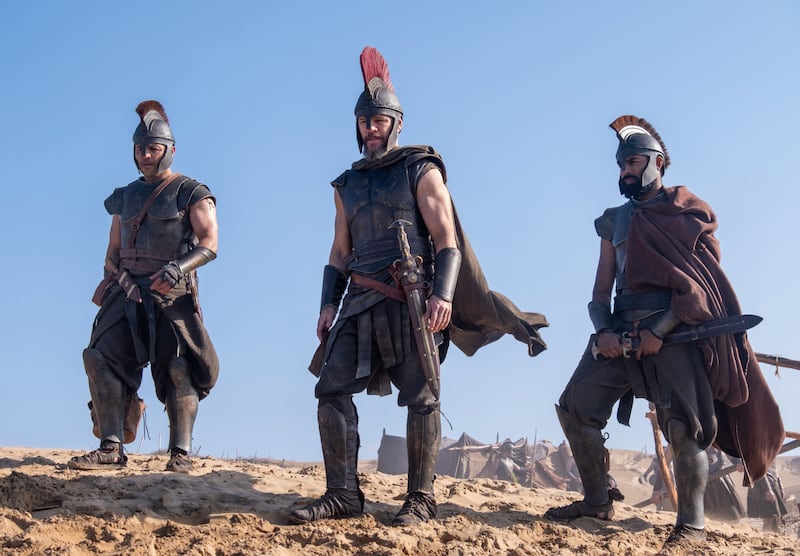
Climaxing with a showdown between Odysseus and a horde of pretenders whose demises are both a continuation of his bloody legacy and a vehicle for his transcendence (most recently dramatized by The Return), it’s a tour de force that, like Clint Eastwood’s best behind-the-camera ventures, investigates itself at every turn.
Modern mainstream films don’t come more daring, mammoth, and accomplished than Nolan’s latest, whose outsized majesty reaffirms him as the medium’s peerless blockbuster artist.