
JD Vance wants you to know that Emily in Paris—Netflix’s fluffiest expat export—is secretly “a massive cultural criticism of millennial decision-making.”
His foolproof evidence? The titular character Emily Cooper, played by Lily Collins, is clearly making the wrong choice about her French chef love interest, Gabriel.
“She should marry this guy. They should start a family, whether in Paris or America. They should build a life together. That’s what they should be doing,” he said in a clip that swiftly spread across TikTok and the political media.
But instead, as Vance lamented, Emily and Gabriel keep dating “a bunch of random people” and focusing on their jobs.
“It’s obvious,” he went on. “Fall in love. Get married. You two were made for each other.”
It’s a series of romantic near-misses, season after season—or what the vice president called, more or less, a case study in bad choices.
In his estimation, the show is a “masterwork… the best bit of cultural commentary—I would say cultural criticism— of my generation, the millennials.”
All this Vance delivered with a straight face, punctuated, memorably, with the claim that Emily in Paris is “the Shakespeare of our time.”
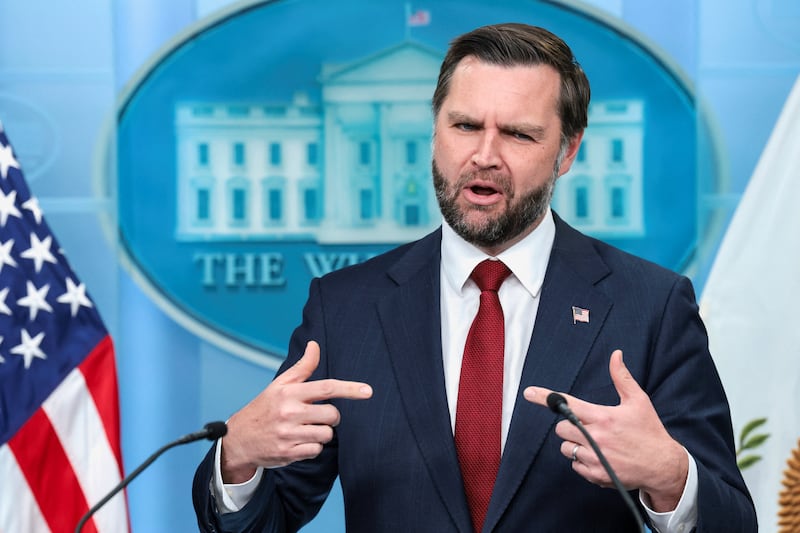
Short of Vance soft-launching a career pivot into television criticism, what the vice president is really doing is taking an idea he’d get heat for stating plainly (young women should stop building careers and casually dating, and just get married already) and laundering it through a show that nobody defends on artistic merit.
Let’s rewind to 2021, when Vance—then an Ohio Senate candidate and author of bestselling memoir Hillbilly Elegy—went on Tucker Carlson’s show and dismissed a cohort of Democratic leaders as “a bunch of childless cat ladies who are miserable at their own lives.” Vance has since referred to that brash quip as “boneheaded.”
And yet, he consistently returns to a similar thesis: that a woman’s choice to delay or refrain from marriage or motherhood in favor of a career (or for any other reason) is not just a personal call. It’s a moral failing, and evidence that something is wrong with her, or at the very least with the culture that allowed her to make such a misguided choice.
Not only that, but according to Vance, such a choice, when made by our female political leaders, should be seen as an existential threat to our nation’s future.
“How does it make any sense that we’ve turned our country over to people who don’t really have a direct stake in it?” he said on Tucker Carlson in 2021. The implication is clear: without progeny, one cannot possibly have a “direct stake” in the country’s future.

Vance’s “meta-analysis” of Emily in Paris (his words) more covertly projects that very sentiment. To him, Emily and Gabriel’s will-they/won’t-they is symbolic of young Americans’ departure from the “traditional family values” that continue to be a Republican talking point amidst the ongoing culture wars.
And the critique is not just of individuals, but of a generation. Vance diagnoses this romantic indecision as a symptom of a widespread millennial malaise.
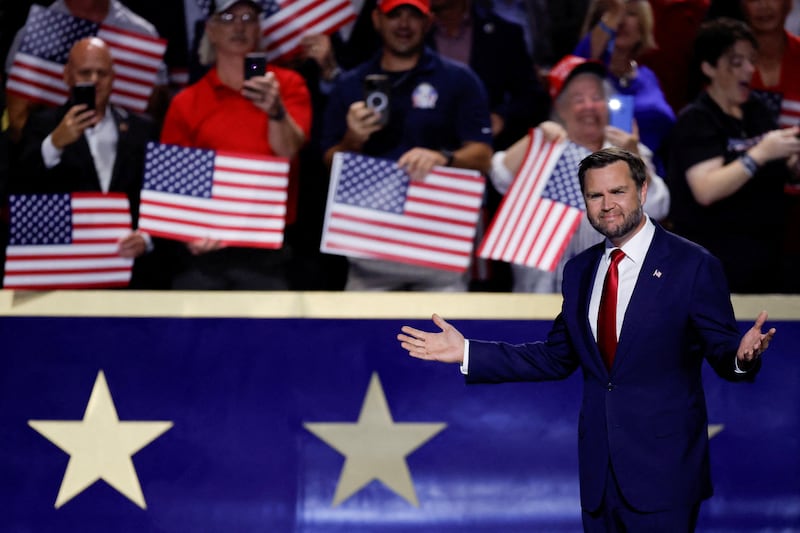
Just last week in his speech at the 2026 RNC Midterm Convention in Dallas, TX, Vance said, “Like most parents, I want my kids to do the most important thing. I want them to fall in love. I want them to find somebody who’s worth building a life with.”
Now, it might be the case that Vance is just simply a Certified Lover Boy and a relatable #GirlDad who can’t resist a cheesy Netflix show about a young woman finding herself in Paris. But I suspect there’s something deeper afoot.
This isn’t happening in a vacuum. This administration has floated $5,000 “baby bonuses” and, according to The New York Times, received draft executive orders from pronatalist activists proposing a “National Medal of Motherhood” for mothers with six or more children.
The administration has changed Title X guidelines to supposedly “strengthen family formation and assist clients in achieving healthy pregnancies,” according to Stateline.
This updated guidance includes prioritizing educating Americans about natural methods of birth control and “body literacy.” It also encourages Title X clinics to promote “fertility-awareness-based methods,” such as period-tracking apps, which experts say can be helpful for tracking fertile windows and getting pregnant, but are often less effective at preventing pregnancy and STIs than other forms of contraception such as condoms, an IUD, hormonal implant, or the pill.
Under the moniker of “conservative family values,” these policy positions treat birthrate as a national priority large enough to justify steering women’s choices toward it. And now the vice president is resorting to pop-culture commentary to push that agenda.
To many viewers (Vance included), Emily and Gabriel’s situationship is maddening. But that’s the point. It’s a trope endemic to the genre itself—one that trades in getting audiences riled up, yelling at their TV screens, “Kiss! KISS ALREADY!!!”
The “will-they/won’t-they” slow-burn love story has always been an engine behind romantic comedy. Where would we be without Ross and Rachel, endlessly taking breaks? Without Carrie Bradshaw and Mr. Big? Or even Elizabeth Bennett and Mr. Darcy?
These plot devices are not a referendum on the characters’ judgment. Choosing to read it as a cautionary tale about ambition and values says a lot more about the viewer than the writers’ room.
The vice president’s musings were never really about a fictional character. They’re about the very real American women whose behavior he wants to control.