It’s early on a brisk November morning, and we are on the farm about an hour and a half outside of Toronto, where the massively popular Hallmark drama The Way Home films. “It really is a beautiful place,” says co-showrunner and executive producer Alexandra Clarke.
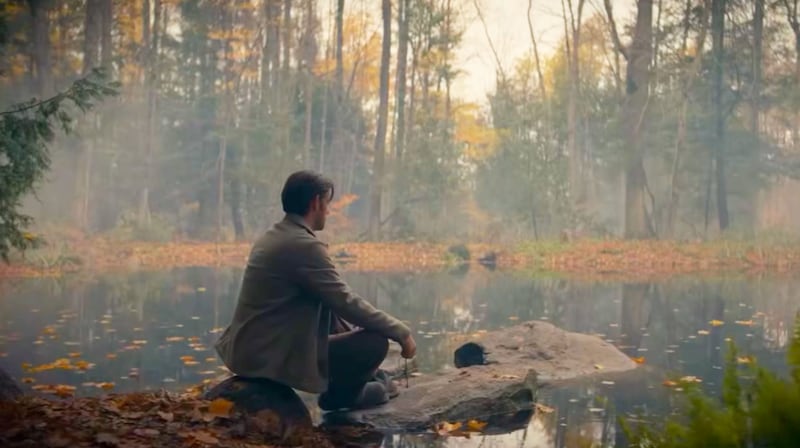
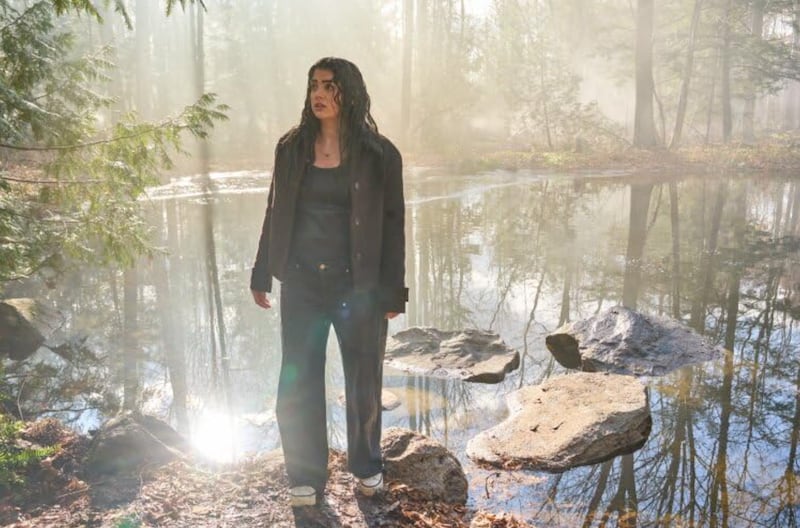
We’re staring at a placid pond as fog rolls over the nearby field like we’re in a Sherlock Holmes novel, and dozens of crew members are already running around preparing for the first shot of the day. It’s one of the last “pond days” of Season 4, which will be the show’s last.
According to Clarke, the pond changes color with the mood. Today it’s almost oil black, and it’s hard to tell if that’s because winter is on the horizon or if the pond knows the tense scenes lined up for today.
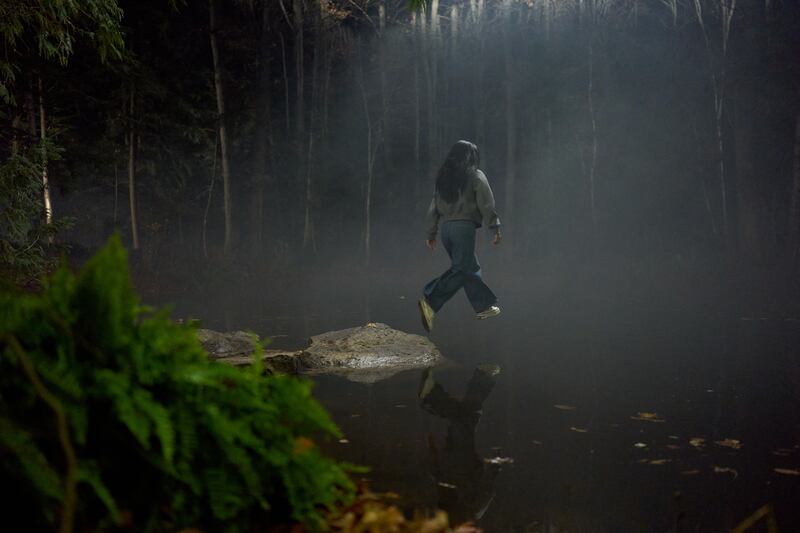
The Way Home is a fantasy drama about three generations of women in the Landry family, who travel back and forth in time to unravel decades of family secrets, rewrite their painful history, and steal five more minutes with departed loved ones. The pond is the mystical vehicle for leaping through time.
Starring Chyler Leigh, Evan Williams, Sadie Laflamme-Snow, and Andie MacDowell, the series is a surprise blockbuster hit, with its ratings ranking it as the number-one cable series for women, helping lift the Hallmark Channel to the number-one cable network on weekends. So the show, and this pond, are a very big deal. I’m in sacred TV territory.
Even though I am here to unveil how the time travel illusions are created—a trip two years in the making—I can’t help but wonder if maybe there is something truly ethereal about this place.
It’s All in the Prep
The work to create a successful pond-day shoot begins months before anyone hits the water.
“When I started forming the idea of the show, I just thought the pond would be cool. I thought it would look cool. It would have cool symbolism. I didn’t think through any of the production challenges of it actually being a pond,” series creator Marly Reed explains. “It’s so funny to me now, having spent four years sinking in the mud down at this pond, forcing our actors to jump in the water in the freezing cold. Every time I’m like, ‘It could have been a closet, or a cave, or a necklace.’ But I do think it looks really good on screen.”
The early days of the series required more frequent dives, so the audience could understand the rules of the Landry family pond. Now the team has gotten wise about when pond scenes are absolutely necessary, especially with Canadian temperatures dropping to close to freezing with each passing week as the end of the season nears.
Temperature isn’t the only thing dictating what scenes are worth a pond production. The water or the jump needs to be essential to what’s happening in the story. Scenes may be set at the pond when the team is writing them early on, but if the pond isn’t a key factor in the plot, they’ll be moved to a location that doesn’t require a technocrane, moon lighting, and trailers to be dragged across the farm.
The wardrobe department also needs advance notice of all pond sequences. Every one of them will require five sets of the outfits worn in the scene. There’s a “hero” outfit that will stay dry and be reused in the dry scenes before and after the jump. Then there’s a set for the actor doing the jump, their stunt double, and a backup just in case anything goes wrong with the other two.
None of the prep matters, though, if the pond isn’t safe to jump into. It’s routinely tested for bacteria, and the temperature is taken every single day. If it falls below 10 degrees Celsius (50 degrees Fahrenheit for Americans), the actors are barred from going in the water, and jump scenes rest on the shoulders of the stunt team. Even if the actors aren’t physically jumping on a specific pond day, they still need to be in lockstep with their stunt double.
“I’ll work with the stunt performers to make sure that their footing is just like my footing, like which part of the rock I typically use to push myself off. I’ve learned so much about that stuff from Supergirl," reveals Chyler Leigh when she arrives for her scenes for the day.
You want to limit the number of takes because of the limited daylight, so it’s all about knowing what the shot needs to be before the cameras start rolling. Grant Harvey, who directed a lion’s share of The Way Home episodes over the four seasons, helped the creative team get pond days down to a science, which is especially helpful for new directors.
“I’ve talked to a few directors, and they think they’re prepared, but then they get there on the day, and maybe it’s raining,” Clarke says. “Maybe the stunt wigs didn’t work out the way we wanted. Anything can go wrong. As long as you’ve got most of the prep under your belt, you’re fine, but it’s always a surprise. These directors are jumping in feet first into these pond days.”
When everyone is on the same page, it’s time to get wet, or at least look like it.
Ready, Set, Jump!
The Landry pond looks like an isolated meadow in the woods on the show, but today it is surrounded by an entire production village. There’s the technocrane and the lights on one side of the pond. Video village is set up on a wooden platform (specifically crafted for this purpose), a few feet away, for directors and producers to watch takes. There’s also a wardrobe and props tent, blocked off by a lighting fixture.
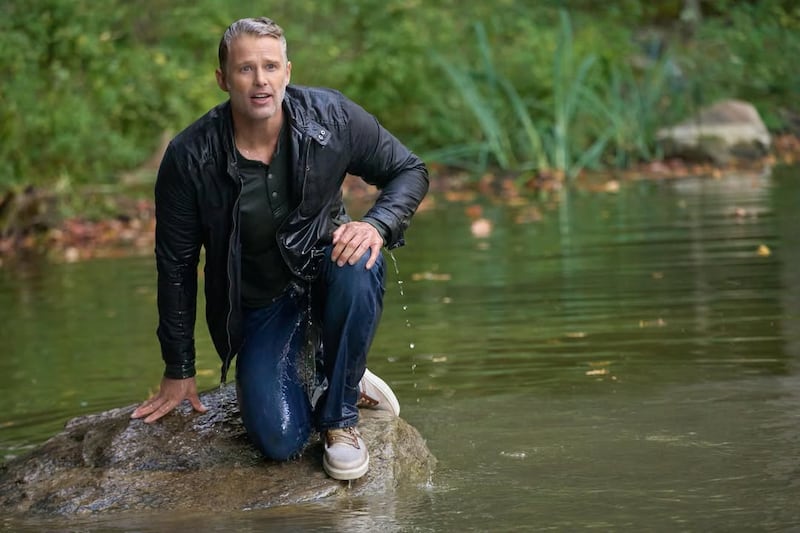
An inflated raft sits hidden from any possible line of the camera but near the water in case there’s a need for an emergency rescue. There are two paramedics in scuba gear on standby as well. And then there’s the most important structure for every pond day: the warming tent. It’s a short walk from the edge of the pond where the actors and stunt performers exit the water after a jump. It’s filled with buckets of warm water, space heaters, and microwaves to warm up blankets that are swathed around jumpers as soon as they emerge from the pond.
“We immediately go from the water, out to the tent. There’s usually a little bucket of warm water for your feet,” Leigh explains. “The last time I jumped in was a few weeks ago, and I think the water was like 54 degrees. I don’t even know what it is right now. It is liquid at least, and there’s no ice on it, like last year.”
The water is 40 degrees Fahrenheit (three–to-four degrees Celsius) on this particular day, according to Leigh’s stunt double Afton Rentz. She’s been Leigh’s stunt performer since the first season of the show and will do the first jump of the day. She prepares for the icy temperatures by telling herself it’s like a warm bath.
“A lot of water work, any elemental work when you’re dealing with the outdoors—it’s all psychological,” she says. “So to me, the water is 20 degrees Celsius (68 degrees Fahrenheit). That’s always my joke, but it’s true.”
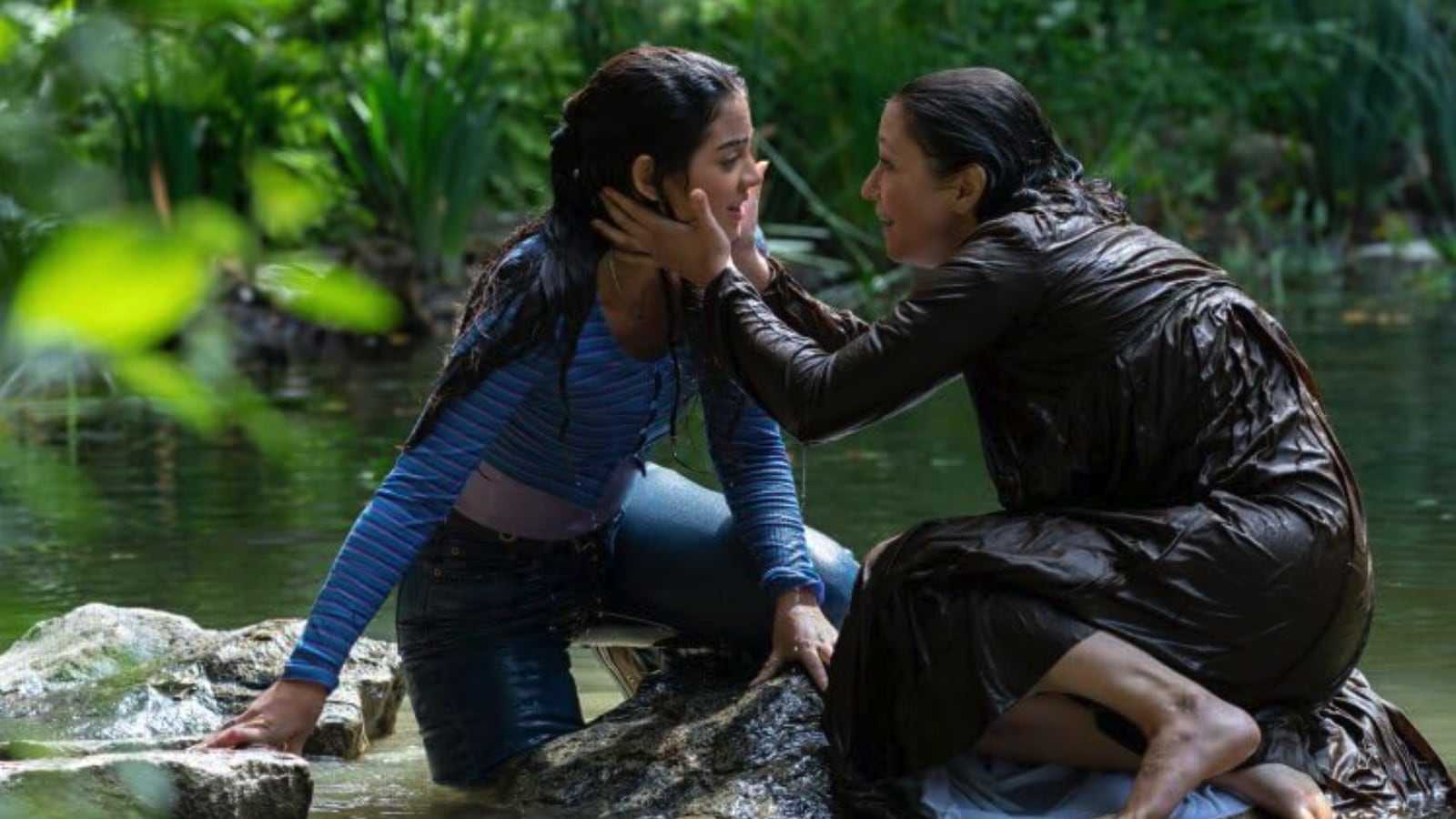
Talking yourself into jumping in the water may seem like the difficult part, but it’s actually staying in once you’ve made the leap. The actors and stunt performers have to stay underwater long enough for the surface to stabilize, making it look as if the character has disappeared through the pond’s portal.
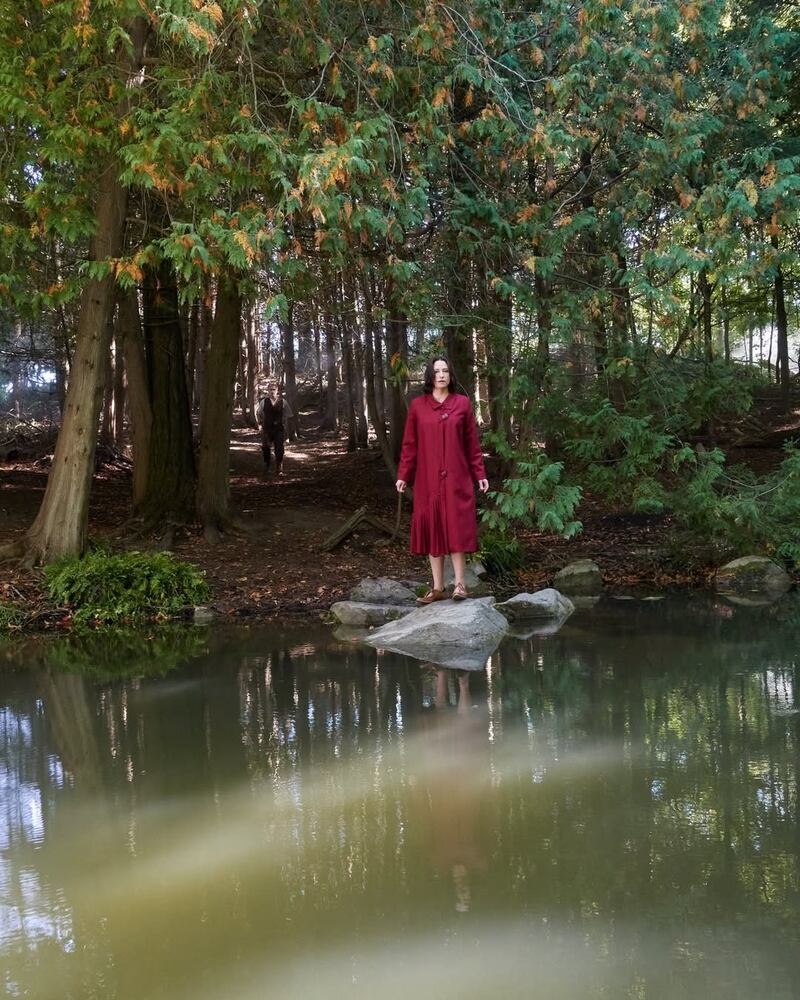
“I think it’s surprising to some people when they get in that they can’t stay under for what I call ‘a limited eight count’,” explains stunt coordinator Andrew Butcher. “If we go 10 seconds, I’m assuming that you’re not coming up and I have to get in there. The safety divers will be prepared and right there to rescue anybody if that were ever the case. We do eight seconds under and then come back up safely.”
“The first few jumps felt like an eternity because you’re going through your story down there and you can’t hear cut,” Rentz adds “You can’t hear anything else that’s happening in any direction. So you’re aiming for the longest possible time, but also what is the safest?”
In today’s case, the actors’ compelling performances are happening above the surface, but going through The Way Home time travel pond requires another unique skill: underwater acting.
Under the Surface
The actual pond is too murky to film scenes underwater, but The Way Home has taken us into the water on multiple occasions. Those scenes are shot in director of photography Thom Best’s personal swimming pool.
“He gets these massive tarps, and he’ll tarp the bottom of his pool to make it black. Then he’ll put tarps all the way around the top of the pool too, to cut out as much sun as possible. He can control the lighting and the different effects,” Leigh states. “That way, we can control what things look like, and you can find the clear expressions on our face and when we have to hold hands, and when you see us get sucked back into the vortex.”
Actor Evan Williams also explains how The Way Home captures the captains of that vortex, sentient ferns at the bottom of the pond. The mischievous plants have been known to separate members of the Landry family or suck people into a time period they didn’t intend to go by wrapping around their ankles and pulling them down.
“We actually shoot it backwards. We’ll start with the fern wrapped around the thigh. Then someone in a wetsuit and scuba gear will pull it gently as we sort of float in the opposite direction,” Williams describes. “When you play it backwards, the ferns look like they’re coming up and twisting.”
The pool is also used when the audience needs to see facial expressions in the water. If you’re not in the acting zone when you’re submerged, then you risk the enemy of any clear underwater shot: bubbles.
“The hardest part of shooting underwater is the closed air, which means there’s all sorts of crazy bubbles. It’s a choreography of when to exhale and when to start the camera rolling so you can get rid of all the bubbles first, and don’t move too fast,” actor Evan Williams says. “Making sure water doesn’t go up your nose is something someone can do while they swim, but it’s really hard to do while you’re acting.”
An Actor Out of Water
After the pre-jump hand choreography is mapped out and captured, it’s time for Rentz to make her first jump of the day. She doesn’t hesitate when the director yells action and jumps right in. A few moments later, she surfaces to the side and climbs out of the south end of the pond and starts to shed the sopping wet coat “Kat” wore into the water in exchange for a warming blanket held out by Thom. Then it’s off to the warming tent to change clothes.
Once Rentz is in dry clothes, she stops by the actor tent to tell Leigh to stay away from the water because it’s so cold. She’s still shivering as she heads to a van to take her back to base camp, where she can shower and dry off before returning to set for another jump later in the day.
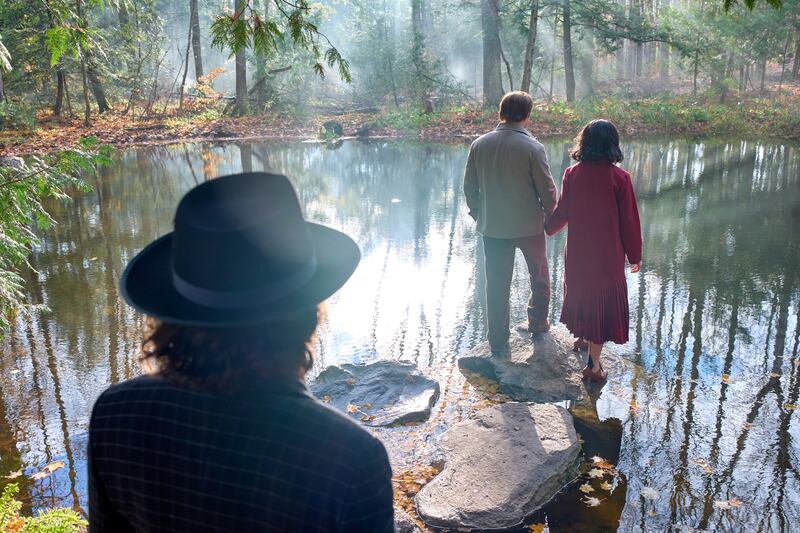
No one denies that using a pond as a time-travel device is a herculean task that takes a small army to pull off, but it is also an integral part of what makes The Way Home special.
“If it was just a phone booth, there would be no sense of danger to it,” Williams says. “It’s sort of like this event horizon, and you don’t really know if it’s on your side. You don’t really know where you’re going to end up and what your future is going to hold, or what your past is going to hold.”
“To me, it’s sort of paralleled by the fact that the pond is a challenge, and I think that it reads on screen as well,” he adds. “It makes me feel like it’s the edge of the world.”
I ask Clarke as the temperatures continue to dip and the drizzle turns into actual rain if today is one of the days she wishes Reed had made the time travel portal a closet or a necklace.
“It would not have been the same,” she says. “There’s just something about it being something in nature that someone is coming upon that makes it so much more ethereal, and so much more eerie and beautiful. Seeing Alice get squished down and go through a little door—I don’t know if I would have been this enthralled.”
The series finale of The Way Home airs Sun. June 21 at 9 pm ET.