As with their horror-movie cousins, serial killer thrillers boast trademark elements—ritualistic murders; dour locations; jaded cops; baffling crime scenes; nocturnal sleuthing; shadowy chases—that can be pleasurable even when the stories they serve are underwhelming.
One must cling mightily to those throughout the course of The Whisper Man, a Netflix feature (August 28) which enlists Robert De Niro, Adam Scott, Michelle Monaghan, and Michael Keaton for severely inane nonsense. A grab bag of genre devices barely held together by its competent headliners and ominous mood, it’s a passable affair only because it seems fated, from the start, to end up somewhere silly.
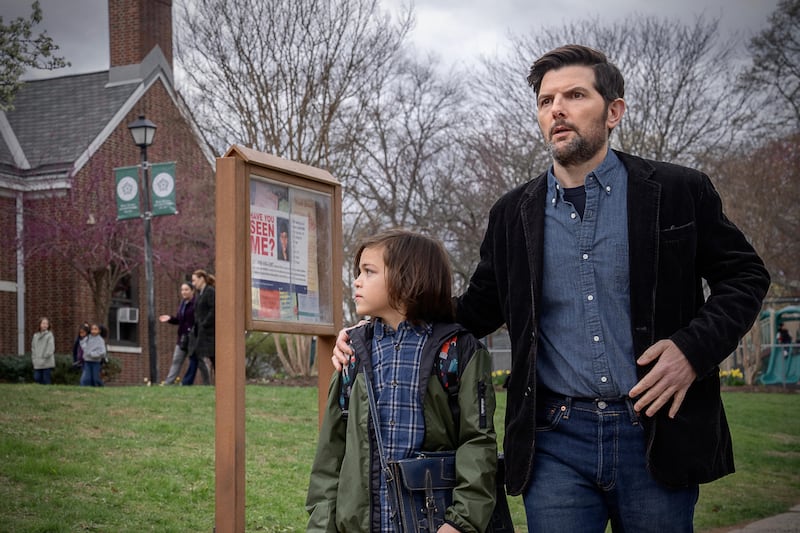
The Whisper Man fulfills that destiny, although it takes nearly two sluggish hours to arrive there. An adaptation of Alex North’s novel of the same name from The Rule of Jenny Pen director James Ashcroft, the film opens with Tom Kennedy (Scott) and his young son Jake (Acston Luca Porto) relocating to the quiet New Jersey hometown of Jake’s recently deceased mother.
They’re a grieving pair, and not helping their feelings of isolation and despair is the house into which they move—a gigantic mansion that’s not only far too big for the two of them (it’s fit for a family of 10!), but creepy in a The Changeling mahogany-and-giant-staircases way.
Tom is a writer, and Jake is a loner who has a habit of speaking to his imaginary friend, a girl in a blue sweater whose identity is almost painfully easy to guess. It takes them approximately 30 seconds in The Whisper Man to get acclimated to their spooky residence, but Jake remains a persistently morose child who misses his mom, and his condition isn’t aided by Tom’s discovery of a squatter in their basement.
Further stoking his nerves are the strange noises outside his window and, eventually, an encounter with a gloved hand sticking through the front door’s mail slot that also rattles Tom.
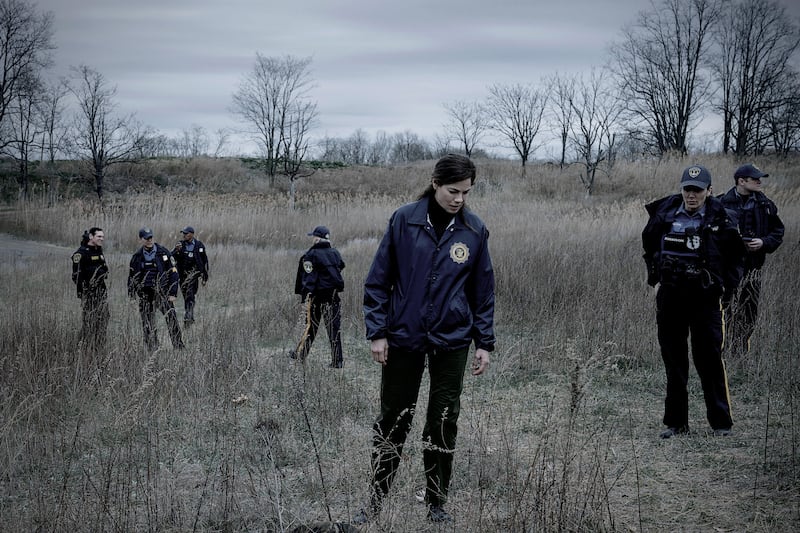
As this mournful duo deals with petty school incidents and testy home squabbles, The Whisper Man concurrently focuses on Detective Amanda Beck (Monaghan), whose search for a missing adolescent named Neil Spencer (Exavier Montanez) is complicated by her discovery of another boy’s body, shirtless and with a wrapped head.
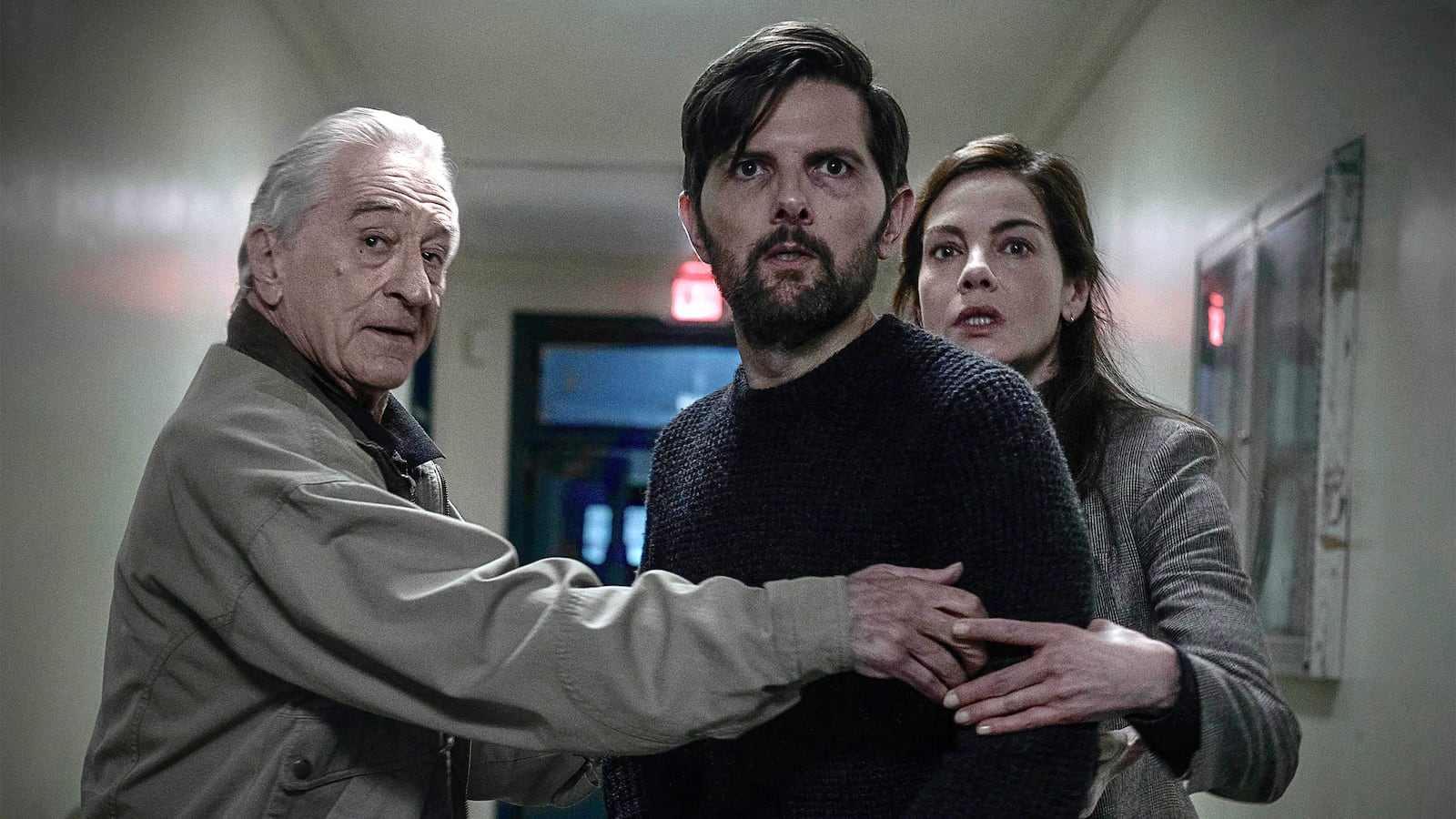
With one look, Amanda recognizes this as the signature of The Whisper Man. That notorious local serial killer was outed as Frank Carter and caught by Detective Peter Willis (De Niro), and upon visiting the latter, Amanda is disappointed to hear that the now-retired cop has little interest in opening up old wounds by humoring her belief that a copycat—or maybe Frank’s long-rumored accomplice—is stalking the streets.
These individuals become hopelessly entangled when— non-spoiler alert—Jake is abducted by the new Whisper Man—or, rather, willingly walks out the front door and into the arms of the fiend. The ultimate explanation for this turn of events is that the Whisper Man has a knack for enticing unhappy kids to join him, thereby lending him a touch of quasi-supernatural menace that’s in tune with Jake’s conversations with his invisible buddies.
Even as it suggests that something uncanny is afoot, however, Ashcroft’s tale becomes leaden, beginning with the revelation—treated in a strangely offhand fashion—that Tom is Peter’s son, and he wants nothing to do with his long-absent dad.
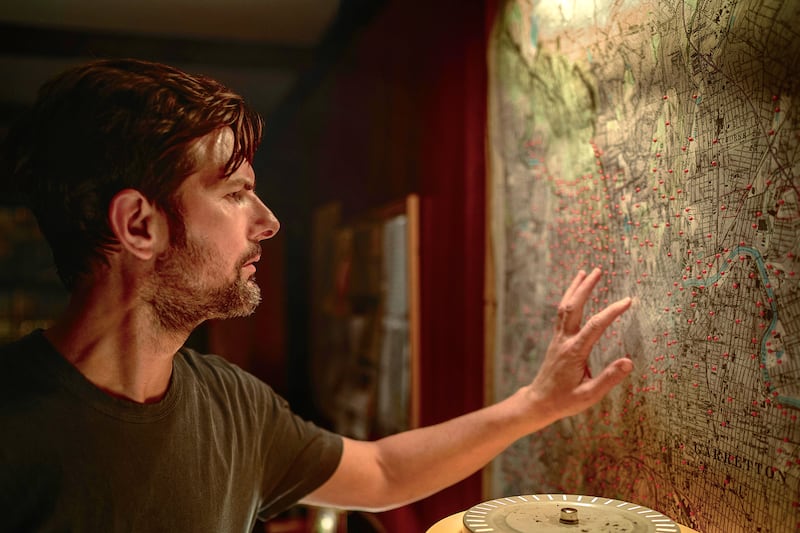
No matter that the grandson he’s never met is now a potential Whisper Man victim, Peter is reluctant to get involved, and once he does, he laughs off Tom’s conjecture that Jake might have been taken precisely because Peter put the original Whisper Man behind bars. This dismissal is so illogical and unconvincing that it marks Peter as a dope and the film as potentially inept. That impression grows stronger once Amanda badgers Peter into sitting down with Frank—the first (but, alas, not last) instance in which The Whisper Man mimics The Silence of the Lambs.
Stealing from Jonathan Demme’s 1991 Oscar winner is a time-honored genre tactic, and so too is replicating the downbeat style of 1995’s Seven. Between perennial rain and howling wind, interior spaces that are always dimly lit (per tradition, no one bothers turning on the lights), and the killer’s oft-obscured face, The Whisper Man does its best David Fincher impression.
All this plagiarism isn’t for naught; such derivativeness generates a welcome (if familiar) brand of deranged psycho-sexual unease, in the process proving the enduring effectiveness of such clichés. Still, clichés they most certainly are, and more emerge as the proceedings crawl toward revelations that are chiefly notable for their dullness.
While Scott freaks out and Monaghan sternly searches for clues, De Niro acts sullen and guilt-stricken as Peter, who regrets letting down Tom as a kid and blames his failings on Frank. It’s a performance that strives for restraint but is hampered by a script (courtesy of Ben Jacoby and Chase Palmer) that haphazardly introduces details—Peter was an alcoholic, and Tom now appears to drink too much; Peter is perhaps closer to Frank than he lets on; Tom’s sole book was about a detective—as if it were making things up on the fly in order to deepen its protagonists and prevent the narrative from spinning out of control.
Amid such scattershot storytelling, De Niro and his castmates are left to either overact or underplay things, creating tonal dissonance.
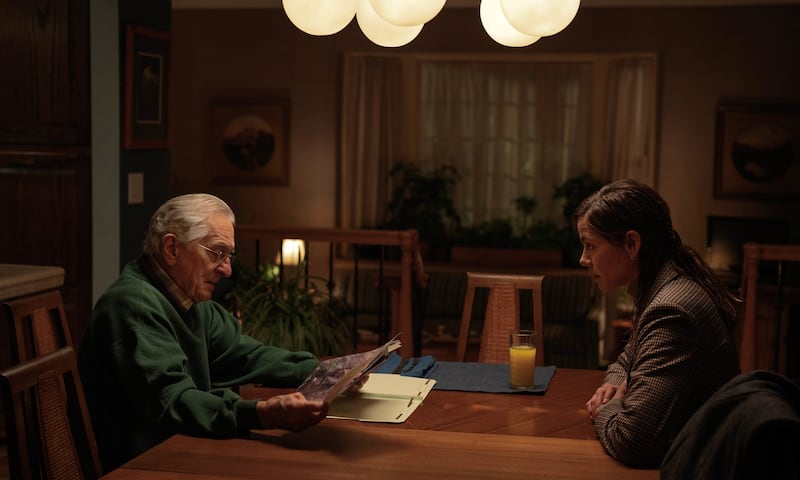
In its concluding third, The Whisper Man ties itself up in twisted father-son dynamics. Yet just as it can’t come up with anything novel to do with its chosen form, it says nothing lucid or meaningful about the determinative (positive and negative) effects parents have on their children. Moreover, its finale is a limp slog that will neither surprise nor unnerve.
At least Keaton—in a part that I’m technically not allowed to divulge despite it being public knowledge—attempts to interject his archetypal character with some off-kilter idiosyncrasy. It’s not enough, though, to salvage this waste of multiple talented people, which may hit a few reliable madman-thriller notes but can’t figure out how to string them together into a coherent tune.