Wonder Man answers the question, what would a Marvel TV show look like if it weren’t, for the most part, about superheroes?
Andrew Guest’s eight-episode Disney+ series (January 27) is similar to HBO’s recent A Knight of the Seven Kingdoms, in that it ignores its franchise’s big-picture concerns, narrowing its gaze to focus on a couple of individuals occupying a highly particular corner of its fictional universe. In this case, that locale is Hollywood and the duo is Simon Williams (Yahya Abdul-Mateen II) and Trevor Slattery (Ben Kingsley), the former an aspiring actor and the latter the thespian notorious for pretending to be The Mandarin in Iron Man 3.
The result is an MCU-style industry send-up à la The Studio or The Franchise that features fewer laughs than those satires but, courtesy of its leads, a surprising amount of heart.
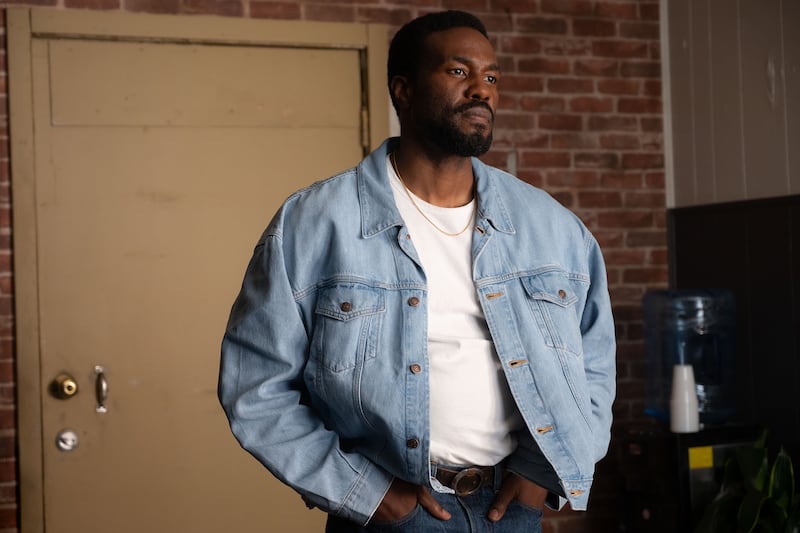
Co-developed by Shang-Chi director Destin Daniel Cretton, who helms two installments, Wonder Man is being released under the “Marvel Spotlight” banner, which denotes that its adventure requires no prior mythology knowledge. Guest’s series began production way back in early 2023, and in the three years since, Marvel has shifted gears from stand-alone small-screen affairs to multi-season ventures, making it something of a relic even before its debut.
Certainly, it doesn’t resemble anything else in the MCU, given that its hero isn’t a do-gooder but a wannabe movie star trying to make a name for himself in Los Angeles. Simon has talent and ambition to burn, which lands him a role on American Horror Story. Unfortunately, he’s also a grade-A pain in the ass, as he demonstrates on that TV show’s set, proposing so many changes to his character, the script, and the director’s blocking and lighting that he’s quickly deemed more trouble than he’s worth and canned.
Simon’s day goes from bad to worse when he returns home to discover that his girlfriend (Olivia Thirlby) is moving out. In response, Simon takes refuge at the movie theater where he and his dad, in the 1980s, watched the blockbuster Wonder Man, and where he’s now poised to see Midnight Cowboy (a film whose central dynamic is soon to be replicated here).
Before the lights go down, he spots Trevor, who’s blabbing loudly on the phone about an upcoming big-time audition. A fan of the legend’s work pre-Mandarin—a villainous character that basically ended his career—Simon presses Trevor about his potential gig and learns that Oscar-winning auteur Von Kovak (Zlatko Burić) is remaking Wonder Man.
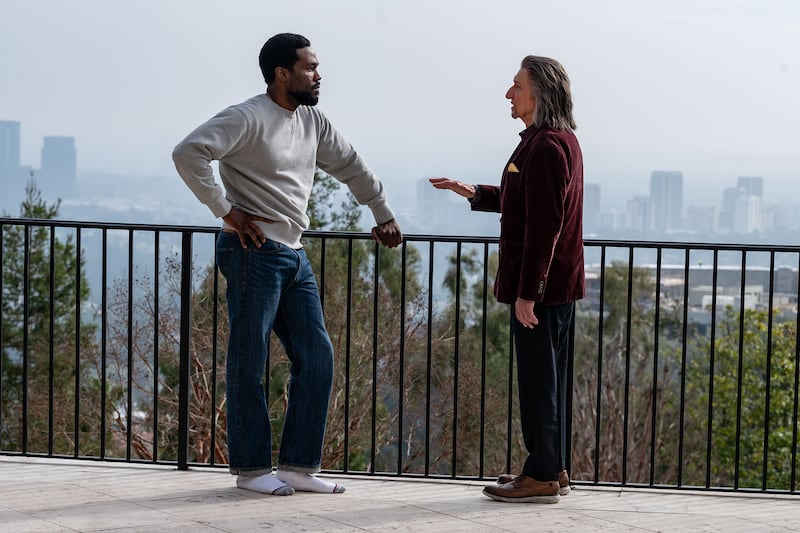
Believing this is the role he was born to play, Simon sneakily gets the address for the audition from his agent (X Mayo) and prepares to earn the marquee part.
[Warning: Minor Spoilers Follow]
Simon’s problem is that he’s so fixated on developing his characters’ backstories and motivations that he can’t effectively embody them, but with the assistance of Trevor’s breathing exercises, he calms himself enough to wow the casting bigwigs.
Afterwards, Trevor (who’s up for the role of Wonder Man’s sidekick Barnaby) exclaims that there’s “something fateful in the air.” This is true, albeit not in the way he means it, because Trevor is actually a fugitive who’s being coerced by Department of Damage Control agent P. Cleary (Arian Moayed) to spy on Simon.
The reason? Cleary suspects that Simon has superpowers that pose a grave threat to national security—and nabbing him will help Cleary keep his job, which is being threatened by budget cuts.
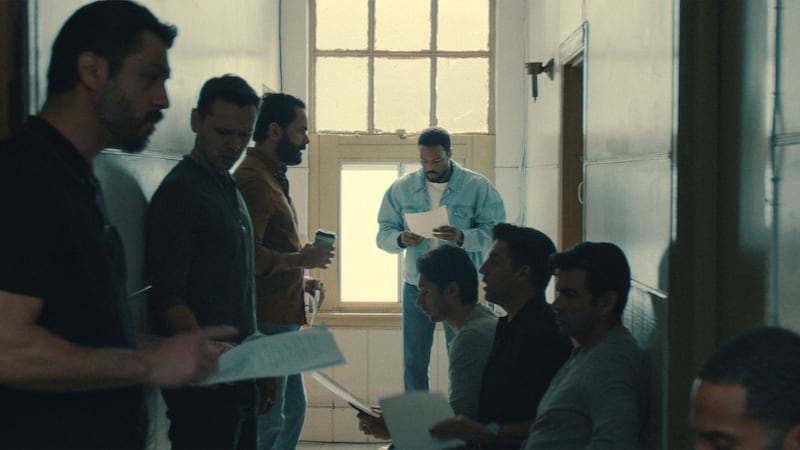
Simon and Trevor’s quest to be cast in Wonder Man is complicated by the latter’s clandestine mission, although much of Guest’s series concentrates on the ins and outs of making it in Hollywood. The anxiety and fear that come from chasing a coveted dream that’s always just out of reach courses through this story. So too does the disappointment, shame, and bitterness that stems from constant rejections and failures, as well as loved ones’ lack of support.
While Simon’s mom staunchly stands by him, his brother Eric (Demetrius Grosse) is a persistent source of criticism, putting additional stress on the actor as he strives to make a self-tape and, later, convince Von Kovak that he’s the ideal Wonder Man.
Especially in its first two episodes, Wonder Man boasts a directorial poise and agility rarely seen in Disney+ MCU shows, with Cretton’s widescreen visuals lending the material a borderline-cinematic sheen. The series’ writing isn’t quite as assured, courtesy of multiple underdeveloped narrative details.
Still, if its plot feels somewhat awkwardly stitched together, its odd-couple protagonists are engagingly three-dimensional. At times recalling Martin Short’s Only Murders in the Building sleuth Oliver Putnam, Kingsley’s Trevor is a brash, brusque, flamboyantly weird artist who’s never without a sharp or loopy retort. Simon, on the other hand, is a likably desperate striver brought to nuanced and affecting life by Abdul-Mateen, whose performance is among the finest in recent Marvel history.
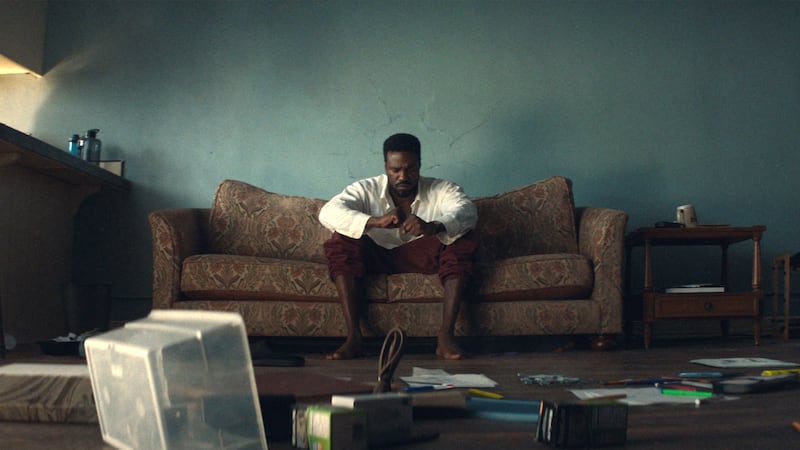
He makes one care about Simon’s plight on an honest-to-goodness emotional level, and the funny, endearing rapport between him and Trevor makes sticking with his saga worthwhile.
There are a handful of twists in Wonder Man, including revelations about Simon’s struggle with his powers, but Guest downplays bold action and tantalizing cliffhangers—and wholly eschews good-vs-evil battles involving Big Bads—for the sort of human drama that, in this genre, has long taken a back seat to CGI spectacle.
At times, the show goes almost too far in that direction, downplaying its fantastical elements to the point that it barely feels like an MCU entry. Even so, there’s something refreshing about a superhero tale that prioritizes relatable dilemmas and feelings over save-the-galaxy derring-do, and as with A Knight of the Seven Kingdoms, its modesty indicates that there are interesting nooks and crannies to explore in this colorful comic-book world.
If Wonder Man doesn’t benefit from premiering after The Studio, it nonetheless drops enough names and mocks enough elements of the Hollywood machine to elicit chuckles, and a particular stand-alone episode is a highlight that adds a novel wrinkle to the franchise’s tensions between average and superhero citizens.
It may be the exact opposite of an Avengers-extravaganza, yet on the whole, that turns out to be for the better—and suggests that a second season might help Marvel continue to forge a new, distinctive, lower-stakes, character-driven template for its TV efforts.