Putin and Poroshenko Agree to… Think About a Ukraine Ceasefire
The deadly toll of fighting in eastern Ukraine has both Moscow and Kiev talking about a serious ceasefire. But that doesn’t mean the killing is over.
Getty
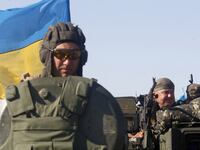
MOSCOW, Russia — On Wednesday the leaders on both sides of Russian-Ukrainian conflict, President Vladimir Putin and President Petro Poroshenko, spoke on the phone and agreed that too many people have been dying on the battlefields in eastern Ukraine—it is time for a ceasefire. But that doesn’t mean there is one.
The Kremlin’s official website commented that both presidents “expressed to a large extent similar views on possible ways out of the crisis.” But to succeed, Putin insisted, both sides have to stop offensive operations; and it is Kiev that must pull its forces away from the front line, away from populated areas that may suffer most from artillery fire.
The new attempts to find compromises come after more than 100 soldiers serving in Russia’s regular army have been killed and Ukrainian troops have suffered hundreds of losses in recent day, according to the human rights activists of the group Memorial. To stop the bloodshed in the Luhansk and Donetsk regions of Ukraine, known as Donbass, the two presidents agreed to create a trilateral contact group and negotiate details of a peaceful settlement this week.
“I really hope that a peaceful process will be initiated in Minsk on Friday,” Poroshenko said at a meeting in Kiev.
Thousands of families in Russia as well as Ukraine look forward to peace. But already analysts and military commanders are predicting complications. “In a good way or a bad, Donbass will be ours,” reads the ironic headline on a report published by the Slon.ru web site, summarizing the opinions of various Russian experts. Most of the think tanks thought that the situation in eastern regions of Ukraine would remain unstable for a long time.
Get the best of The Beast delivered right to your inbox
By clicking “SUBSCRIBE” you agree to our Terms of Use and Privacy Policy.
One of the peace negotiators, the Ukrainian commander, Gen. Vladimir Ruban, told local television on Tuesday that the bodies of 680 Ukrainian servicemen were being gathered in Donetsk. Most had been killed during the recent fighting against Russian backed forces in Ilovaisk and Saur Mogila, the commander said.
In the past few weeks Ruban has traveled personally to the Donetsk and Luhansk regions occupied by anti-Ukrainian rebel forces. He confirmed that both sides had used heavy artillery in the city of Donetsk, which has a current population of about 500,000 civilians. “Both sides continue killing each other, but there is an understanding now that the change in the attitude is necessary,” Ruban said.
The commander confessed that on many occasions Ukrainian artillery “managed to miss,” hitting local houses and multi-story apartment buildings: “Eight people were killed by a bomb in one of the houses," he said when discussing civilian losses. In the past three months over 2,500 civilians have been killed in the crossfires of Donbass.
Meantime, on the eve of the NATO summit in Wales, President Barack Obama called on the alliance to help Ukraine and open the door to the country’s membership: “NATO must make concrete commitments to help Ukraine modernize and strengthen its security forces. We must do more to help other NATO partners, including Georgia and Moldova, strengthen their defenses as well.”
Obama delivered his message from Russia’s neighbor Estonia, a member of NATO and the European Union: “We must reaffirm the principle that has always guided our alliance, for countries that meet our standards and that can make meaningful contributions to allied security, the door to NATO membership will remain open.”
As a result of the violent war in Donbass, more and more Ukrainians say their country should join NATO. If in 2010 most Ukrainians, 51 percent opposed their country’s admission to NATO and only 12 percent supported the idea. But the most recent polls show 40 percent of Ukraine’s population now want to join alliance, so NATO would defend them. Last weekend former Ukraine Prime Minister Yulia Tymoshenko called for a nationwide referendum on NATO membership.
See more of our coverage in your search results.

Got a tip? Send it to The Daily Beast here.
Register below to read this article for free or subscribe
to unlock unlimited access to The Daily Beast.
Monthly
$1
First month then $5.99/month
Annual
$35
First year then $59.99/year
Premium
$79
First year then $119.99/year
*Substack access provided by the next business day, using your subscription email. Choosing the Premium plan constitutes your permission to share your subscription email with Substack and your agreement to Substack’s Privacy Policy.
Already have an account? Sign In
Looks like you already have a subscription!
You're all set!
Thanks for subscribing.