Researchers Uncover Proteins That Could Finally Explain ALS
The proteins suggest a direct link between the rare neurological disease and dementia.
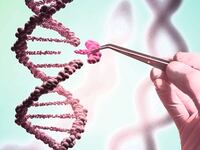
Photo Illustration by The Daily Beast
Get the Beast Digest newsletter delivered straight to your inbox
By clicking “SIGN UP” you agree to our Terms of Use and Privacy Policy.
On Monday, researchers published a breakthrough in JAMA Neurology that suggests a gene that causes amyotrophic lateral sclerosis, or ALS, could be linked to dementia.
ALS—which is more commonly referred to as Lou Gehrig’s disease after the famous baseball player who was diagnosed with it—occurs when a patient’s motor neurons, which direct movement, begin to mysteriously die, making it difficult for them to control muscles and perform basic actions, from speaking to walking to breathing, without help.
The disease has no cure thus far.
What makes ALS, which also affected the late physicist Stephen Hawking, especially confusing is the fact that about half of patients with the condition also develop memory and cognitive issues. That didn’t make sense to scientists: How could a disease that affected the very foundation of how people move affect their thinking and ability to remember?
The new research, a collaboration between scientists at the University of California at San Francisco and Washington University, was a genetic meta-analysis of 124,876 individuals of European ancestry.
What the team found shows that there could be a genetic link between the breakdown of movement and cognitive skills. That link comes from a gene that’s been associated with neurodegenerative diseases, such as Alzheimer’s, Parkinson’s, or frontotemporal dementia (FTD).
Specifically, what’s known as the tau protein seems to be connected to an elevated risk factor for ALS. Mutations in the tau protein also seem to be linked to neurodegenerative diseases, particularly when the tau protein starts to abnormally pile up in sections of the brain that are affected by neurodegenerative diseases like Alzheimer’s.
What made the researchers’ analysis more compelling is the fact that the tau protein link was the only one associated between neurodegenerative diseases and ALS.
FTD, in fact, could be the key to figuring out why some ALS patients are susceptible to cognitive issues. FTD typically targets neurons that affect how we socialize with others—how we judge behavior to be appropriate or not in a situation, and how we might inhibit ourselves from acting one way even though we might internally want to act on a behavioral urge.
The set of genes that kickstarts FTD could be connected to ALS patients. FTD symptoms include muscular spasms and weakness, difficulty controlling movement, and reduced coordination—which made researchers of the JAMA study believe the two conditions could possible lie on the same disease spectrum.
And sure enough, they were. A protein known as BNIP1 seemed to show a link between FTD and ALS. BNIP1 helps keep neurons functioning normally and promotes healthy development. BNIP1, which increases a patient’s risk for FTD, has also been shown to fall when the spinal cords of ALS patients are analyzed postmortem.
In other words, this pair of genetic connections with the BNIP1 and tau proteins could indicate that there is a link between the motor problems and simultaneous cognitive breakdown that many ALS patients experience.
It’s a big step in finally understanding the mysterious basis of a disease that has stumped medical researchers for decades. While seeing this link doesn’t mean we’re any closer to a cure for ALS, it could help us understand how the proteins and their genetic instructions could lead to a higher risk of ALS for some individuals, or why the double breakdown of cognition and motor neurons occurs. In the future, the two proteins could be targeted for therapies.
See more of our coverage in your search results.

Got a tip? Send it to The Daily Beast here.
Unlock a year of full access to The Daily Beast for $35.
Monthly
$1
First month then $5.99/month
Annual
$35
First year then $59.99/year
Premium
$79
First year then $119.99/year
*Substack access provided by the next business day, using your subscription email. Choosing the Premium plan constitutes your permission to share your subscription email with Substack and your agreement to Substack’s Privacy Policy.
Looks like you already have a subscription!
- Account (completed)
- Payment (completed)
- Confirmation (completed)
You're all set!
Thanks for subscribing.
- 1Account
- 2Payment
- 3Confirmation
Sign in or create an account
Register below to read this article for free or subscribe
to unlock unlimited access to The Daily Beast.
Monthly
$1
First month then $5.99/month
Annual
$35
First year then $59.99/year
Premium
$79
First year then $119.99/year
*Substack access provided by the next business day, using your subscription email. Choosing the Premium plan constitutes your permission to share your subscription email with Substack and your agreement to Substack’s Privacy Policy.
Already have an account? Sign In
Looks like you already have a subscription!
- Account (completed)
- Payment (completed)
- Confirmation (completed)
You're all set!
Thanks for subscribing.
- 1Account
- 2Payment
- 3Confirmation