Evidence of Traumatic Brain Injury Found in Gunman Behind Maine’s Deadliest Shooting
Army reservist Robert Card, a grenade training instructor, is believed to have been exposed to thousands of blasts.
John Tlumacki/Boston Globe via Getty Images
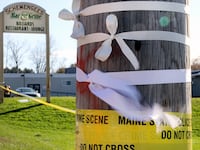
An analysis of the brain tissue of Robert Card—the Army reservist who killed 18 people last year in Maine in the state’s deadliest shooting spree—found significant evidence of traumatic brain injuries, according to a report released Wednesday.
Card, who worked for years as a hand grenade instructor, is believed to have been exposed to thousands of low-level blasts, and the kind of damage found in his brain aligned with that seen in previous studies on the effects of blast injury in humans, according to Dr. Ann McKee, the director of Boston University’s Chronic Traumatic Encephalopathy (CTE) Center. The shooter’s family released the findings in the hope of helping to prevent future tragedies.

Card, 40, died by suicide after the Oct. 25 shootings at a bowling alley and a bar in Lewiston. The Maine Chief Medical Examiner’s office requested that the Boston University center conduct a study of his brain, with researchers finding “significant degeneration” in nerve fibers that allow for communication between different areas of the brain, according to McKee, along with inflammation and small blood vessel injury.
“While I cannot say with certainty that these pathological findings underlie Mr. Card’s behavioral changes in the last 10 months of life, based on our previous work, brain injury likely played a role in his symptoms,” McKee said, adding that there was no evidence of CTE.
Card’s family said in a statement that they are “deeply sorry and heartbroken” to all of the shooting’s victims and their loved ones. “We know it does not fully explain Robert’s actions, nor is it an excuse for the horrific suffering he caused, but we thank Dr. McKee for helping us understand his brain damage and how it may have impacted his mental health and behavior,” the statement added.
In the months leading up to the killings, both the police and Army had been alerted to Card’s declining mental health. Card’s family had warned authorities that he had started showing signs of paranoid delusions, and his fellow reservists also told police they were concerned about his behavior before his two-week hospitalization in New York last summer.
Get the best of The Beast delivered right to your inbox
By clicking “SUBSCRIBE” you agree to our Terms of Use and Privacy Policy.
He was admitted to a hospital in July after pushing another reservist and locking himself inside a motel room during training. Months later, just weeks before Card’s attack, one reservist informed a superior he feared that Card was about to “snap and do a mass shooting.”
Army officials are scheduled to testify before a special commission established by Maine Gov. Janet Mills on Thursday. Daniel Wathen, the chair of the commission investigating the shooting, said at a Monday hearing with victims that an interim report could be published by April 1.
See more of our coverage in your search results.

Got a tip? Send it to The Daily Beast here.
Register below to read this article for free or subscribe
to unlock unlimited access to The Daily Beast.
Monthly
$1
First month then $5.99/month
Annual
$35
First year then $59.99/year
Premium
$79
First year then $119.99/year
*Substack access provided by the next business day, using your subscription email. Choosing the Premium plan constitutes your permission to share your subscription email with Substack and your agreement to Substack’s Privacy Policy.
Already have an account? Sign In
Looks like you already have a subscription!
You're all set!
Thanks for subscribing.