Their Loved Ones Paid $13K for a Moon Burial. They’ll Burn Up in Space Instead
The remains of over 70 people are expected to be incinerated on reentry to Earth’s atmosphere after a jet propulsion failure.
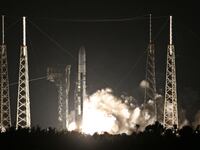
Gregg Newton/Getty
A robotic spacecraft carrying the remains of more than 70 people is expected to burn up upon its reentry to Earth’s atmosphere Thursday. The Peregrine mission, intended for the moon’s surface, was doomed in as little as seven hours after its launch on Jan. 8, when it suffered a failure in its propulsion system and began to leak fuel. The flight would’ve been the first U.S. mission to land on the moon in more than 50 years.
Astrobotic, the company that launched the Peregrine, announced definitively that the Peregrine would never reach the moon a day after the launch and the propulsion leak began, on Jan. 9. It stood by its decision Sunday, when it said it would allow the spacecraft to reenter Earth’s atmosphere, upon which the craft and its deceased passengers would burn up.
The human remains, which included that of science fiction writer Arthur C. Clarke, were stored in capsules on the moon-bound robotic spacecraft. They were meant to “remain on the lunar surface as a permanent tribute to the intrepid souls who never stopped reaching for the stars,” as Celestis, a memorial spaceflight company involved in the failed mission, says on its website.
Celestis sells a variety of memorial flight plans on spacecraft owned and operated by other organizations. Friends and family of those on the Peregrine paid for the company’s Luna Service, which starts at the sum of $12,995.
Lunar burials have repeatedly drawn criticism from the Navajo Nation, which said the practice was “tantamount to desecration.” The nation views the moon as sacred, and objected almost 30 years ago to NASA’s decision to send the remains of scientist Eugene Shoemaker to the moon. At the time, NASA told the Navajo Nation it would consult with Native Americans “if we ever discuss doing something like this again.”
Sign Up for Our Beast Digest Newsletter
By clicking “SUBSCRIBE” you agree to our Terms of Use and Privacy Policy.
Deana Weibel, an anthropologist at Grand Valley State University in Michigan, told The Washington Post that the decision about who or what goes to the moon ultimately isn’t about religion or morality. “It’s who has the power, who has the rockets,” she said.
See more of our coverage in your search results.

Got a tip? Send it to The Daily Beast here.
Register below to read this article for free or subscribe
to unlock unlimited access to The Daily Beast.
Monthly
$1
First month then $5.99/month
Annual
$35
First year then $59.99/year
Premium
$79
First year then $119.99/year
*Substack access provided by the next business day, using your subscription email. Choosing the Premium plan constitutes your permission to share your subscription email with Substack and your agreement to Substack’s Privacy Policy.
Already have an account? Sign In
Looks like you already have a subscription!
You're all set!
Thanks for subscribing.