The Highest Paid Man on Wall Street
While just about every top banking executive declined a bonus this year, a relatively unknown former Lehman Brothers snagged himself a $25 million a year contract. Some are crying foul.


Addendum: this article has been updated to include a statement from Barclays, which disputes the story.
In addition to everything else, 2008 will be remembered as the year bonuses all but disappeared on Wall Street for most senior executives—and rightly so, given the horrific performance of nearly every firm—with one notable and, particularly galling exception.
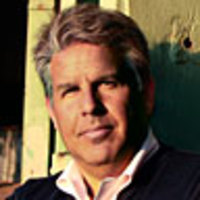
While just about every top Wall Street executive—from Lloyd Blankfein of Goldman Sachs and John Mack of Morgan Stanley to Bank of America’s Ken Lewis and JPMorganChase’s Jamie Dimon, has agreed to eschew a bonus in 2008, my sources tell me that a relatively unknown 49-year-old—Hugh “Skip” McGee III, the former head of investment banking at Lehman Brothers—may now be the highest paid banker on Wall Street. He negotiated for himself a two-year, $25-million-a-year contract to remain global head of investment banking at the British bank Barclays plc, as part of the deal where Barclays bought (for a song) the remnants of Lehman Brothers’ U.S. banking business out of bankruptcy. “I’m feeling nauseous right now even thinking about McGee’s deal,” said one of his former Lehman colleagues.
“I’m feeling nauseous right now even thinking about McGee’s deal,” said one of his former Lehman colleagues.
A spokesman for Barclays declined to comment during the reporting of this article. This afternoon the company sent a one-sentence statement: "This is categorically false."
McGee, who had been at Lehman since 1992 and its head of investment banking since 2002, has never been particularly well known on Wall Street, even when he was responsible for much of Lehman’s success in the natural resources and power industries. Now, he may become infamous for negotiating a boffo deal for himself in a year when most top Wall Street bankers and executives are getting close to nothing in compensation. Ironically, had McGee’s payday come during last year’s bonanza when Blankfein made $68.5 million and his own boss, Lehman CEO Richard Fuld, was paid more than $40 million, McGee’s huge compensation would have been barely noticed.
In addition to the sheer magnitude of the $50-million dollar deal—which feels wholly inappropriate these days—there is at least an appearance of conflict of interest: McGee was one of three Lehman senior executives—along with former Lehman president Bart McDade and Mark Shafir, the former head of M&A—who negotiated the sale of Lehman’s U.S. investment banking assets to Barclays, some six hours after Lehman Brothers Holdings filed for bankruptcy. (After initially serving in a senior position at Barclays, McDade has now left the firm. Shafir never joined Barclays and is now head of M&A at Citigroup.)
As part of the shotgun deal, Barclays agreed to buy certain of Lehman assets (including paying $1.29 billion for its headquarters and two data centers) and assume certain of Lehman’s liabilities, including the accrued bonuses for any Lehman investment bankers still employed by Barclays at the end of 2008. Three days after the deal with Barclays was inked—and before Lehman’s creditors had a moment to organize in opposition—U.S. Bankruptcy Court Judge James Peck approved the sale. He said it would be in the best interests of the 10,000 Lehman employees who supposedly would still be employed by Barclays—about half still are—and in the best interests of the bankrupt estate. “Lehman Brothers became a victim,” the Judge said in approving the deal with Barclays. “In effect, the only true icon to fall in the tsunami that has befallen the credit markets. And it saddens me.”
Not only did McGee know by mid-September, his former colleagues said, that as an executive committee member he was unlikely to get any bonus from Lehman in 2008, he also knew that he would likely be the linchpin that would hold together the Lehman team that Barclays was buying pretty much on the fly. The failure to keep the Lehman bankers and traders in their seats—not that there were many good options for them in the market if they decided to leave—would quickly render Barclays’ deal a disaster. Like a good banker, McGee used to his advantage the leverage the situation had presented to him. Some Lehman creditors—who will end up with pennies on the dollar when all is said and done—feel duped by the deal McGee negotiated for himself and for the Lehman estate. “It’s especially outrageous,” said one of them, “because it was Bart and Skip who negotiated the deal.”
The frustration over the proceeds from the Barclays deal among the Lehman creditors is such that Bryan Marsal, the turnaround expert who is now the CEO of Lehman Brothers Holdings—the bankrupt entity—is said to be considering bringing a lawsuit to recover, if possible, some additional value from Barclays based in part upon this potential conflict of interest. Marsal and the Lehman creditors are also working together to file a motion with the bankruptcy court—as soon as at the next public hearing on January 14—that would ask Judge Peck to appoint an examiner to investigate the Barclays deal for Lehman’s U.S. investment banking assets. “There clearly were conflicts of interest here,” said someone close to the Lehman estate.
For its part, Barclays can, of course, pay its executives whatever it wants to pay them. Barclays received no bailout money from the UK government (or, of course, from the U.S. government) and as a result has not been the focus of the efforts by Congressman Henry Waxman and New York State Attorney General Andrew Cuomo to reign in the huge bonuses that have historically been paid to Wall Street’s bankers, traders, and executives.
But something just does not feel right about the deal McGee cut for himself when the world was falling apart last September.
William D. Cohan, a former senior-level M&A banker on Wall Street, is the author of The Last Tycoons: The Secret History of Lazard Freres & Co. Cohan's House of Cards: A Tale of Hubris and Wretched Excess on Wall Street, will be published by Doubleday in 2009. He also writes for Fortune, ArtNews, The Financial Times, and The Washington Post.
Got a tip? Send it to The Daily Beast here.