Since the 1970s, there have been strict limits on how much money an individual can donate to a presidential candidate in a given election—$2,500. But there’s no limit to how much they can “bundle” by soliciting donations from friends and business connections. So the McCain-Feingold campaign-finance law that went into effect in 2002, which banned a variety of “soft money” loopholes that allowed donors to circumvent these limits, made bundlers a much bigger part of the money-in-politics story. Whether contributed via a bundle or a one-off donation, such “hard money” goes straight to a candidate’s coffers, to be used however the campaign sees fit.
And it’s the hard money that matters most, according to Bill Allison, editorial director at the Sunlight Foundation, a government-transparency group, and one of the reigning experts on bundling. Despite all the attention paid to superPACs in the wake of the Supreme Court’s controversial Citizens United ruling, Allison said, candidates and their campaigns do not have direct control over superPAC money—and that can lead to real problems.
The famous “swift-boating” campaign against John Kerry in 2004 is a case in point. When the anti-Kerry ads hit the air, Kerry’s campaign was cash-strapped, so the fact that the independent political action committees supporting the Mass. senator—known as 527s—were lead-footed in their response may have doomed his campaign. If the campaign had had more hard cash on hand, things could have gone differently. “There is an independence to these groups and they don’t always do exactly what the candidates would do in the same circumstances,” Allison said.
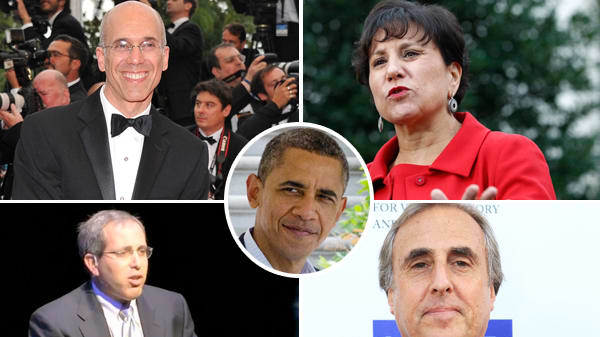
Using the website OpenSecrets.org as a guide, The Daily Beast has identified seven of President Obama’s most important bundlers for the 2012 campaign, and considered why their presence will matter in this election. (Exact contributions are not available, because the campaign only provides ranges.) In keeping with his general lack of transparency, Mitt Romney has not revealed who his bundlers are.
All of the bundlers either declined to comment or did not respond to interview requests. The Obama administration declined to comment.