0
Ai Weiwei Survey at the Hirshhorn Museum in Washington (Photos)

Image courtesy of the artist.

Ai Weiwei, China's Art Sage
Image courtesy of the artist.

"Straight" (2008–12)
Image Courtesy Cathy Carver / Hirshhorn Museum and Sculpture Garden

"Map of China" (2008)
Image courtesy of the artist

"Forever" (2008)
Watanabe Osamu. Photo courtesy: Mori Art Museum, Tokyo

"Table with Two Legs on the Wall" (2008)
Image courtesy of the artist.

Ai Weiwei with his installation called "Provisional Landscapes" (2002–08)
Photo courtesy: Mori Art Museum, Tokyo.

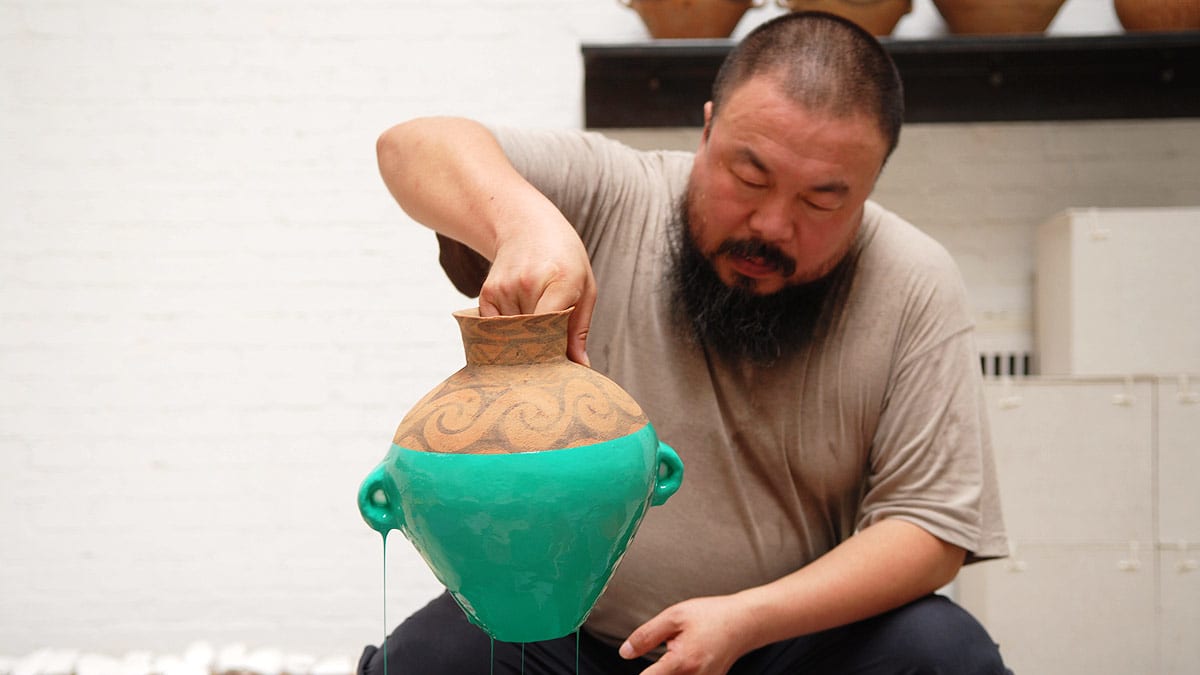
"Colored Vases" (2007–10)
Image Courtesy Cathy Carver / Hirshhorn Museum and Sculpture Garden

A detail from Ai Weiwei's recent installation called "He Xie"
Image Courtesy Cathy Carver / Hirshhorn Museum and Sculpture Garden

"Cube Light" (2008)
Image Courtesy Cathy Carver / Hirshhorn Museum and Sculpture Garden

"Snake Ceiling" (2009)
Image Courtesy Cathy Carver / Hirshhorn Museum and Sculpture Garden

"Grapes" (2010)
Image courtesy of the artist

"Moon Chest" (2008)
Image Courtesy Cathy Carver / Hirshhorn Museum and Sculpture Garden

"Divina Proportione" (2006) and "F Size" (2011), installed with images of the building of Ai's "bird-nest" stadium in Beijing.
Image Courtesy Cathy Carver / Hirshhorn Museum and Sculpture Garden

"Dropping a Han Dynasty Urn" (1995)
Image courtesy of the artist.
Got a tip? Send it to The Daily Beast here.