Somewhere at sometime in history an obscure philosopher that you’ve probably never heard of coined a neat-sounding little maxim that perfectly sums up how you’re feeling and seamlessly validates your quirks and kinks.
Being particularly in need of wisdom at the moment, I have fallen smack-dab in the middle of this trap.
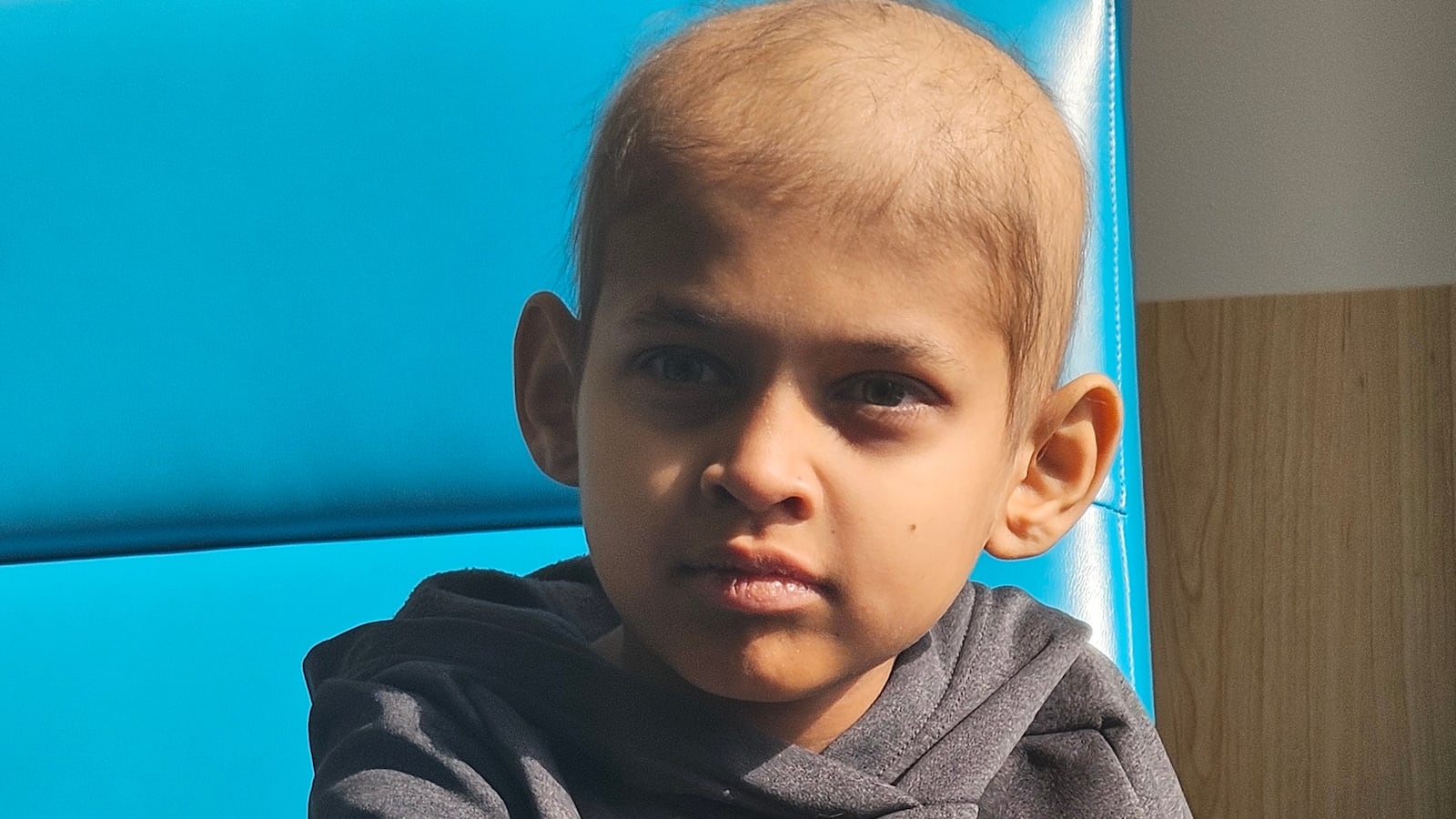
I’m watching my eight-year-old son recover from a bone marrow transplant that we hope will stave off a deadly brain-eating disease, and as things tend to go in such situations, I’m waiting for the other shoe to drop. Because even though the dust has finally settled—he survived three weeks of hell as chemo tore his insides up to make room for a stranger’s donated bone marrow—we’ve barely just begun.
This I know, and feel in my bones, every time someone congratulates us on being discharged from the hospital. Which, more often than not, is followed soon after by new fallout behind closed doors, like a new ache or bodily change making my son probe my eyes and ask, “Why couldn’t you just let me die?”
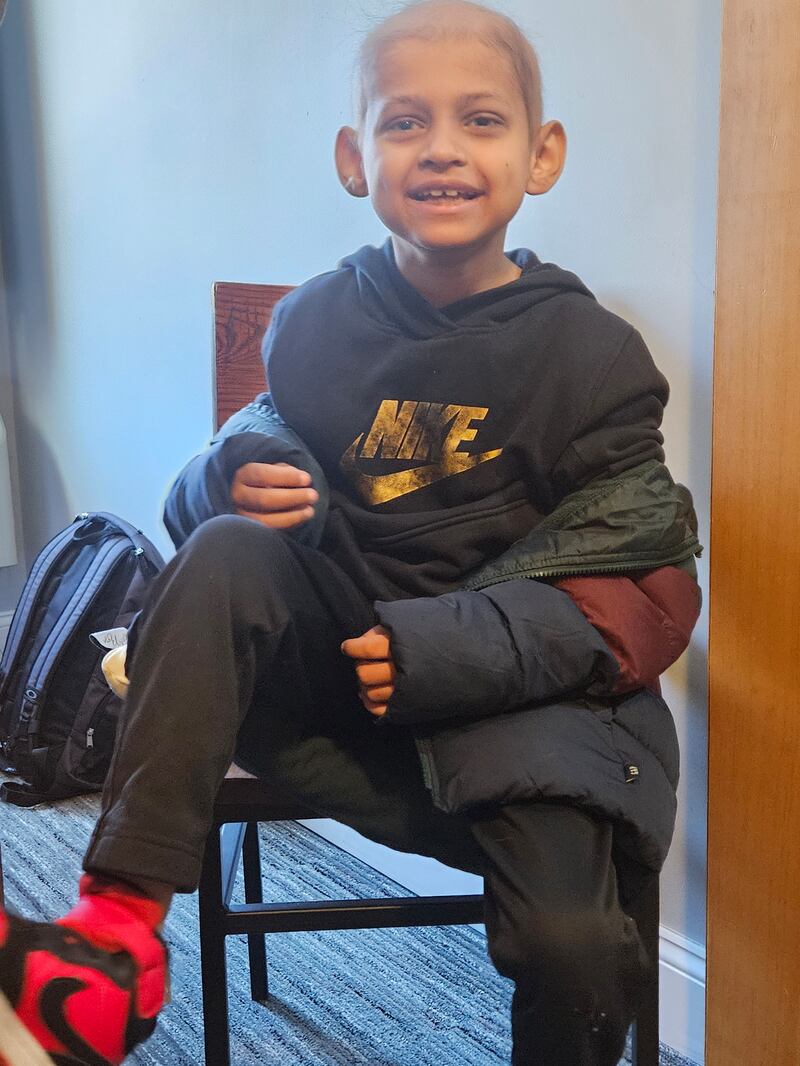
I never have an answer, at least not one that satisfies him, so he keeps asking the same question in different ways. And as much as I want to tell him everything will get better from here on out, that would be a lie.
Even as we now get to live outside of the hospital, we’re watching for signs of a deadly complication that’s very Alien vs. Predator in both name and nature. There is always a chance of donor cells attacking the recipient’s cells, which can result in things like rashes or near-certain fatalities like organ failure and permanent devastation in the digestive tract.
“Ninety percent of these complications are usually treatable,” our doctor reassures, noting that we’re only “a third of the way through” the 100 days post-transplant thought to pose the biggest risk.
That’s a lot of time to live in dread. Which is probably why, during our most recent hospital check-up, I find myself browsing through various laws of nature in search of one that might disprove my current hunch about good news—namely that it’s not to be trusted. Surely, it must be a myth that if a bad thing happens (my third-grade son being diagnosed with a rare genetic disease that eats his brain), followed by a good thing (him receiving a bone marrow transplant that might save his life), something bad is about to happen again to cancel out the good.

I expected to be told this pattern of thinking is a fallacy, a kind of confirmation bias with no predictive value or bearing on reality. But no. Apparently quite a few long-dead philosophers argued quite the opposite. I am told that a 20th century philosopher known for changing his mind summed up my current dilemma perfectly: “Anytime things appear to be going better, you have overlooked something.”
There are myriad variations on this mindset, all condensed neatly into bite-sized dictums that almost certainly obscure truth and probably reinforce mental illness. Everybody’s heard of Murphy’s law, that old adage first used off-hand to describe difficulties in aerospace engineering before it was bastardized to the point of confused ubiquity and emblazoned on T-shirts and bumper stickers: “Anything that can go wrong will go wrong.”

Deep in my doom scrolling, my son’s eyes are pleading with me from the exam table where he’s been forced to lie down. He seems at once resigned to this latest procedure, made more excruciating by some of his meds, and furious about it, a single tear almost imperceptibly pooling on his chin. I try to hold his hand but his eyes are ablaze with fury, and worse than that, betrayal.
“I hate you,” he says through gritted teeth. A moment later, he’s howling in pain as a nurse pulls week-old adhesive off the hole in his chest used for infusions.
I’d like to think his torment will be worth it; he’ll be a success story. Not one of those transplant kids memorialized in smiling photos on Facebook from happier times, an “angel” supposedly summoned home to heaven after he succumbed to irreparable organ failure; his lungs stopped working; his liver turned to mush.
I take one more look at my phone, at my ill-advised search results, and see another morsel of so-called wisdom: It’s always darkest just before the lights go out.
There’s a law for almost anything. Laws of nature, laws of life. People apparently say a lot of stupid things to convince themselves of their own perceptions. Centuries of mental energy wasted on trying to make sense of things when a deep-throated “Fucked if I know” would be more to the point. The only wisdom here is that words are a salve, a sedative, often less about communicating with others than convincing ourselves.
It’s at this point that my son suddenly rouses me from my fevered search for prophecy. He’s full-on sobbing now and red-faced, hollering at the nurse to stop.
“We’re almost done, bud, just a little bit more,” the nurse says.
But in a moment of complete meltdown, nearly baring his teeth even as he struggles to breathe, my skinny, half-naked son demands that all medical personnel in the room stop and listen to him.
And if they don’t, he says, he’ll blow up the hospital.
“Because this is hurting me!” he squeals.

His threat (as insincere as it is) doesn’t yield the kind of response he’d intended, prompting not a break but a psychological intervention by doctors. Asked over and over again why he’d threaten to inflict harm on the nurses and doctors trying to help him, he only grows more frustrated to see that no one is taking him seriously.
“Why aren’t you scared?” he asks the doctor.
She stares back, studying him, while I see an opening, finally, buried behind all his rage, but there: “Did you want us to be scared?”
“Yeah,” he says, suddenly beginning to look a bit lighter behind the eyes.
“But why?” I ask.
“Because it’s not fair if I’m the only one scared.”
It’s the only law of nature I need to know right now. That anger is often fear, unrecognized. And it’s better not to fear all alone.