Former New York Governor Andrew Cuomo has officially entered New York City’s mayoral race.
Cuomo’s political comeback—after he resigned as governor in 2021 amid a slew of sexual harassment allegations—arrives in time for a potential run at the White House in 2028.
Cuomo, a Democrat who already held a sizable lead in the mayoral polls even before announcing his candidacy, confirmed his intention to run in a video shared on social media on Saturday.
“Our city is in crisis. That’s why I am running to be Mayor of New York City,” the 67-year-old politician wrote in the caption. “We need government to work. We need effective leadership.”
According to polling data from earlier this month, Cuomo is leading the Democratic primary field at 32 percent. Embattled incumbent Eric Adams is second, with 10 percent.
While Cuomo hasn’t publicly signaled any Oval Office aspirations, three of the last four New York City mayors have leveraged the position into presidential runs—albeit with minimal success.
In a field of potential Democratic candidates that is lacking obvious superstars, a mayoral run in the country’s biggest media market could help camera-ready Cuomo make a splash.
Cuomo—whose brother is NewsNation anchor Chris Cuomo—has already proven himself a formidable on-air talent. At the onset of the COVID-19 pandemic, he earned national recognition for firing barbs at President Donald Trump in his televised press conferences.
“If Andrew Cuomo becomes mayor of New York, he could very well be Trump’s chief antagonist starting in 2026, which could give Democrats a voice to rally around, however imperfect a messenger he may be,” Democratic strategist Jamal Simmons told The Hill earlier this month.
Cuomo is the heir to his family’s New York political dynasty. His father, Mario Cuomo, was immensely popular in New York City as the state’s governor, serving for three terms from 1983 to 1994. When he narrowly lost his fourth re-election campaign, it was because he failed to garner support outside of the flagship city.
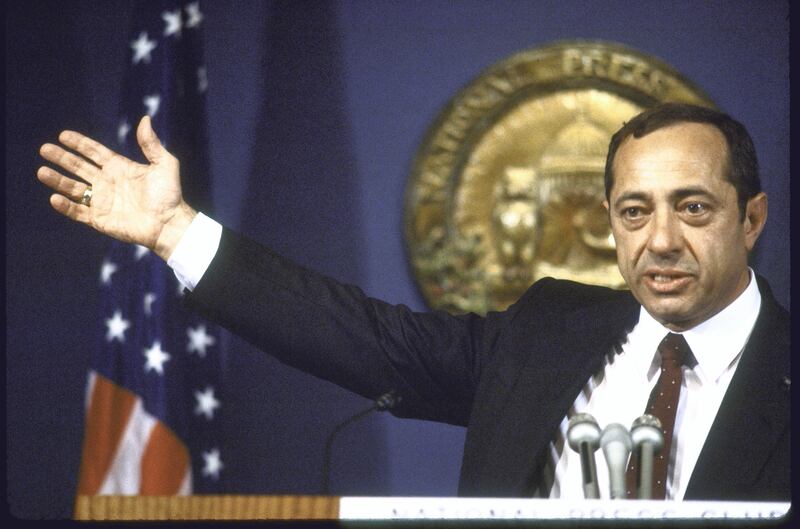
Democratic leaders also viewed the elder Cuomo in his day as a potential candidate for national office. But he never ran.
He came close, though. In December 1991, after years of pressure, Cuomo had a plane idling on the tarmac at the Albany airport ready to carry him to New Hampshire just in time to meet the filing deadline to run for president.
But the plane never took off. Cuomo’s decision not to run for national office earned him the moniker “Hamlet on the Hudson.”
His son, whose name was floated for a presidential run in both 2016 and 2020, now has the chance to create a new legacy. However, he will have to fend off the criticism lingering from his precipitous fall from grace as governor.
The sexual harassment allegations, which Cuomo denied and were never proven in court, were the final straw after a series of debacles in his administration.
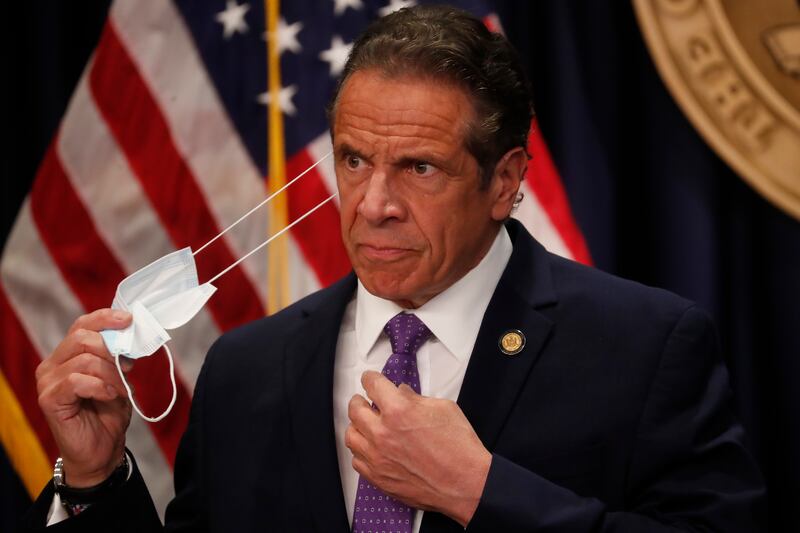
Still, his early support for pandemic precautions contrasted starkly with Trump’s initial downplaying of the epidemic and thrust Cuomo into the national spotlight.
Many of his Cuomo’s fans embrace the label “Cuomosexuals,” which was emblazoned on T-shirts and became an Instagram fad.
In May 2020, Cuomo enjoyed jaw-dropping polling numbers showing stratospheric bipartisan support. Ninety percent of Democrats viewed him favorably, as did 53 percent of Republicans.
However, his decline came quickly. Alongside the sexual harassment claims came accusations that Cuomo’s administration was taking steps to make COVID death counts seem lower than they actually were.
Since resigning, Cuomo has kept a low profile—until now.
“It won’t be easy,” he said in the video on Saturday. “But we can turn this city around, and I believe I can help.”