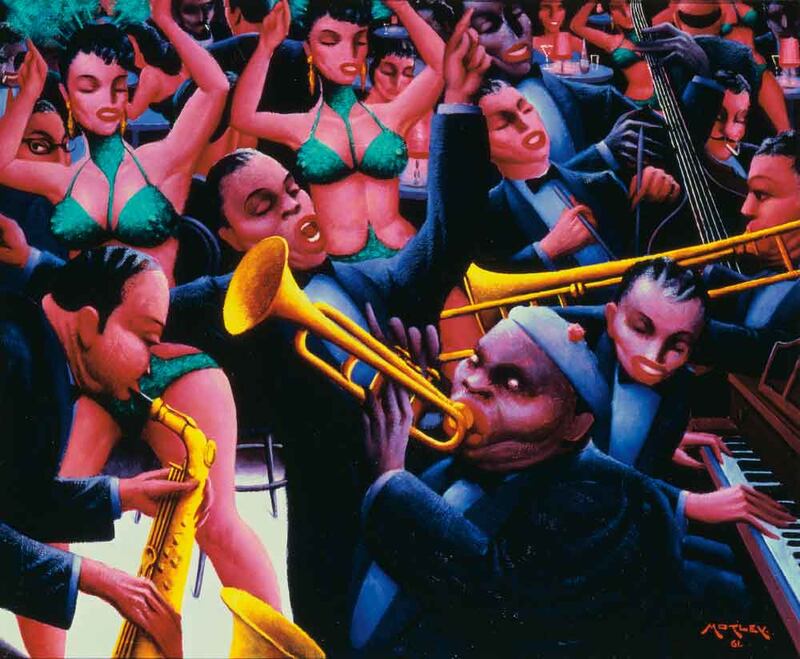
The 1961 painting embodies the way Motley used color and shape to capture the music and movement of night clubs, as he did with his Jazz Age paintings.
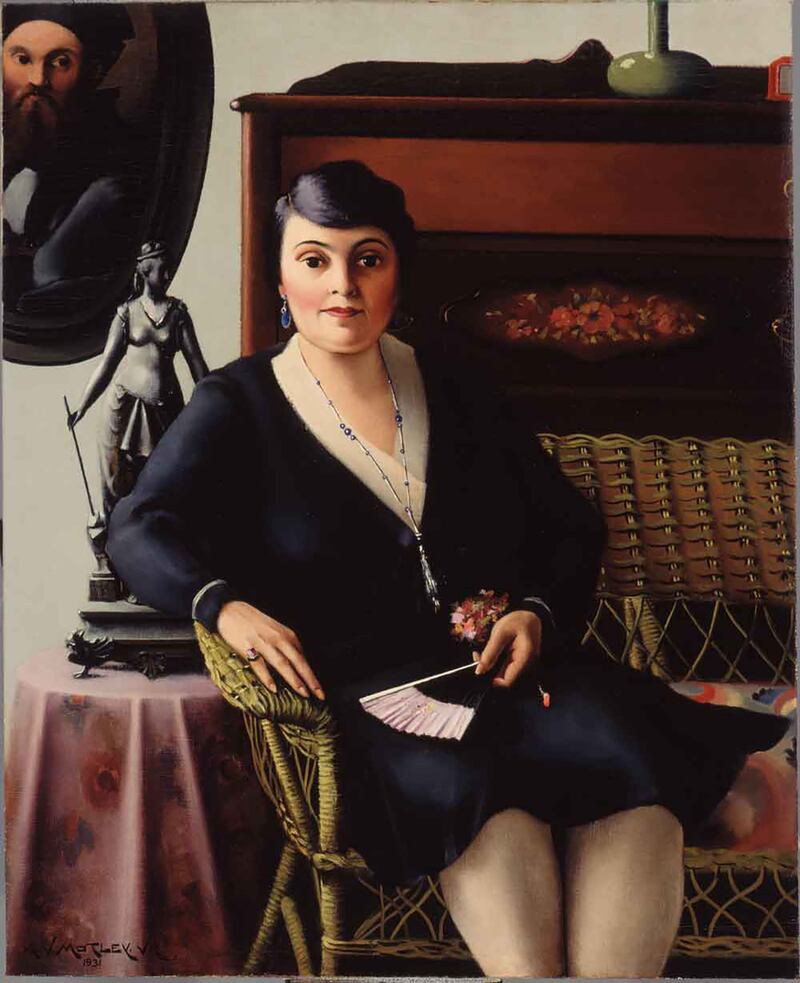
This 1931 portrait is an example of Motley's commitment to depicting African Americans in dignified ways, as well as capturing "the whole gamut" of their skin tones, from light-skinned to darker shades.
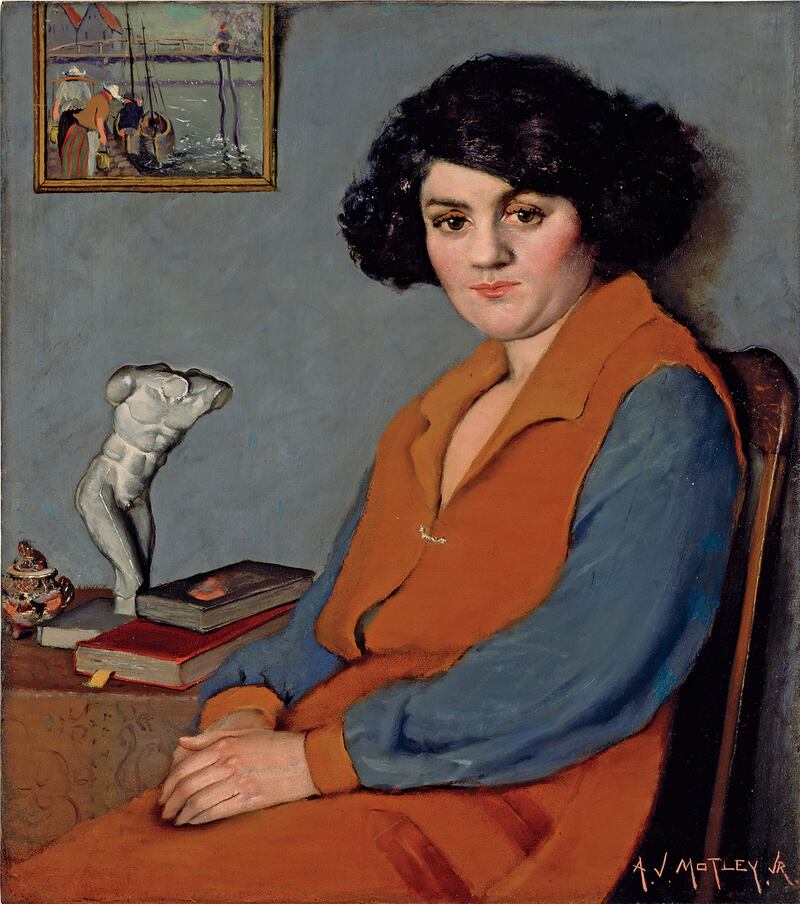
This 1920 painting speaks to Motley's fascination with capturing African Americans across an array of skin tones.
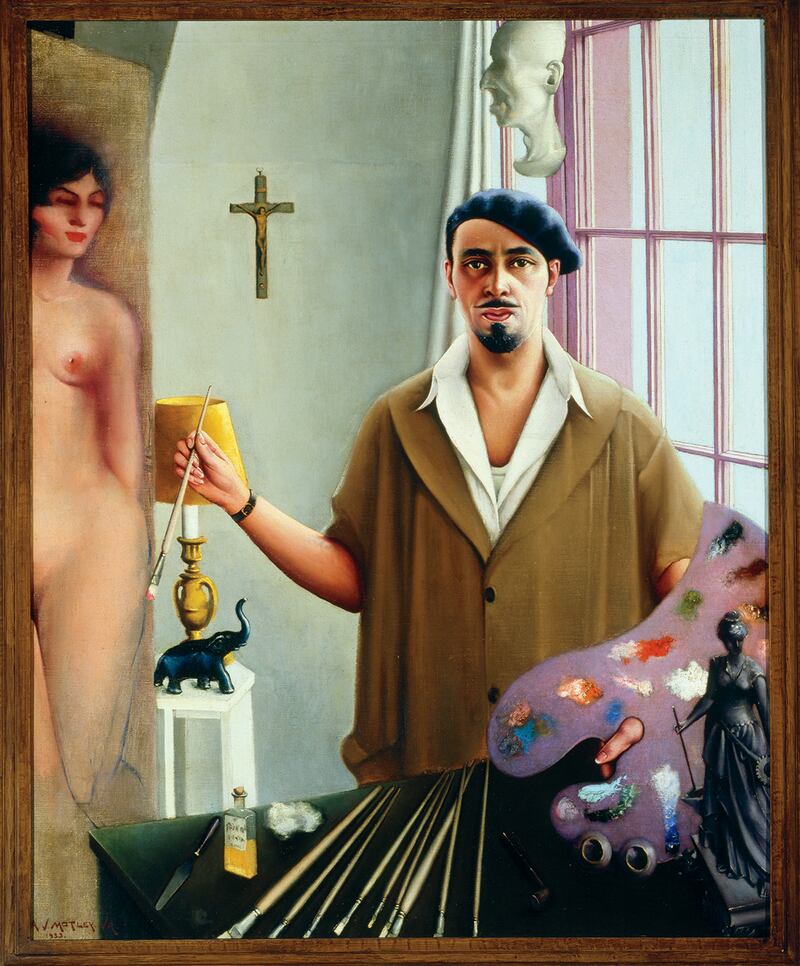
In this 1933 painting, Motley depicts himself at work painting one of his many nudes.
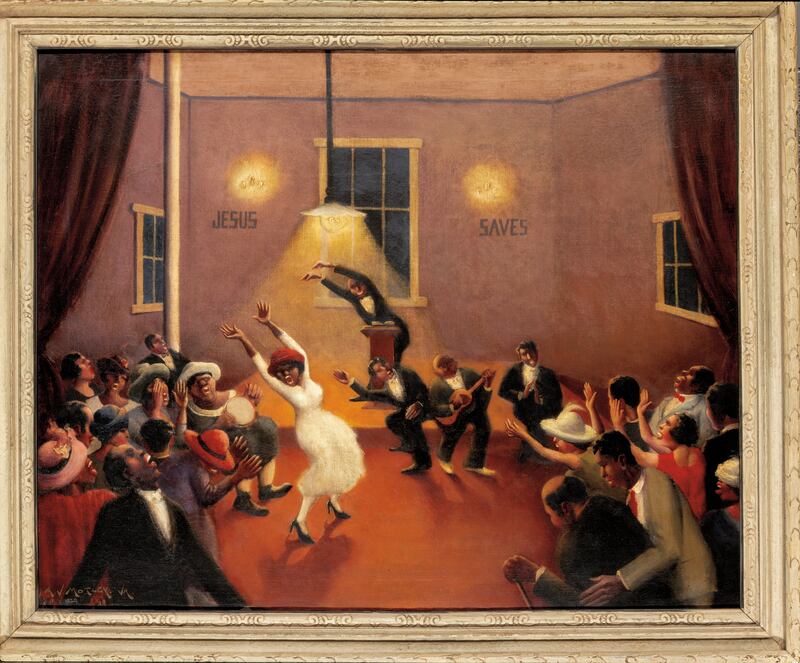
This 1929 painting captures a church meeting in rural Arkansas, part of Moltley's fascination with rural Southern black culture.
Courtesy Whitney Museum of American Art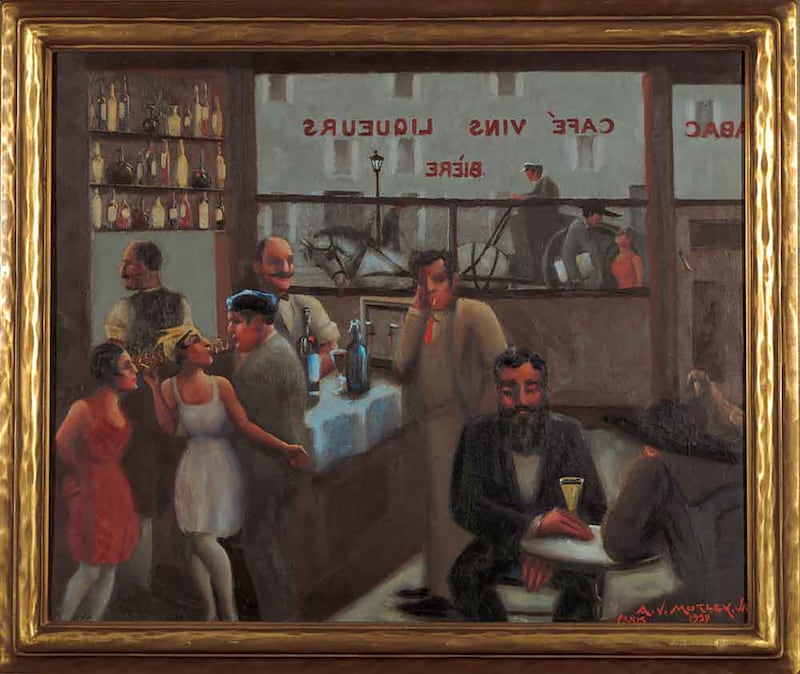
This 1929 painting was completed during Motley's year in Paris, where he went on a Guggenheim Fellowship. He joined several other African American artists and entertainers in Paris at the time, including Josephine Baker.
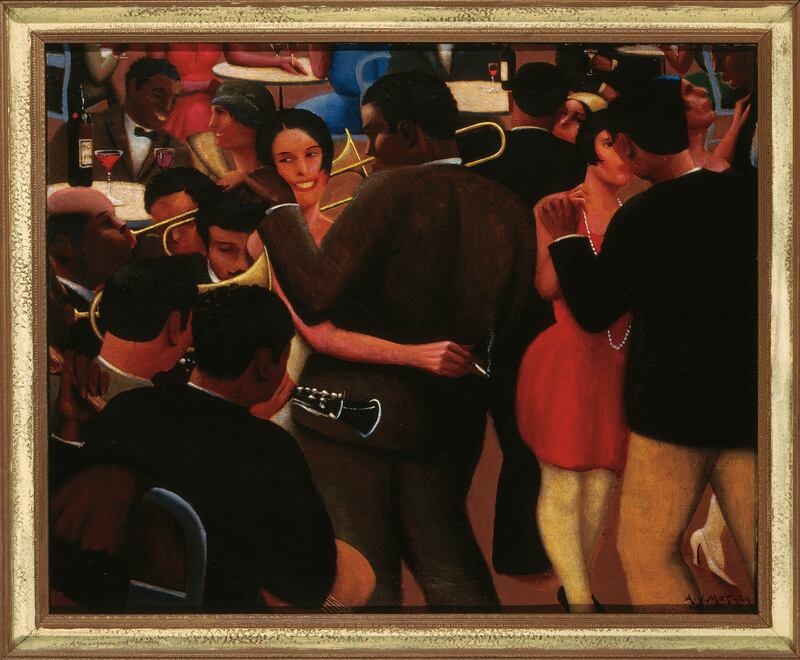
This 1929 painting captures the movement and nightlife of Paris in the Petite Cafe, which was popular with expatriate Africans and West Indians.
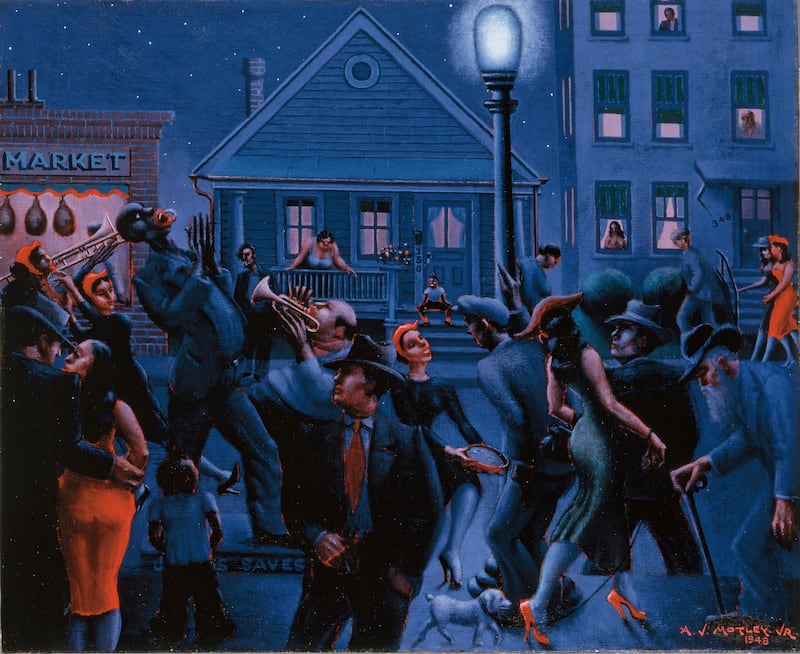
This 1948 work is one of the many scenes Motley painted of Bronzeville, a hub of Jazz Age excitement, and a center of African American migration in Chicago.