King Charles’ Free Portraits Snubbed on a Spectacular Scale as 46,000 Institutions Say No Thanks
The effort to get King Charles III’s likeness into community buildings fell flat.
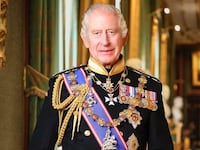
Hugo Burnand/Royal Household 2024/Cabinet Office
A program to distribute portraits of King Charles III to community institutions around the U.K. has been revealed as expensive and unpopular.
The initiative represented an attempt to depart from British cultural norms. In the U.K., it has long been considered a quirk of foreigners to display large images of the head of state in buildings funded, one way or another, by central or local government.
Some criticized the initiative as feeling “like an order from a dictatorship such as North Korea” when it was first announced.
The Conservative government at the time of the coronation went ahead with the plan all the same, which would have seen Charles, resplendent in naval uniform, gazing down at loyal citizens while they paid their parking ticket, worshipped God, or tried to avoid eye contact in a hospital waiting room.
However, a Freedom of Information request by the avowedly republican Guardian newspaper has now exposed the scheme as a flop.
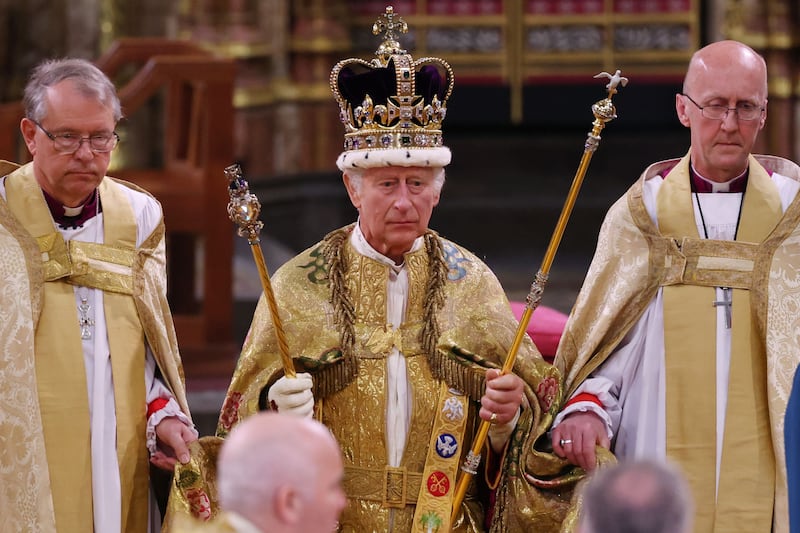
The free portraits were offered after Charles' coronation in May 2023.
WPA Pool/Getty Images
Around 20,000, or 31 percent, of institutions offered the portraits of the king accepted, and the scheme cost over £2.7 million ($3.7 million). More than 46,000 eligible public institutions rejected the offer, a 69 percent miss rate.
Get the best of The Beast delivered right to your inbox
By clicking “SUBSCRIBE” you agree to our Terms of Use and Privacy Policy.
Oliver Dowden, then deputy PM, said at the time of the coronation that the portraits would be “a reminder of the example set by our ultimate public servant.”
Of the 20,000 portraits that did find homes, the Cabinet Office declined to say specifically where they ended up, arguing such details could “give rise to controversy” and create “negative public perception,” according to the Guardian.
In general terms, however, hospitals barely touched them (3 percent take-up), universities were unimpressed (7 percent), and only a quarter of Church of England churches fancied displaying a picture of the man who is officially their “Supreme Governor.”

Local government offices were keener—73 percent said yes—and the coastguard was unanimously enthusiastic, with each and every one of the country’s 23 coastguard bodies snapping up the freebie, the Guardian reported. Nothing boosts morale during a maritime rescue quite like a framed King Charles beaming down from the wall.
But overall, more than 46,500 public institutions that could have ordered a portrait did not.
“The public may have an interest in knowing which institutions applied for the King’s portrait,” the government said in its freedom of information response to the Guardian.
“However, the likely motivation behind such interest may focus more on identifying which organizations did not apply rather than understanding government decision making or policy effectiveness,” the government added. “This type of scrutiny does not necessarily serve a broader public interest and could unfairly single out institutions for criticism over a discretionary decision that does not impact their ability to provide public services. This type of negative attention could discourage organizations from engaging in similar schemes in the future due to negative media coverage or reputational harm.”
Graham Smith, chairman of the anti-monarchy pressure group Republic, accused the government of covering up “spending money we don’t have on a man we didn’t elect.”
The Guardian highlights that the monarchy is in “steady decline” in the polls. Still, at least the king has plenty of coastguard offices where he can still feel wanted.
Want more royal gossip, scoops and scandal? Head over to The Royalist on Substack
See more of our coverage in your search results.

Got a tip? Send it to The Daily Beast here.
Register below to read this article for free or subscribe
to unlock unlimited access to The Daily Beast.
Monthly
$1
First month then $5.99/month
Annual
$35
First year then $59.99/year
Premium
$79
First year then $119.99/year
*Substack access provided by the next business day, using your subscription email. Choosing the Premium plan constitutes your permission to share your subscription email with Substack and your agreement to Substack’s Privacy Policy.
Already have an account? Sign In
Looks like you already have a subscription!
You're all set!
Thanks for subscribing.