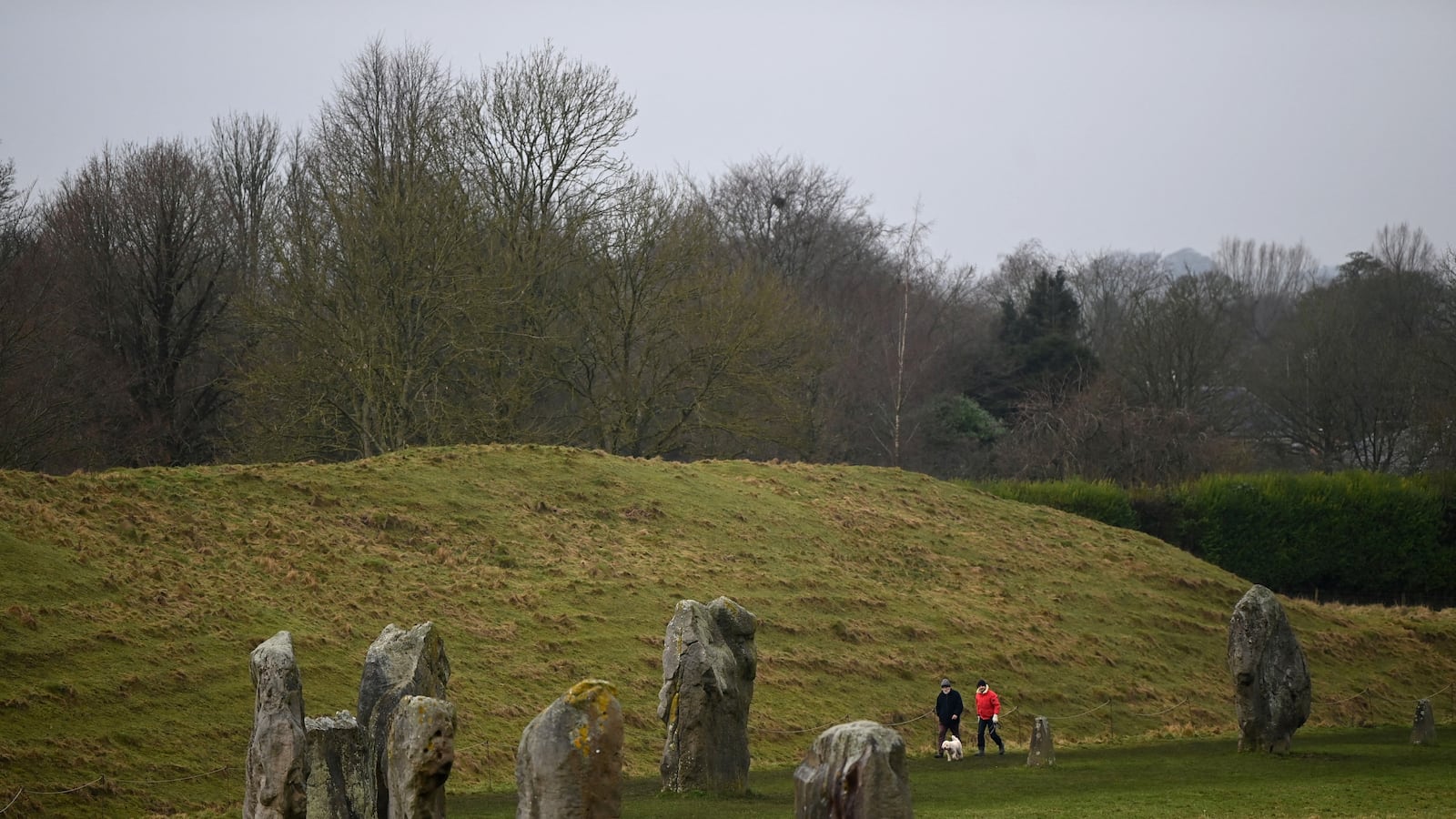
Miles north of Stonehenge, archaeologists discovered what the British museum is touting as “the most important piece of prehistoric art to be found in Britain in the last 100 years.” In addition to a chalk sculpture called a drum, a bone pin, and chalk ball, archaeologists discovered the remains of three children aged between 3 and 12, cuddling nose to nose and possibly holding hands. The oldest of the trio of children was embracing the younger two. The grave was dated to around the time Stonehenge would’ve been constructed, between 3005 and 2890 B.C. Mark Allen, founder of Allen Archaeology and the man behind the discovery of the grave and drum, said he believed the site was a circular burial mound. “It almost feels something dramatic happened, for the community to come together to bury the three in this way,” he said. Theories include that a tragedy like a drowning or epidemic struck the trio, or that they were offered as sacrifices.
Read it at Washington Post