Brussels Shows Airports Are the Force Multiplier for Terrorists
Aviation remains the top prey for groups like ISIS because it can spread panic on a global scale with little effort—no matter how ‘hardened’ planes and terminals become.
Reuters
Get the Beast Digest newsletter delivered straight to your inbox
By clicking “SIGN UP” you agree to our Terms of Use and Privacy Policy.
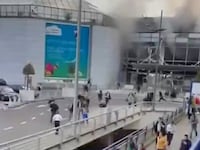
Airports “internationalize” an atrocity in a way unlike another other terrorist target.
And that transforms the propaganda effect of an attack like the one in Brussels, Belgium, with relatives all over the world suddenly fearful that a family member or colleague could just have been in the wrong place at the wrong time. Unlike the subway station that was also targeted, tourists, politicians and business travelers are more likely to be concentrated at airports than anywhere else in a major city, particularly in Europe.
GALLERY: Scenes From Brussels’ Day of Terror (PHOTOS)
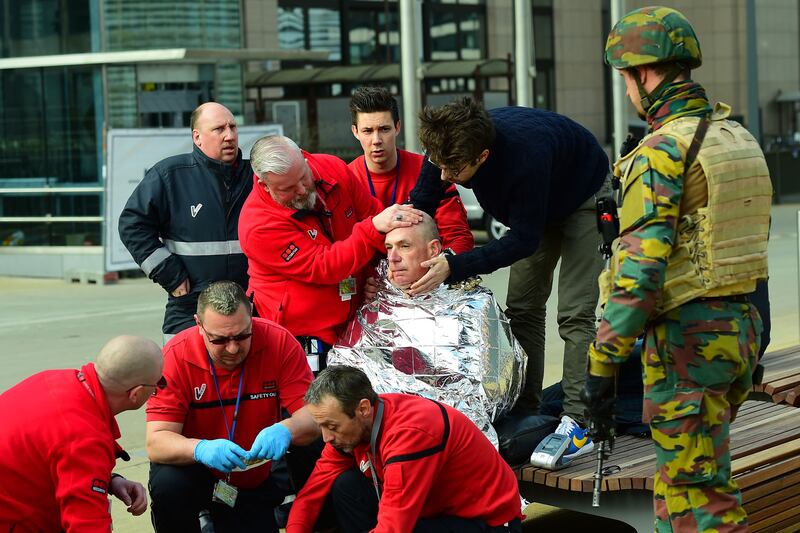
Brussels adds even more probability of significant victims since it is the headquarters of the European Union and the headquarters of NATO is nearby. Among those injured at the airport was a U.S. Air Force officer, his wife, and four children.
Consequently, if there are victims from other countries, the media coverage in those countries is amped up with the personal stories.
Then there is the heightened sense across the world of a new vulnerability, and, inevitably, calls to reinforce airports even more against terrorist attacks.
But the reality is that most international airports have been “hardened” against attacks as far as they can be. Check-in areas like the one hit in Brussels are far more difficult to control than the “airside” area beyond security. If people entering arrival areas (frequently not just travelers but relatives) were subjected to the same body searches and baggage scanning as passengers are after checking in, movement in the whole airport would swiftly grind to a halt.
However, some defenses do work.
In June 2007 two men drove at speed a Jeep loaded with propane canisters at the entrance to the terminal at Glasgow Airport. Steel bollards stopped them and the Jeep exploded, killing one of the attackers and slightly injuring four others.
Some airlines don’t depend only on airport security to protect passengers before they board flights. For example, terrorists who attacked an El Al check-in area in Rome in 1985 were gunned down by El Al security men, although some travelers were killed.
But it would be foolish to look at airports in isolation as soft targets.
Any mass transit system is similarly vulnerable. The attack on the Maalbeek Metro station today killed almost as many as did the suicide bomber in the airport. In 2005, bombs killed 52 in the London Underground and on buses. Any choke point that involves funneling large numbers of people through pathways will always be tempting to terrorists.
And, as the Brussels attacks again demonstrate, given targets like these, it’s all too easy for a relatively small number of attackers to wreak not only a large amount of carnage but to achieve the “spectacular” propaganda effects that ISIS wants.
The economic impact will also be costly, particularly to European tourism.
It’s sobering to remember, too, that long before ISIS even existed, in 2004, a far more carefully planned and coordinated attack that targeted the Atocha railway station in Madrid had a far more devastating result than the London bombings, last November’s attacks in Paris, and the Brussels bombings: 192 people died and more than 2,000 were injured, many grievously.
The only and best form of defense against outrages like those in Europe is not more fortress architecture but intelligence to stop terrorists before they get in the door.
See more of our coverage in your search results.

Got a tip? Send it to The Daily Beast here.
Unlock a year of full access to The Daily Beast for $35.
Monthly
$1
First month then $5.99/month
Annual
$35
First year then $59.99/year
Premium
$79
First year then $119.99/year
*Substack access provided by the next business day, using your subscription email. Choosing the Premium plan constitutes your permission to share your subscription email with Substack and your agreement to Substack’s Privacy Policy.
Looks like you already have a subscription!
- Account (completed)
- Payment (completed)
- Confirmation (completed)
You're all set!
Thanks for subscribing.
- 1Account
- 2Payment
- 3Confirmation
Sign in or create an account
Register below to read this article for free or subscribe
to unlock unlimited access to The Daily Beast.
Monthly
$1
First month then $5.99/month
Annual
$35
First year then $59.99/year
Premium
$79
First year then $119.99/year
*Substack access provided by the next business day, using your subscription email. Choosing the Premium plan constitutes your permission to share your subscription email with Substack and your agreement to Substack’s Privacy Policy.
Already have an account? Sign In
Looks like you already have a subscription!
- Account (completed)
- Payment (completed)
- Confirmation (completed)
You're all set!
Thanks for subscribing.
- 1Account
- 2Payment
- 3Confirmation