
Donald Trump has filled his Cabinet with people who are too afraid to speak out against his bad ideas, White House insiders say.
A lengthy profile from Politico on the dynamics of Trump’s second-term White House includes a damning comment from a senior administration official, who described how even those in the top jobs act like a “head-nodder” to avoid disagreements with the president.
“There’s a huge emphasis to basically steer where he’s gonna go. It turns most of the Cabinet into yes people,” the official told Politico.
“Everybody wants to keep their job, and those who haven’t had a pre-existing relationship with the president don’t have the ability to tell him the truth.”
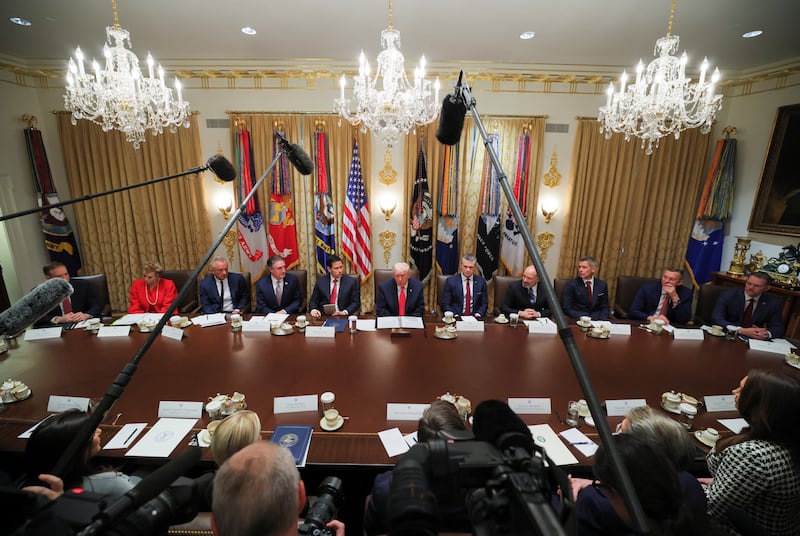
The article details how little trust Trump often has in his own Cabinet. This includes purposely asking questions he already knows the answer to just to test whether they are lying to him.
“The president likes watching people squirm a little,” said a person close to the White House. “Or to put it differently: Who’s a player and who’s furniture?”
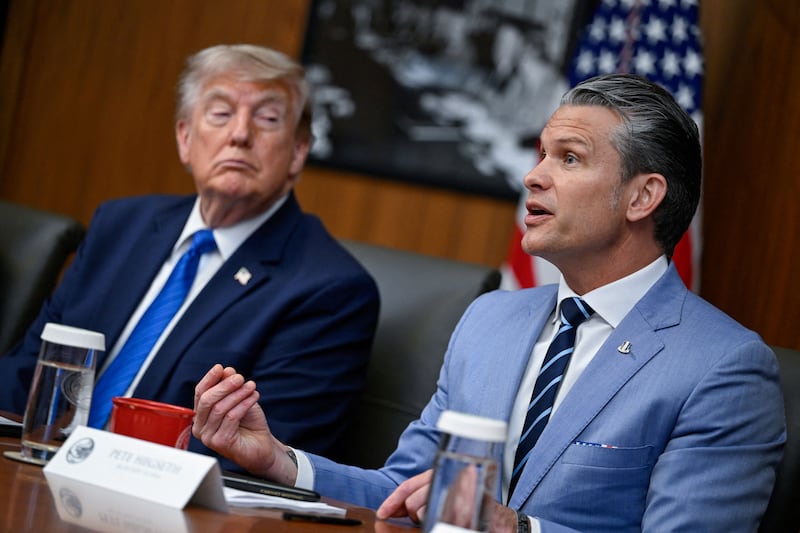
Trump also did not trust his own Cabinet—not even Defense Secretary Pete Hegseth—to speak publicly throughout the weekend when he launched his war on Iran at the end of February.

Instead, the White House instructed Cabinet officials to stay quiet so the president’s Truth Social post would serve as the government’s sole voice on the conflict.
Hegseth did not publicly address the war, its objectives or its strategy until the morning of Monday, March 2, when he gave a Pentagon press briefing.
Elsewhere, the Politico article notes how the role of Cabinet officials must be fluid to keep up with the erratic and compulsive behavior of the president.
This includes Trump deciding, seemingly at random, that Commerce Secretary Howard Lutnick would be the one to “fix” the issues surrounding the Kennedy Center after a federal judge ruled that the president must remove his name from the arts venue.
This is despite Lutnick’s role leading the Department of Commerce having nothing to do with Trump’s MAGA takeover of the Kennedy Center.
“If you bring a problem up to the president, and it’s not exactly in your lane, and it’s really not in anybody else’s lane, but there’s a problem, you will inherit that problem,” said Homeland Security Secretary Markwayne Mullin.
“Because the president will listen to you, get your opinion, and he’ll say, ‘Well, go fix it.’”

Trump’s preference for loyalty over skills or experience has long been a factor in his political career. Politico reports that during his second term, Trump has a “small cast of trusted characters” who must always be ready to be assigned a job overseeing one of Trump’s policies or ideas at any moment.
“What you have is a very strong centralized authority figure, and everybody is trying to stay in his good graces and keep him happy from a personality perspective,” one former senior Trump administration official said. “Trump is a very strong monarch, and when you have a strong monarch and weak barons, they’ve got to constantly go to the king for the ability to do anything.”
White House spokesperson Davis Ingle denied that Trump’s appointees treat him like a monarch.
“President Trump is working tirelessly on behalf of the American people to fulfill his commonsense America First agenda that nearly 80 million people elected him for,” Ingle said.
The Daily Beast has contacted the White House for comment.