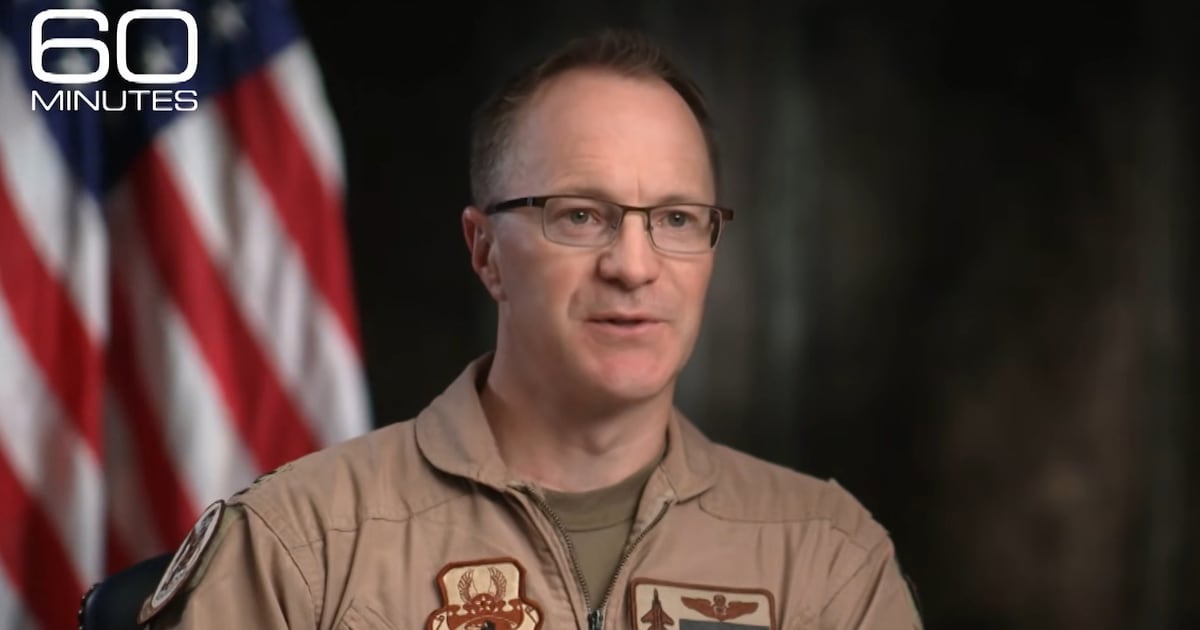
A top doctor has warned that Mitch McConnell appeared as though he wasn’t well enough to return to the Senate and expressed deep concerns about elder abuse.
The 84-year-old senator was seen in public for the first time on Monday evening, after being hospitalized on June 14.
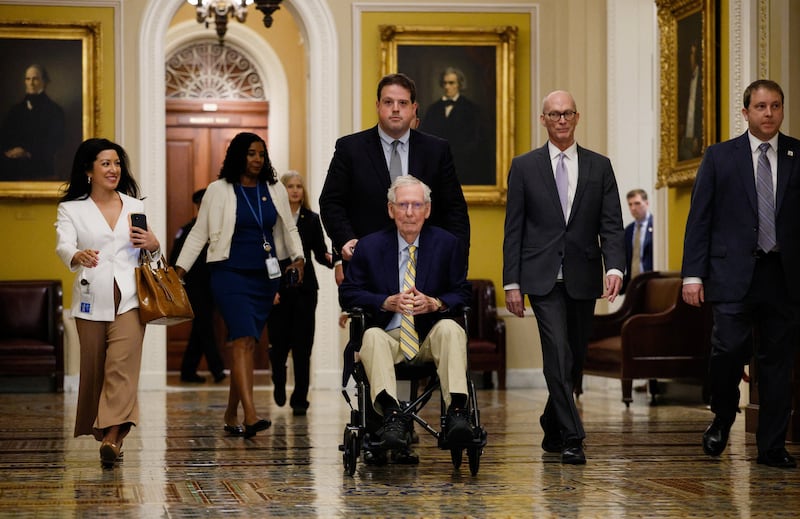
It had been 92 days since anyone had seen the senator, who appeared frail, remained in a wheelchair, and spoke softly during his appearance on Capitol Hill, surrounded by aides.
They maneuvered him into the Senate chamber so he could avoid giving his brief statement on video. He did not stay for long, being wheeled out shortly after voting.
“If he had another fall, it could kill him. It could absolutely kill him,” said Dr. Anahita Dua, a vascular surgeon. “Right now, his biggest issues are his balance and his strength. He undoubtedly is on some medications. He needs to regain his stamina, his mobility, and be able to do his ongoing rehabilitation.”
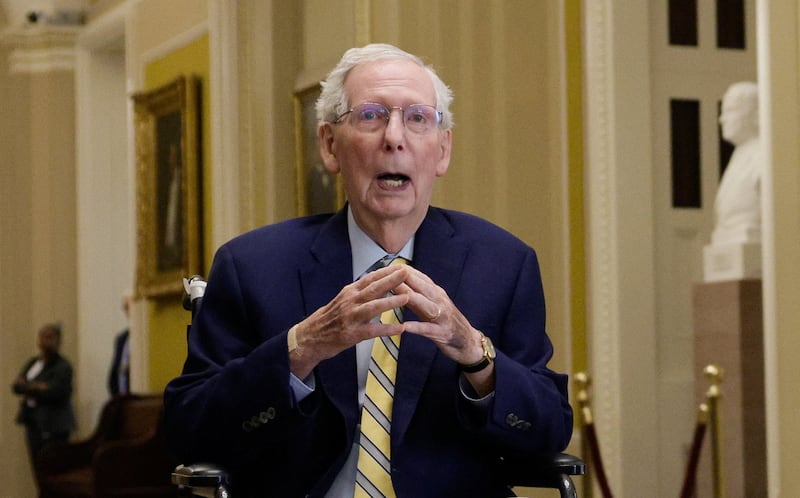
“Unless he’s something different from the patients that I see day to day, he is in no position to be going onto the Senate floor, listening to hours of testimony, reading bills, and making executive decisions when he’s probably in pain, probably unable to do the basic things like something as simple as he needs to go to the bathroom,” she observed.
Dua noted he looked “exactly like somebody who underwent a fall and had pneumonia would look” and said the word frailty immediately comes to mind.

While Dua has not treated the senator, her biggest concern after watching him wheeled into the U.S. Capitol as a doctor was that he could take another spill.
“He should be rehabilitating at home with his family, eating properly, sleeping properly, and as de-stressed as possible,” she said.
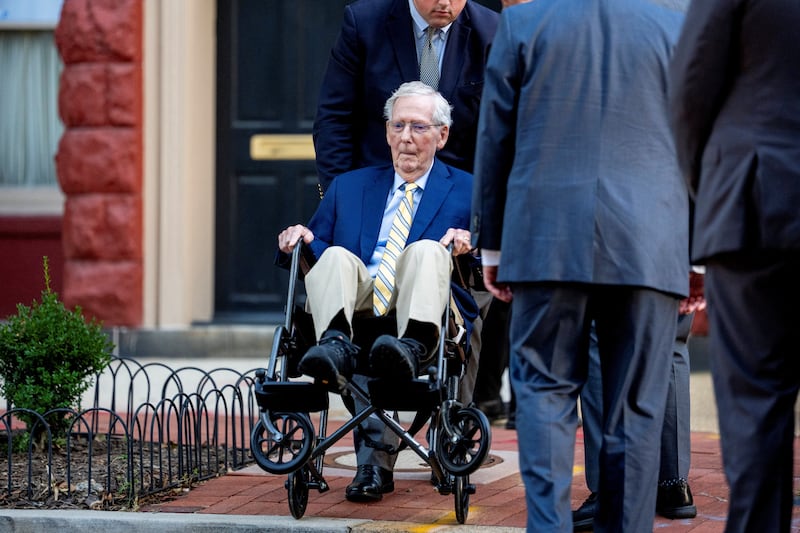
Dua noted he looked “exactly like somebody who underwent a fall and had pneumonia would look” and said the word frailty immediately came to mind.
McConnell was facing intense questions about whether he would return to the Senate when Congress returned from recess this week. He had faced growing pressure to share more information about his prognosis after his staff refused to provide almost any updates for three months after he was rushed away from his home in an ambulance.
In a statement on Monday as he returned to the Senate, McConnell admitted he is “not quite back to 100%.”
“I’ve assured Leader Thune that, as I continue with physical therapy on the advice of my doctors, I will do my best to be present for tough votes when our Conference needs me,” McConnell’s statement read.
Dua warned Senate work would absolutely be a distraction from his recovery and add to the strain, and warned the entire situation reeked of “elder abuse.”
“I’m glad to see that he’s not debilitated, but there’s no way that this recovery is complete,” she said.
While McConnell’s team said in July that he had not suffered a stroke or heart attack, she warned stress from rushing back to work could lead to further problems, including a heart attack, stroke, or even an aortic dissection, which is what recently caused Sen. Lindsey Graham’s death. She questioned whether the “performative” nature of his return was worth it.
“Recovery is very up and down, and really is heavily reliant on a persistent schedule that includes appropriate nutrition, intensive physical therapy, and support. That those three fundamentals are what keep somebody like him in a position where they are still able to function,” she said.
Dua, who founded Healthcare for Action, has been calling for guardrails requiring members of Congress to meet certain criteria to serve, with third-party medical experts sitting down to define the bare minimum a person needs to function in the halls of power.
“I am telling you the exact same thing for [late Senator] Dianne Feinstein and for [President Joe] Biden as I’m telling you for [President Donald] Trump and for Mitch McConnell. It’s the same problem, and we owe it to ourselves to put in these guardrails quickly because this problem is increasing significantly,” Dua warned.
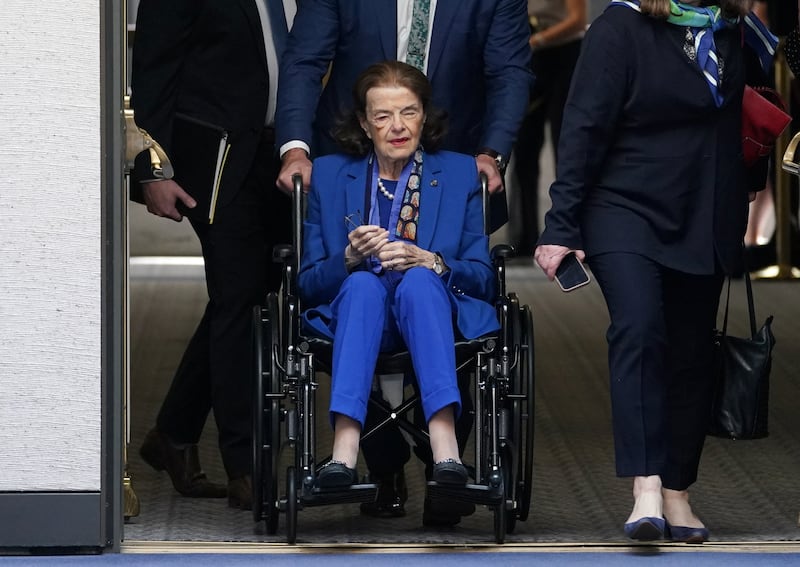
Feinstein was a Senate giant for decades but faced increasing health challenges in later years. She was hospitalized for two months in early 2023 for shingles but refused calls to resign. She returned to the Senate, pushed in a wheelchair. She passed away that September at age 92.
Dua pushed back on criticism that such calls are ageist, arguing it’s okay to have averages and not all 84-year-olds are the same.
“We as a country need to come together, regardless of party line,” Dua said. “We need to come together as a nation and say, this is not how we treat our elderly.”