The Justice Department issued and then quickly withdrew several subpoenas that were part of a criminal probe involving one of President Donald Trump’s longest-running conspiracy theories.

The president has long claimed he’s the victim of a “grand conspiracy” of Democrats and “deep-state” operatives who have been working to destroy him since his first term in office, despite a lack of evidence.
As part of its wide-ranging “grand conspiracy” probe, the DOJ has issued dozens of subpoenas to intelligence officials who concluded in January 2017 that Russia was trying to tip the election in Trump’s favor, and has opened a criminal investigation into former CIA Director John Brennan.
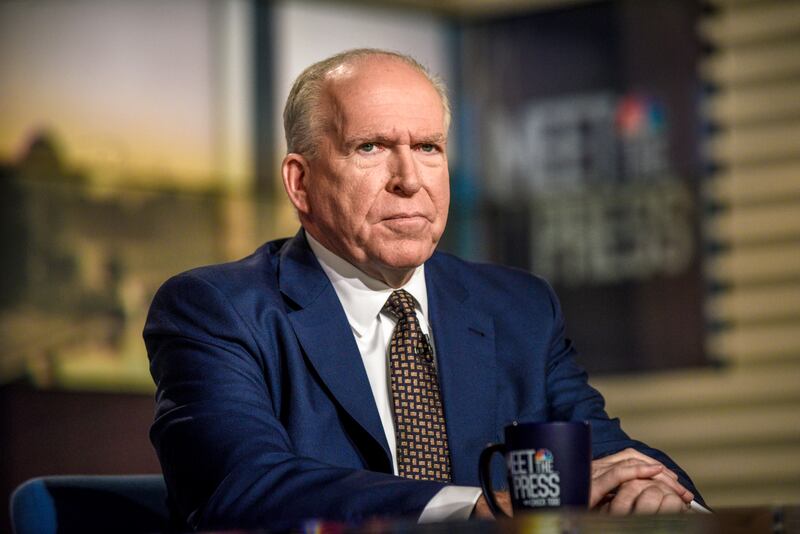
Over the weekend, the DOJ served several more subpoenas in connection with the investigation into Brennan, whom the administration is trying to charge with making false statements about his and the CIA’s role in launching the Russia probe, MS NOW reported.
On Monday, though, the DOJ clawed back the subpoenas, revealing the disorder and confusion surrounding the investigation. Career prosecutors have privately criticized the probe as lacking evidence and being politically motivated, according to MS NOW.
The subpoenas ordered former government officials, along with some current and former intelligence agency officials, to appear for questioning before a Washinton grand jury.
FBI agents told lawyers for the witnesses that now that subpoenas have been withdrawn, the DOJ is seeking voluntary interviews from the officials instead, two sources told MS NOW.
A DOJ official told the Daily Beast that the withdrawn subpoenas had “no bearing on the strength of the case.”
Two previous investigations into high-level officials who led the Russia inquiry failed to turn up evidence of any crimes.
Jason Reding Quiñones, Trump’s hand-picked U.S. attorney for the District of Southern Florida, is running the “grand conspiracy” case out of the Miami prosecutor’s office.
Besides the Russia probe, he has also scrutinized the DOJ’s 2022 deliberations about whether investigate Trump’s efforts to overturn the 2020 election.
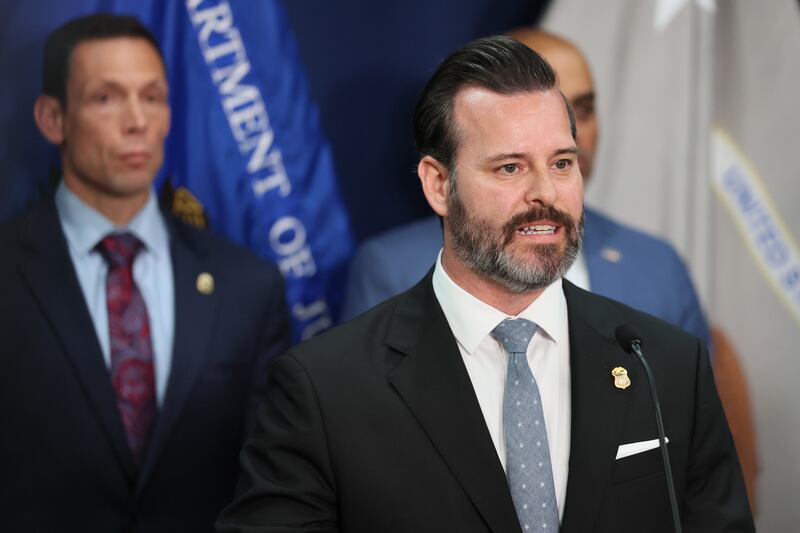
Both investigations took place in Washington, D.C., which is outside of Reding Quiñones’ jurisdiction, and the Russia investigation predates the usual five-year statute of limitations to bring federal charges.
Reding Quiñones nevertheless appears to be trying to connect the two Washington-based investigations—even though there’s no evidence they’re related—to the FBI’s 2022 search of Trump’s Mar-a-Lago club in Palm Beach, Florida, as part of a single deep-state conspiracy.
The president’s allies argue that a unified conspiracy theory would bring the cases into Quiñones’ district and remedy the statute of limitation issues.
The DOJ has also given Reding Quiñones—who was previously fired from the U.S. attorney’s office over poor performance evaluations before being installed by Trump to run it—special authority to bring indictments in jurisdictions where he’s not the U.S. attorney, The New York Times reported.
Last week, Maria Medetis Long, the veteran career prosecutor in Miami who was overseeing the Brennan investigation, was taken off the case after she told her supervisors there wasn’t enough evidence to charge the former CIA director.
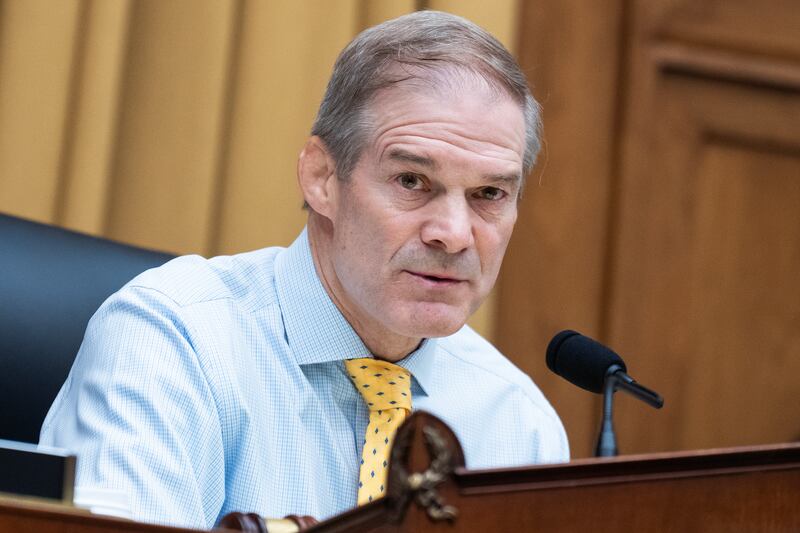
The investigation began last year when Trump loyalist Rep. Jim Jordan of Ohio made a criminal referral to the DOJ saying Brennan had lied during a 2023 deposition to Congress about the Steele dossier, a raw compendium of unverified political opposition research making outrageous claims about the relationship between Trump and Russian President Vladimir Putin.
Brennan told Congress that while the FBI wanted to include the dossier in the intelligence community’s assessment of Russia’s involvement in the 2016 election, the CIA was “very much opposed to have any reference or inclusion” of the dossier.

As a compromise, the report was included as an appendix with a disclaimer that its contents did not contribute to the report’s judgment.
Jordan argued that Brennan made false statements because he supported the compromise measure, while Brennan’s lawyer has said that Brennan’s statement did not contradict the facts.