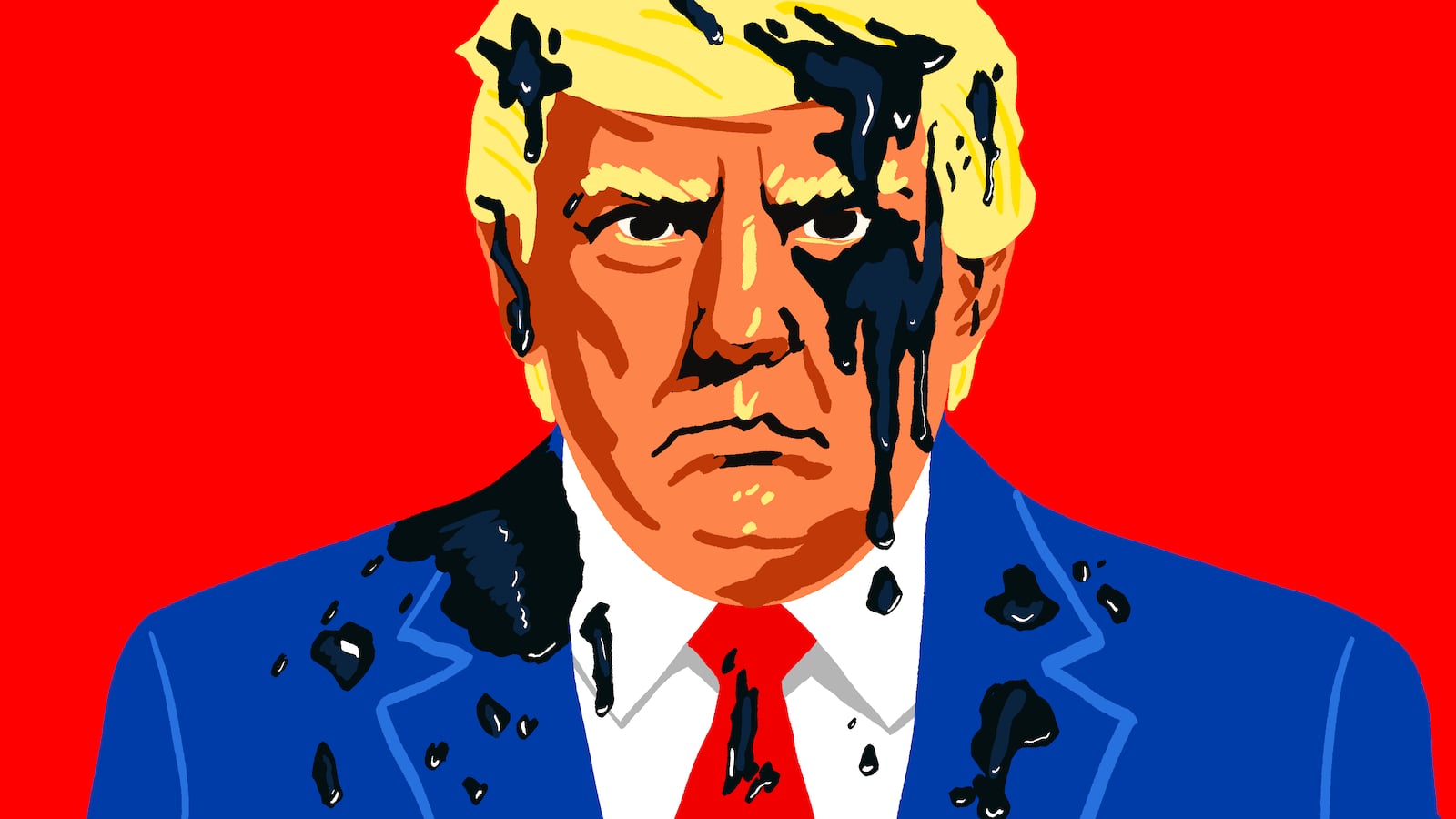
Economists are sounding the alarm over the fallout for the U.S. economy caused by Donald Trump’s war with Iran.
Experts believe the conflict will continue driving up oil prices and inflation, stifle U.S. growth, and make it unlikely that the Federal Reserve will lower interest rates, the Financial Times reported.
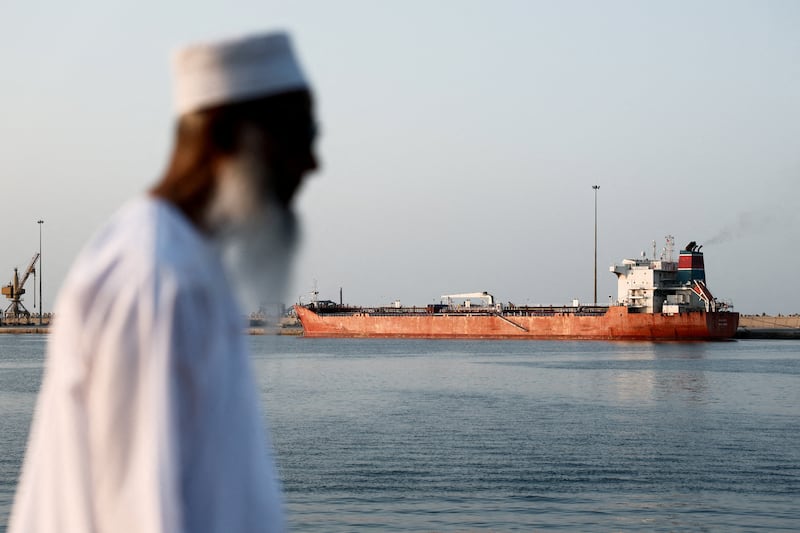
Trump’s multibillion-dollar war in Iran shows no clear end in sight, as Tehran is steadfastly refusing to reopen the Strait of Hormuz—the narrow shipping passage between Iran and Oman through which roughly a fifth of the world’s oil passes. Its closure has triggered a global oil crisis, with gas prices surging in the U.S. and crude oil repeatedly topping $100 a barrel.
Economists polled by the Clark Center for Global Markets on behalf of the Financial Times warned that the closure of the strait, something the Trump administration shockingly failed to plan for, could significantly damage the U.S. economy.
“The key question is the extent and duration of a blockage of the Strait of Hormuz,” said James Hamilton, a professor at the University of California San Diego and an energy market expert. “If it goes on for a month or so, then this is a very big deal. And I think it would lead to a significant downward revision in the kind of growth we’re expecting for this year.”
Of the 47 economists surveyed by the Clark Center, about 68 percent believe GDP growth would take a hit of at least 0.25 to 0.5 percentage points if oil stays at $100 for the rest of the year.

More than 80 percent also said personal consumption expenditures inflation could rise by as much as 0.5 percentage points if oil prices remain above $100 a barrel.
PCE is currently 2.8 percent, above the 2 percent level the Fed has targeted to achieve since 2021.
Stephen Cecchetti, a professor at Brandeis University, said the Federal Reserve is unlikely to ease inflation pressures by cutting interest rates for the rest of the year at least.
“My prediction right now is that you’re not going to see much action [from the Fed] for a while,” Cecchetti told the Financial Times. “The uncertainty is so high that you have to wait. I would be waiting. But I would be unhappy that I had to start from here.”
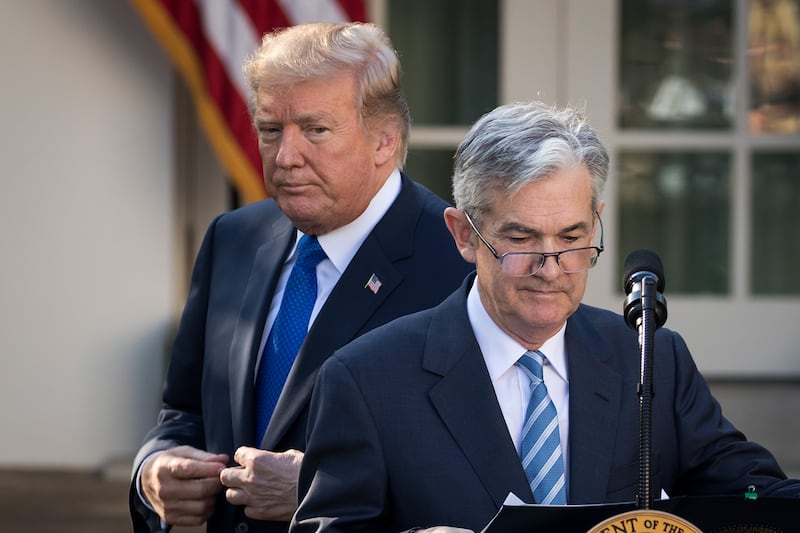
Fed Chair Jerome Powell, a longtime Trump nemesis, is expected to hold interest rates when he delivers a news conference Thursday afternoon.
“President Trump has always been clear about short-term economic disruptions as a result of Operation Epic Fury. The economic fundamentals and trajectory of America, however, remain strong with real wages rising, productivity growing, and trillions in investments pouring in,” White House spokesman Kush Desai told the Daily Beast.
“After the military objectives of Operation Epic Fury are achieved, Americans can rest assured that the President’s agenda of tax cuts, deregulation, energy abundance, and fair trade will continue taking America to new highs.”

Kevin Hassett, director of the White House’s National Economic Council, tried to downplay the economic concerns surrounding the war but acknowledged that American “consumers” will be affected, while also admitting that the administration doesn’t particularly care.
“If it were to be extended, it wouldn’t really disrupt the U.S. economy very much at all,” Hassett told CNBC on Tuesday.
It would hurt consumers, and we would have to think about if that continued, what we would have to do about that, but that’s like really the last of our concerns right now,” Hassett told CNBC on Tuesday.