
Elon Musk’s father, Errol Musk, picked Moscow of all places to reignite the space race debate.
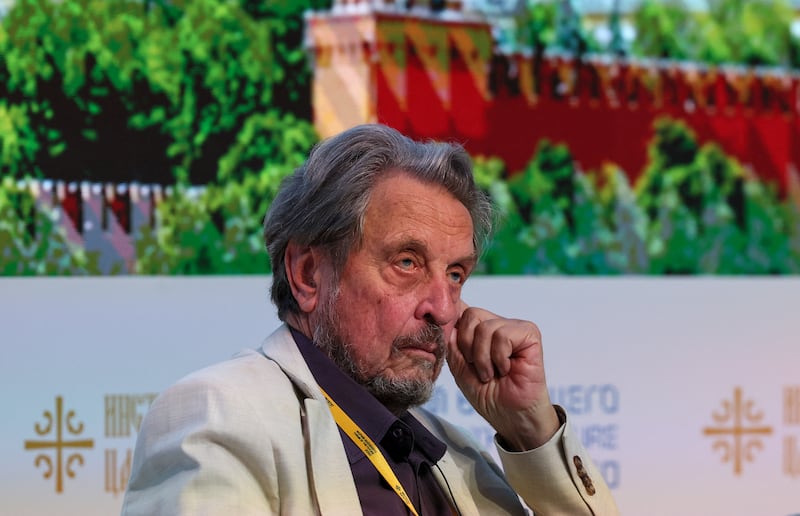
The 78-year-old used a press conference at Russia’s TASS news agency on Tuesday to air doubts about the U.S. moon landing, suggesting America may have cheated its way to victory in the Cold War space race.
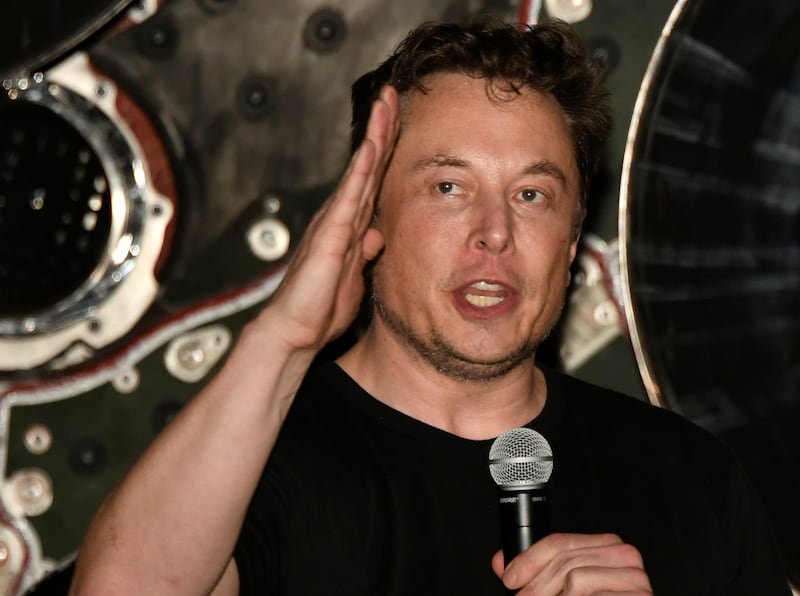
Speaking to reporters, the nuclear and space researcher hyped plans by his billionaire son, SpaceX CEO Elon Musk, to build a city on the moon, noting that “landing on the moon is very difficult.”
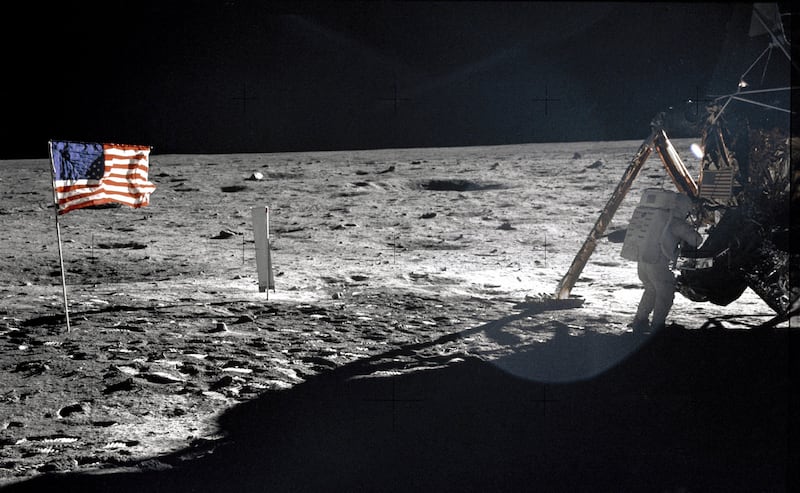
“One has to question some things,” he said, before slipping into a rant casting doubt on Neil Armstrong’s famous 1969 landing, telling the room, “I’m curious as to how they did it.”
He went on to argue that a string of failed moon landings that left a “huge tail of debris” from the spacecraft called the 1969 landing into question, particularly in terms of how the Apollo 11 could have slowed down enough to make a smooth landing.
He also cited his own calculations to claim that a spacecraft entering lunar orbit would reach speeds three times faster than a bullet—requiring enormous amounts of fuel to slow down, far more than he believes was possible with 1960s-era technology.
“Imagine such a retro rocket,” Musk said, arguing that the missions would have needed at least 29 tons of fuel just to manage a safe landing.
The remarks echo long-debunked conspiracy theories about the Apollo program, but Musk framed his skepticism as rooted in physics rather than speculation, claiming that other astrophysicists have reviewed his calculations and reached the same conclusion about the missions possibly being fraudulent.
While casting doubt on the U.S. program, Musk struck a far more optimistic tone when it came to the modern race back to the moon—particularly his son’s role in it.
He predicted that a lunar colony could become reality within the next few years, suggesting that SpaceX would ultimately lead the charge.
The comments come as the billionaire space race heats up, with Musk’s SpaceX competing against Jeff Bezos’s Blue Origin for dominance in lunar exploration. Both companies are developing technologies to land humans on the moon and build long-term infrastructure there.
Musk suggested his son would take a different approach to landing on the moon, describing a model that relies more heavily on Earth’s gravitational pull and a direct trajectory rather than traditional lunar orbit insertion.
The “turn-landing” method, he said, would allow a spacecraft to approach the lunar surface more directly.
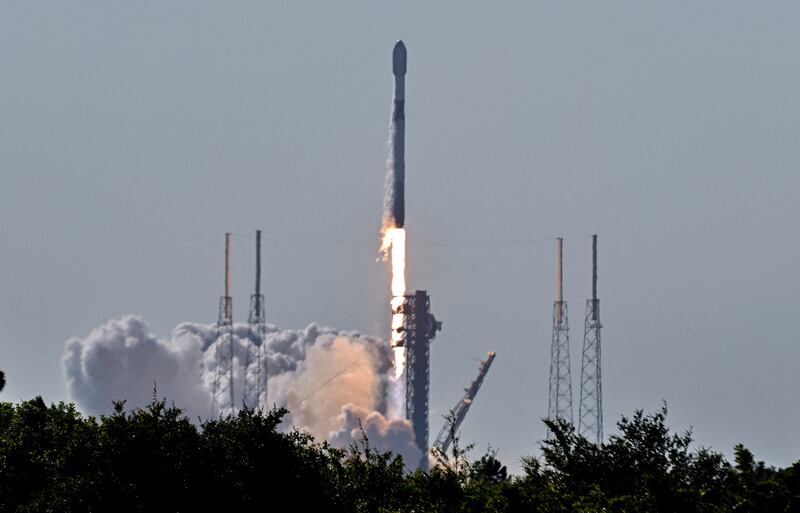
Even so, he acknowledged that landing on the moon poses major challenges, citing the lack of atmosphere and other environmental factors that make the process inherently difficult for his son to pull off.
The renewed focus on the moon isn’t limited to private companies; the U.S. has also gone full steam ahead in the modern space race.
Under President Donald Trump, NASA has been pushing to return astronauts to the lunar surface for the first time since 1972 through its Artemis program. NASA’s chief, Jared Isaacman, 43, has emphasized plans not just to revisit the moon but to establish a sustained presence there.
“We’re not just going to plant the flag,” Isaacman said in outlining the agency’s goals.
The next major step is the Artemis II mission, which is expected to send astronauts on a lunar flyby as NASA ramps up its long-term ambitions for a permanent foothold beyond Earth.
The Daily Beast has reached out to NASA for comment.