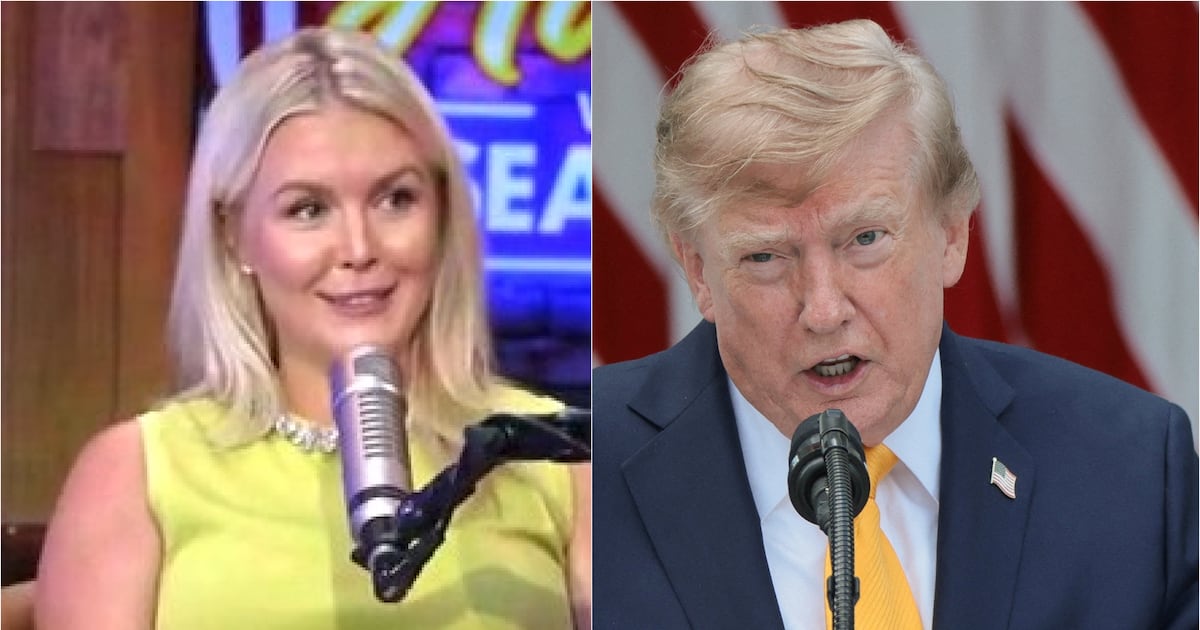

President Donald Trump’s tariffs are facing growing resistance from his own base, with new polling showing MAGA voters turning against the policy.
After trade talks between the U.S. and Canada collapsed in late August, Trump imposed a 50 percent tariff on approximately $20 billion worth of Canadian products under a previously unused provision of the Tariff Act of 1930. Trump also invented a bogus new name for Lake Ontario—“Lake America.”
Canadian Prime Minister Mark Carney responded by increasing counter-tariffs on American steel and aluminum and introducing new duties on other U.S. goods, set to go into effect on September 29.
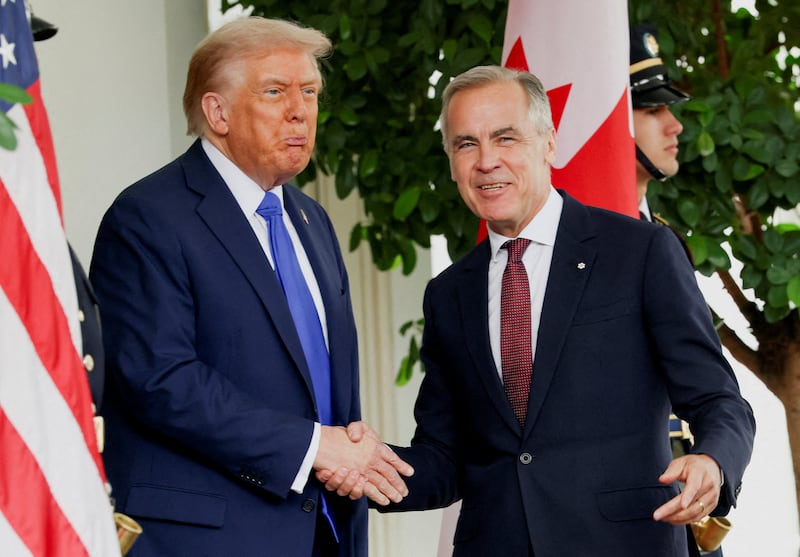
The dispute between the two close allies has been bubbling since the beginning of Trump’s second term, when he threatened to make Canada the 51st U.S. state.

Trump has argued that the trade war is necessary for border security and that tariffs are needed to create more “fair” and reciprocal trade.
“Canada is destroying itself by allowing millions and millions of people into the Country, essentially unchecked and unvetted, and who are causing problems that will soon be too big to handle. It is a Liberal takeover that will end very badly. Already showing up in their numbers. Big unemployment. ‘Oh Canada!” Trump posted on Truth Social on Wednesday.
But new polling shows that even his biggest supporters don’t support the policy.
Among self-identified MAGA Trump voters, only 38 percent said he was right to impose the tariffs despite the potential political cost, while another 40 percent said the move was justified but should have been delayed until after the midterms, according to a Politico/Public First poll conducted September 13–15.
The survey also found that half of Americans do not think tariffs are worth it if they drive up prices, including more than a third of Trump voters from 2024.
Overall, just 26 percent said Trump was right to impose the new Canadian tariffs, compared with 56 percent who said he was wrong.
The Daily Beast has contacted the White House for comment.
This comes as polls show voters are feeling the impacts of inflation, which stood at 3.4 percent as of August.
Inflation has remained stubbornly high in recent months. That is largely due to Trump’s deeply unpopular war in Iran, which has seen energy prices skyrocket as the Strait of Hormuz remains blockaded.
The war in Ukraine, which Trump previously vowed to end on day one of his second term, has also affected consumer prices.
But with no end in sight for both wars, voters are not happy with Trump. The latest Reuters/Ipsos poll showed that only 17 percent of respondents approved of Trump’s handling of household costs.
The same poll showed that Trump’s approval rating has plunged to a career-low 32 percent only six weeks before the midterm elections.
But according to Republican pollster Frank Luntz, voters are now also starting to associate Trump’s tariffs with higher prices, which is not good news for Republicans.

“Voters simply did not connect tariffs to higher prices for many, many months,” Luntz told Politico. “But that has begun to change—and the consequences are serious and significant.”
That is because heavily imported consumer goods like tomatoes and coffee have seen very significant price rises.
And with prices rising so close to the midterms, Democrats have seized on Trump’s tariffs for driving up costs, particularly in several key Senate battlegrounds with strong economic ties to Canada like Michigan, Maine and Texas, prompting some Republican candidates to publicly break with Trump on the issue.
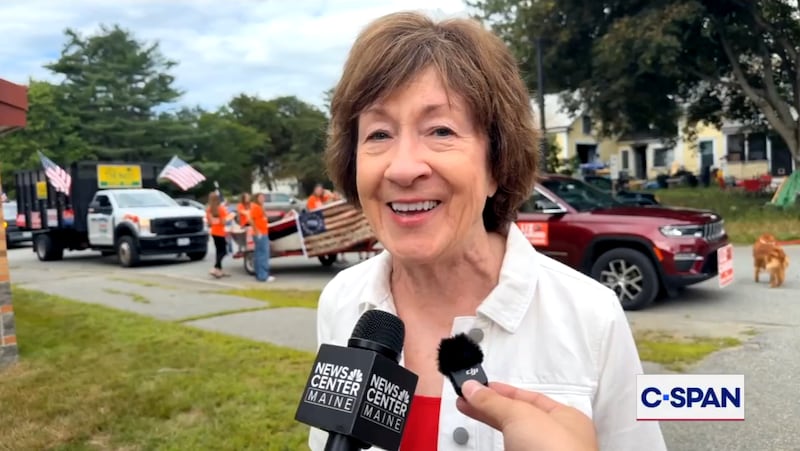
In Maine, Sen. Susan Collins has repeatedly criticized Trump’s trade policies, while former New Hampshire Sen. John Sununu has also opposed the tariffs.
But polls are showing signs of a bleak midterm showing for the GOP.
The Reuters/Ipsos poll found Democrats leading Republicans by 8 points among registered voters asked which party they would support in the midterms—43 percent to 35 percent. It was the Democrats’ largest advantage in Reuters/Ipsos polling this year.
Meanwhile, Democrats are ahead in Senate races across Iowa, Ohio, Michigan, North Carolina, Maine, Alaska and Texas, with Kansas and Nebraska also in play—all states that largely backed Trump in 2024.
“Republicans know that their back is against the wall,” Republican strategist Doug Heye told CNN last week.