
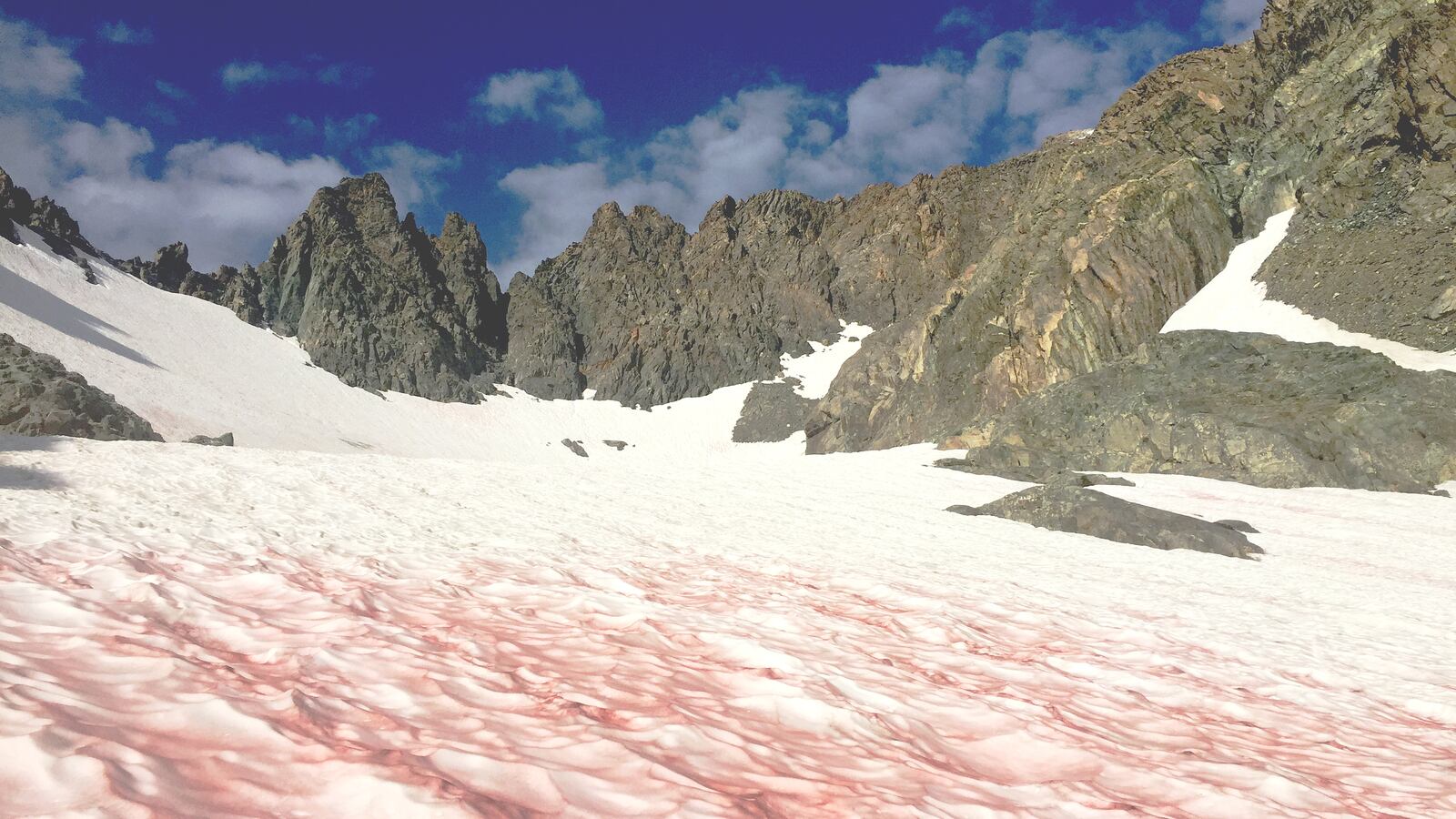
The mystery of what is causing patches of snow dubbed “watermelon snow” in Utah’s Tony Grove Lake to turn pink has been revealed as a natural phenomenon that occurs all over the world, from Beartooth Highway in Montana to Glacier National Park in British Columbia, Canada and even all the way over in Gran Paradiso National Park in Italy. Scott Hotaling, an assistant professor at Utah State University’s watershed sciences department, told CNN the color appears thanks to a green snow algae bloom that thrives in cold, snowy, mountainous environments similar to those seen in Utah. When Chlamydomonas nivalis, the algae responsible for the vivid show, is hit by light it shields itself by changing color and can turn snow into other colors including purple, green and orange, Hotaling said, however red is its most usual hue. “(The algae is) normally in this kind of dormant cyst form, and when there’s enough meltwater in the snowpack and enough nutrients, like during spring, that cyst form is triggered out of dormancy,” Hotaling told CNN.
Read it at CNN