Four Months After Benghazi Attack, Where Are the Killers?
Four months after the consulate assault, U.S. investigators seem no closer to justice. Eli Lake reports.
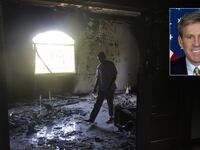
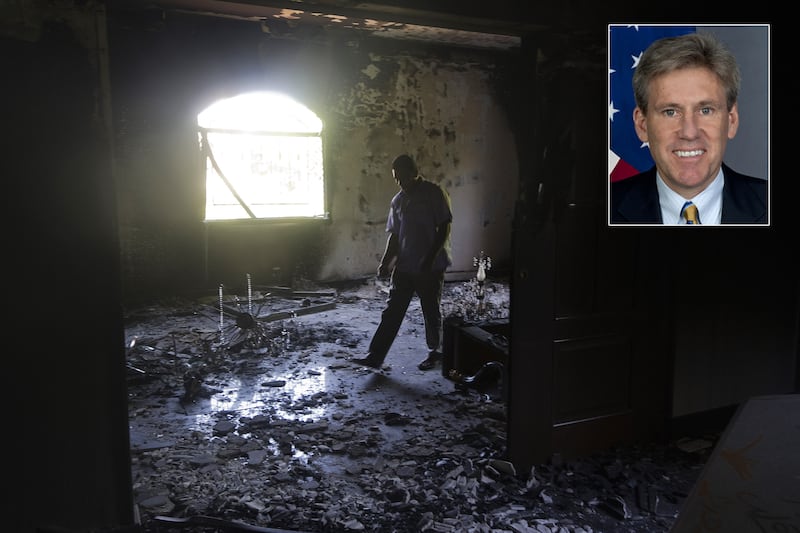
Gianluigi Guercia/AFP/Getty; AP
Get The Swamp newsletter delivered straight to your inbox
By clicking “SIGN UP” you agree to our Terms of Use and Privacy Policy.
Ever since an armed mob torched a U.S. diplomatic mission in Benghazi, Libya, on the 11th anniversary of the 9/11 attacks, President Obama has vowed to bring the killers of Ambassador Chris Stevens and three other Americans to justice. Yet four months after the assault, U.S. counterterrorism and intelligence officials tell The Daily Beast that the hunt for those responsible remains stymied by poor cooperation by North African governments.
On Tuesday the Tunisian government released Ali Ani al-Harzi, a leading suspect in the attack, who was taken into custody after fleeing Libya for Turkey and then sent to Tunisia. Officials say Harzi was released over Washington’s objections, as Tunis cited a “lack of evidence.” While the FBI eventually got access to Harzi, efforts to press him on what he knew were often blocked by bureaucratic objections by the Tunisian government and its court system. In December the Tunisian branch of the Islamist militia Ansar al-Sharia posted photos of people they claimed to be FBI agents who interviewed Harzi, according to the counterterrorism website Long War Journal. The U.S. intelligence community believes members of Ansar al-Sharia in Benghazi participated in the attack four months ago.
While some U.S. officials feared that Harzi’s release was coming, Tunisian officials did not inform the U.S. government ahead of time.
Meanwhile, in Libya, the landscape is becoming increasingly lawless. In Benghazi this week, Ahmed Abu Khattala, a militia leader who claimed in an interview with Reuters that he was at the U.S. mission the night of the consulate attack, survived an assassination attempt after a bomb was placed under his car. The device exploded prematurely and instead killed one of Khattala’s assailants. Additionally, the Benghazi police officer investigating the murder of the chief of Benghazi police in November went missing last week.
One source of frustration for U.S. intelligence community: the president’s decision to make the Benghazi probe a criminal investigation. While the CIA has an ever-changing list of suspects it dubs the “Benghazi attack network,” the drones and Special Operations teams that are used to hunt al Qaeda operatives in Pakistan and Yemen are not being used to track down Stevens’s killers. Instead the investigation is being led by the FBI, which relies on cooperation from local and national police in Libya, Tunisia, and Egypt.
Some U.S. intelligence officials stress that counterterrorism investigations take time. In this case, the Benghazi attack is not like other al Qaeda terrorist operations that are planned for months and involve the movement of people, money, and the metadata found on emails or social media. While there was some planning of the Benghazi attack (the State Department’s Accountability Review Board confirmed that someone dressed as a police officer was casing the U.S. mission the morning of the assault), there is little evidence there was a plot similar to the 2001 World Trade Center and Pentagon attacks or the bombing of the USS Cole in 2000.
Harzi is not considered to be a ringleader of the Benghazi-attack network, according to three U.S. intelligence officials who spoke to The Daily Beast on the condition of anonymity. He is, however, considered a suspect, because he used social media to tip off friends about the attack and was later arrested at Istanbul’s airport trying to get to Syria.
According to these officials, Harzi’s brother is believed to be Tariq Abu Ammar, a midlevel planner for al Qaeda’s franchise in Iraq. Today Ammar’s main job is arranging the travel of fighters from North Africa to Syria’s al Qaeda–linked opposition, known as the al-Nusra Front.
The slow pace of the hunt has caught the attention of some lawmakers. Last month Rep. Mike Rogers, the Republican chairman of the House Permanent Select Committee on Intelligence, told CNN he was “getting reports of people who are in that business that tell us it is going far too slow, and they can’t tell us why it’s so slow.”
See more of our coverage in your search results.

Got a tip? Send it to The Daily Beast here.
Unlock a year of full access to The Daily Beast for $35.
Monthly
$1
First month then $5.99/month
Annual
$35
First year then $59.99/year
Premium
$79
First year then $119.99/year
*Substack access provided by the next business day, using your subscription email. Choosing the Premium plan constitutes your permission to share your subscription email with Substack and your agreement to Substack’s Privacy Policy.
Looks like you already have a subscription!
- Account (completed)
- Payment (completed)
- Confirmation (completed)
You're all set!
Thanks for subscribing.
- 1Account
- 2Payment
- 3Confirmation
Sign in or create an account
Register below to read this article for free or subscribe
to unlock unlimited access to The Daily Beast.
Monthly
$1
First month then $5.99/month
Annual
$35
First year then $59.99/year
Premium
$79
First year then $119.99/year
*Substack access provided by the next business day, using your subscription email. Choosing the Premium plan constitutes your permission to share your subscription email with Substack and your agreement to Substack’s Privacy Policy.
Already have an account? Sign In
Looks like you already have a subscription!
- Account (completed)
- Payment (completed)
- Confirmation (completed)
You're all set!
Thanks for subscribing.
- 1Account
- 2Payment
- 3Confirmation