In the middle of the Amazon jungle, a town that oddly resembles Dearborn, Michigan, has been eaten by the ravenous fauna of Brazil.
The enigmatic settlement of Fordlandia is one of Henry Ford’s most expensive and little-known failures. Ford, one of the 20th century’s most successful industrialists, met his match in the Amazon jungle nearly 90 years ago.
In 1928, shortly after unveiling the Model A, Ford acquired 2.5 million acres of lush forest in the middle of the Amazon and opened what he decided would be the world’s largest rubber plantation.
Eager to undermine the high prices of rubber coming from Asian plantations owned by the British, Dutch, and French, Ford ventured out on his own. Demand for rubber was at an all-time high in the U.S., as Americans snapped up the newfangled automobile models.
Ford set his sights on the Amazon jungle, which was already known for its plentiful pure rubber, and began plotting a replica of his Michigan company headquarters. The Brazilian government granted him the land and a promise of protection, and Ford pledged 9 percent of his profits would return to the government.
With a budget of $2 million, Ford sent a steamer filled with city-building supplies on a 5,700-mile journey from Dearborn, Michigan, to Santarem, Brazil. He dubbed his budding community Fordlandia.
This exotic venture whipped the press into ecstasy. The Washington Post gushed that Ford would be introducing “white man’s magic to the jungle.” And The New York Times wondered if the Amazon was “on the verge of an awakening that may mark the overthrow of the British corner on the world production of rubber.”
Ford knew that a key component of his success was keeping the workers happy. He built a first-class hospital, ice cream shop, golf course, movie theater, library, and hotel. The houses he made for workers were shingled in Cape Cod fashion, and outfitted with all the trappings of a modern American life.
He dreamed of planting 1 million rubber trees and a First-World living situation for 50,000 workers.
But that utopia wouldn’t last. The workers imported from America couldn’t handle the heat and isolation of living in the middle of the jungle, despite the familiar architecture.
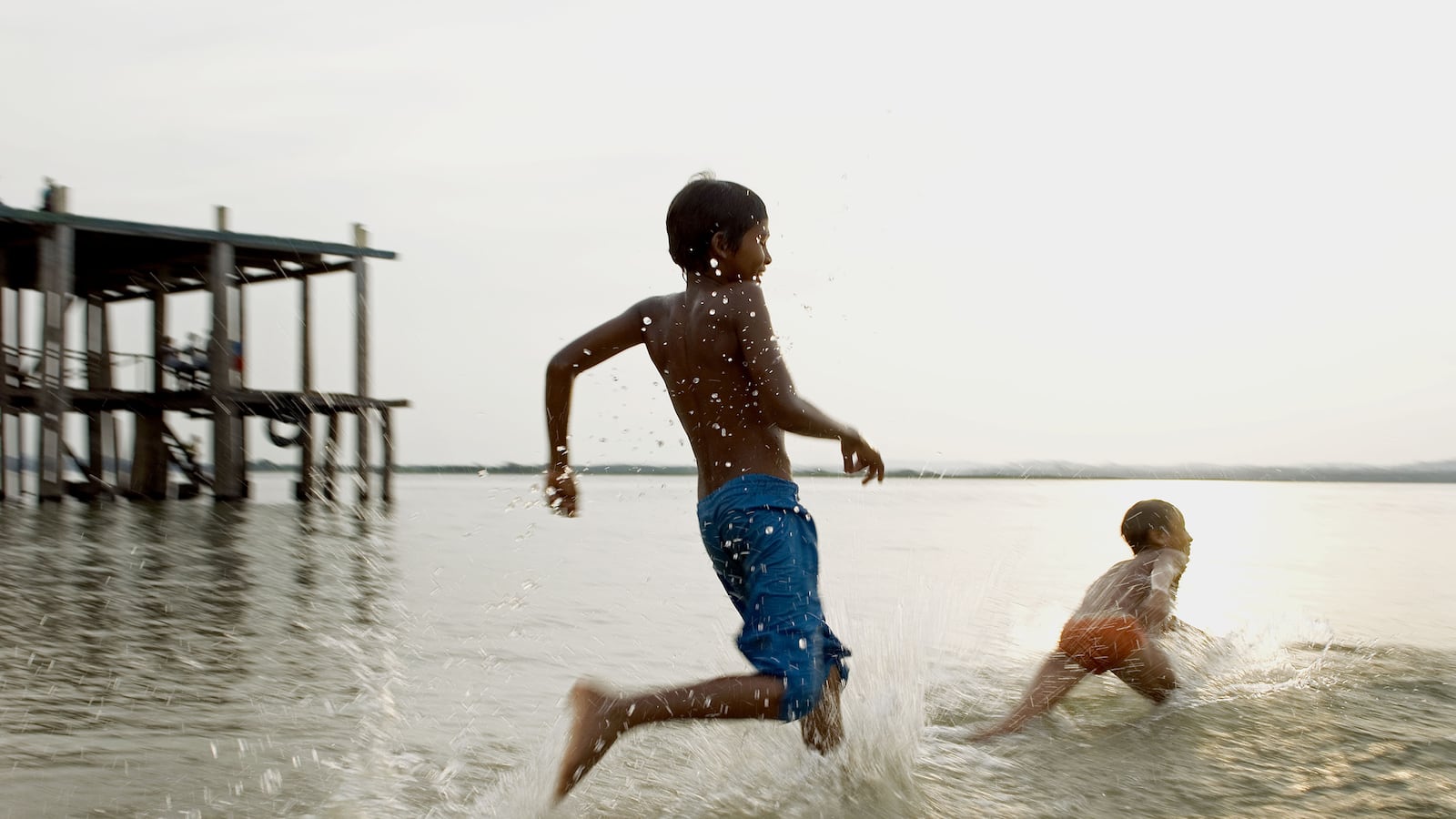
Thousands of locals showed up under a promise of good pay—37 cents a day—food, and medical care.
Ford micromanaged every aspect of the workers’ lives, from the type of food and way it was served, to enacting a ban on alcohol and forcing American culture lessons on the Brazilian workers.
In 1930 there was a full-fledged riot. Workers destroyed the cafeteria, overturned cars and shattered windows for three days straight.
“The first years of the settlement were plagued by waste and violence and vice,” Greg Grandin, the author of Fordlandia: The Rise and Fall of Henry Ford’s Forgotten Jungle City, told NPR. The area soon turned into “a rain forest boomtown” of gambling and bars, writes Grandin.
To add to this, the plantation wasn’t actually producing rubber plants because the method of harvest chosen was completely unsustainable for the environment. Pests decimated the rubber plants.
In 1933, Ford struck out again, this time 80 miles away from the original base and called Belterra. It was nicknamed “Dearborn in the Jungle,” and boasted five schools and a population of 7,000 people. There were tailors and bakeries and two swimming pools: one for American workers and one for Brazilians.
This community was more attuned to local customs. There was no insistence on “square dancing or wholesome Detroit-style cooking,” visiting journalist Charles Morrow Wilson wrote for Harper’s Magazine in 1941.
But 10 years after Belterra’s founding, Ford had failed miserably to create his own South American rubber pipeline.
Fordlandia never produced anything, and Belterra only gave 750 tons of latex—a far cry from the 38,000 tons Ford had hoped would supply his annual tire production.
“Rubber baron” may not be a title attached to Ford’s legacy, but reminders of his efforts haven’t been completely wiped from the history books.
Much of the construction of Belterra and Fordlania remain in the two jungle cities, including workers’ quarters, factory infrastructure, and medical facilities.
Photos today show rotting wooden buildings, some with faint outlines of the Ford name; crumpled machinery; and arms of the jungle reaching into every unkempt nook and cranny.
But the solid construction and modern utilities weren’t entirely left to nature’s whims. In 1993, a visiting journalist from the Globe and Mail found 4,300 Brazilian residents in Fordlandia. Though no doctor had been in town since the late ’80s, the 100-bed hospital was still stocked with 1930s-era supplies and period decorations.
In Belterra, the homes were still well-kempt, and the sidewalks and power lines connected the town.
In his book, Grandin describes the remnants of the town he found when he visited. The rusting 150,000-gallon water tank—the tallest man-made structure in the jungle—was the “crown jewel of an elaborate water system” built by Ford, and still stood towering over the area.
The so-called “American neighborhood” also remains, though the wooden buildings connected by concrete sidewalks and lit with streetlamps are now overrun with weeds and jungle creatures.
In 1945, Ford bowed out of the rubber industry after 17 years and the equivalent of $200 million lost. None of the rubber produced was ever used in a Ford vehicle.
In fact, Ford himself never visited Fordlania or even Brazil. He sold the area back to the Brazilian government for about $250,000—a fraction of the money the great industrialist poured into his namesake plantation.