
Welcome to Pay Dirt—exclusive reporting and research from The Daily Beast’s Lachlan Markay on corruption, campaign finance, and influence-peddling in the nation’s capital. For Beast Inside members only.
A pair of House freshmen have lined up legislation that could dramatically alter the legal landscape for lobbying and policy advocacy. The lawmakers, both Democrats, are looking to remake rules governing paid policy advocacy and “dark money” politicking.
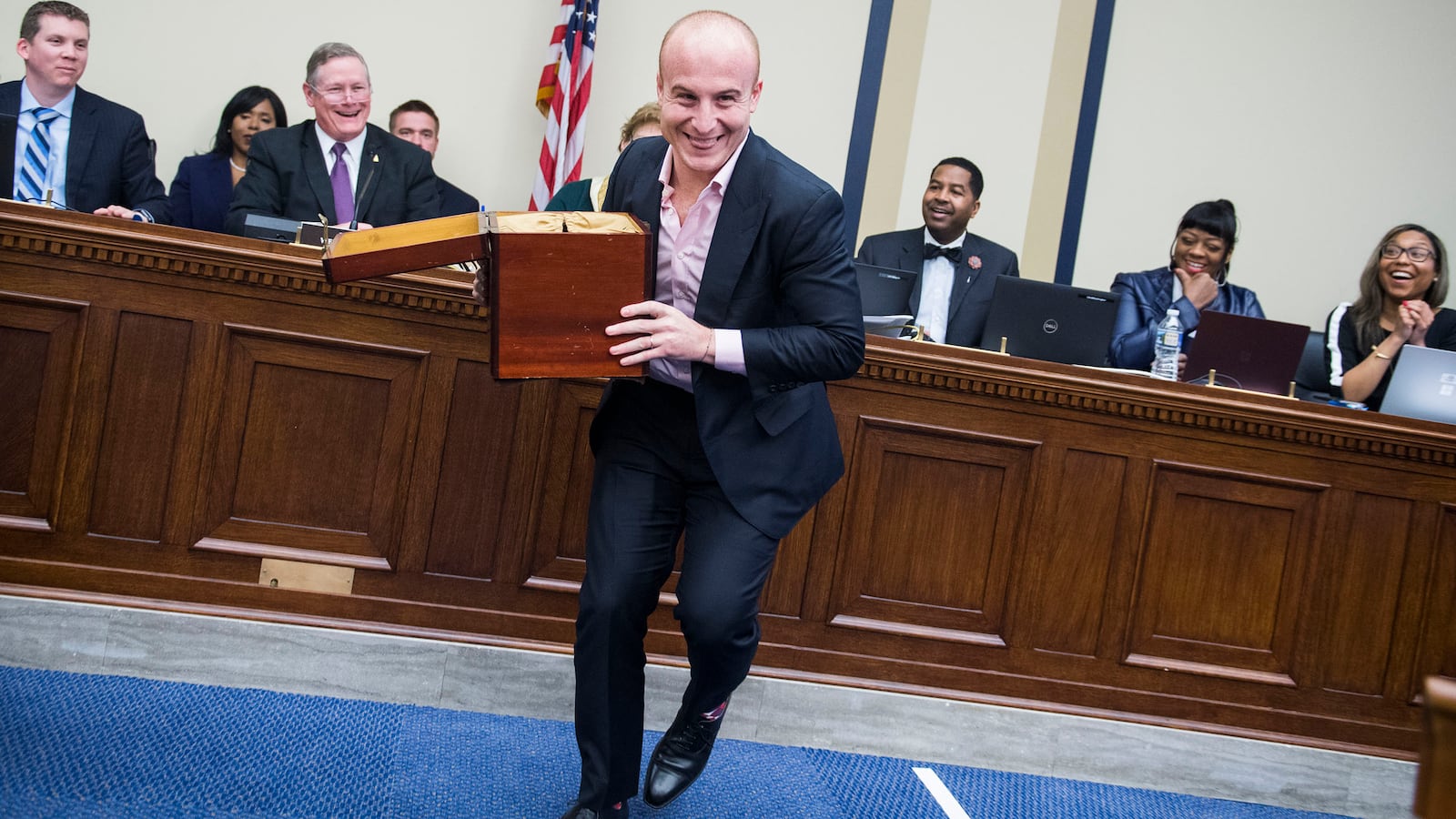
Rep. Max Rose (D-NY) introduced legislation this week that seeks to cut down on what good-government advocates dub “shadow lobbying”—or policy advocacy structured to avoid triggering the legal definition of lobbying. The “political intelligence” industry in Washington is booming, but most of its participants aren’t technically lobbyists; they’re “consultants,” “policy advisers,” or “government relations executives.”
Rose’s bill is fairly narrow in its scope. It targets employees of lobbying firms who don’t qualify as lobbyists under current law, but nonetheless supplement and support their firms’ paid advocacy work. It would expand the definition to include anyone who engages in “legislative, political, and strategic counseling services, research, and other background work” in support of a registered lobbyist.
The text of the legislation is not yet publicly available, but Rose’s office provided a copy, which you can read here.
A bill introduced Wednesday by Rose’s colleague Rep. Jason Crow (D-CO) is even simpler in its language, which consists of just 30 words, but has the potential to dramatically alter the legal landscape for politically active nonprofits.
The bill would simply repeal a provision of a spending bill passed last year that bars the Treasury Department and the Internal Revenue Service from issuing any rules governing political activity by 501(c)(4) “dark money” nonprofits. Existing rules on that activity are murky at best, but IRS and Treasury are legally barred from specifying exactly what a dark-money group can or cannot do under the law, making the enforcement of tax and election laws against such groups very difficult.
Like Rose’s bill, Crow’s is not yet available. But PAY DIRT readers can get a sneak peak at the text here.
Get the data: