

When Defense Secretary Pete Hegseth spoke with such un-American glee about delivering “death and destruction from above” in Iran, he boasted about the combat debut of the new Precision Strike Missile (PrSM), designed to explode over the target with an air burst of “pre-formed” tungsten fragments.
To use Hegseth’s favorite word, the thousands of metal bits proved to be extremely lethal when a PrSM detonated above a school and an adjacent sports facility in the southern city of Lamerd during the early hours of our newest war.
“It’s shrapnel pierced the roof and headed toward the Lamerd Province, Fars, youth volleyball team,” an Iran-based journalist named Negin Bagheri posted on X after interviewing some of the survivors.
Bagheri reported that it was a juvenile girls’ team and it had been practicing defense.
“Against the ball; not against a missile,” she wrote.
Then the building’s lights went out. Death tore down from the sudden darkness above.
Bagheri named two team members who she said had been mortally wounded. Elham Zaeri had been in the fifth grade.
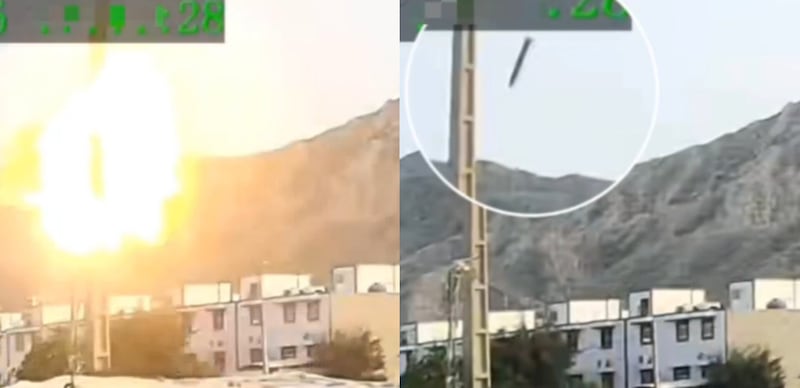
“The doctors had said that Elham had lost her life before the hospital,“ Bagheri wrote.
But, Helma Ahmadizadeh, a 10-year-old fourth-grader, had initially seemed to have escaped injury.
“Helma boarded the ambulance on her own two feet,” Bagheri reported. “Without a single drop of blood on her body, she had told her coach: ‘It feels like something has gone into my body.“
Bagheri reported that a moment came at the start of America’s latest war when a little girl lifted her clothing and revealed she had been struck by a small black shard of metal.
“[The shard] didn’t even seem like it could cause much damage,” Bagheri wrote.
Some 7,300 miles away. Hegseth stood in the Pentagon with his usual American flag pocket square, sounding too much like a throwback to World War II, and not someone on the same side as the U.S. He spoke about “crushing the enemy” with “brutal efficiency.”
“No quarter, no mercy,” he said, as no truly American leader ever would.
Back in Lamerd, little Helma died after emergency surgery.
She was reportedly the cousin of Zahra Ahmadi Zadeh, a member of the Iranian women’s soccer team, which caused a stir on March 15 when they failed to sing along with their country’s national anthem at the Asian Cup in Australia. Zedeh was not among those who sought asylum afterwards. The death of her young cousin and Elham in an American missile strike could not have encouraged Zeha to take a stand against the regime.

On top of the two dead, a dozen other young volleyballers had been injured.
“The girls who had been panting heavily just minutes earlier after an intense practice session had now, out of fear, lost their breath in the hospital. 10 to 12 of them underwent surgery that very night.” Bagheri wrote.
A sixth-grade boy named Ilya Khatami had been killed along with his coach on the facility’s soccer field.
“[They] also lost their lives to the same shrapnel,” Bagheri reported.
Other online photos show thousands of bits of metal scattered across the grounds of the school and the sports facility. Those real-life post-combat images are matched by animated video posted by the American manufacturer of the PrSM to dramatize its lethality. The deadliness—extolled by Hegseth—is more key to American greatness than decency. The Lockheed Martin video shows a detonating missile airburst peppering the target and the surrounding area with countless ”pre-formed” fragments, created not by the warhead’s blast but in an Arkansas factory so as to be diabolically deadly.
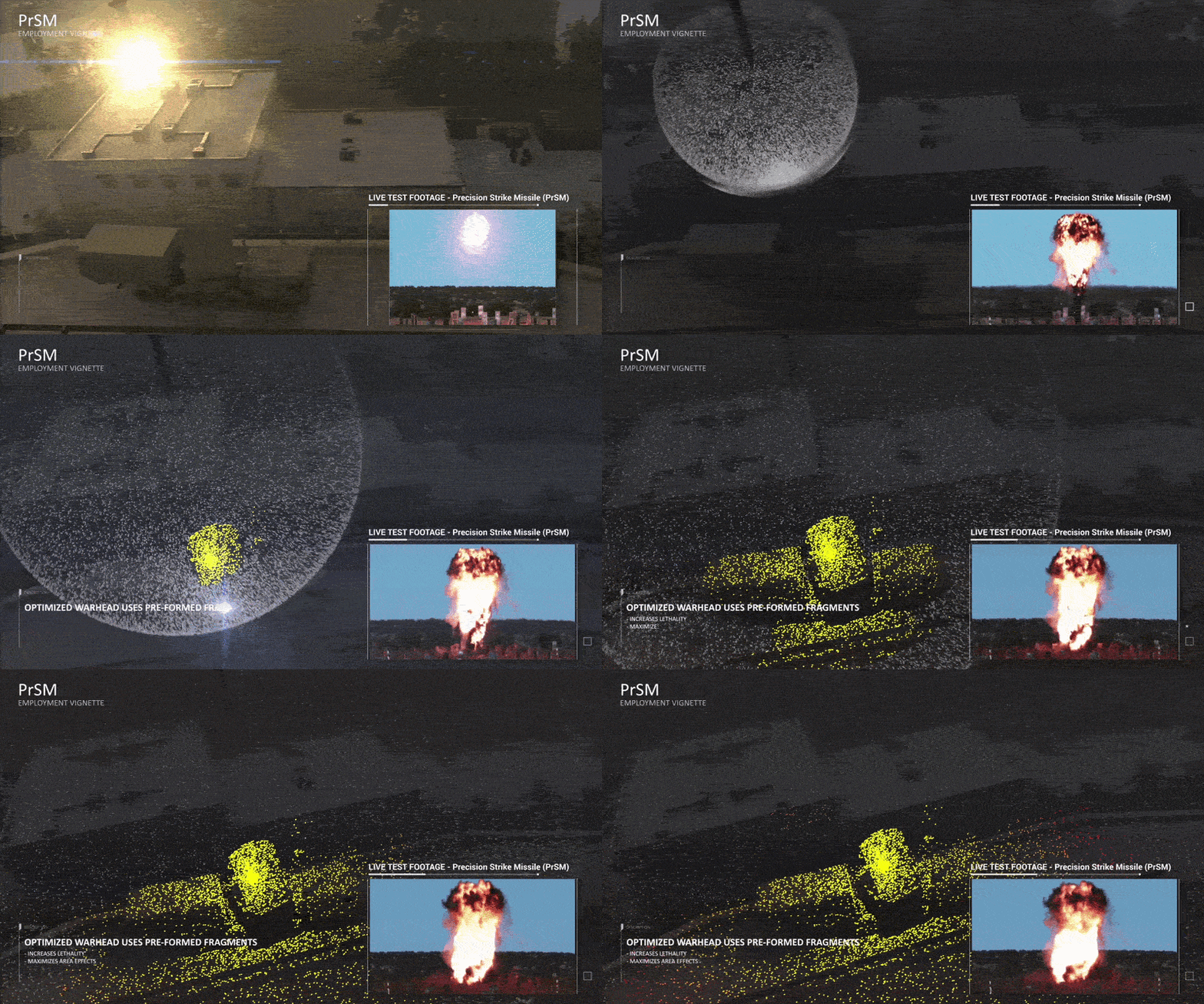
No doubt the Ukrainians could use the PrSM against advancing Russian troops. But clearly such an anti-personnel weapon should not be used anywhere near a girl’s volleyball team, or any other non-combatants.
The Trump administration insists it does not deliberately target civilians. But the reckless firing of a PrSM had the same result for two pre-teen volleyball players. Neither Hegseth nor Trump have expressed a syllable of regret.
The combat debut of our newest missile was initially announced by U.S. Central Command on March 3.
“Our U.S. Army soldiers are defending ourselves and our partners and in an historic first, the U.S. Army fired long range Precision Strike Missiles, called PrSMs, in combat, providing an unrivaled deep strike capability,” Adm. Brad Cooper, commander of USCENTCOM said in a press announcement.
The unrivaled deep strike capability translated into tiny, insidiously deadly bits of tungsten killing little kids.
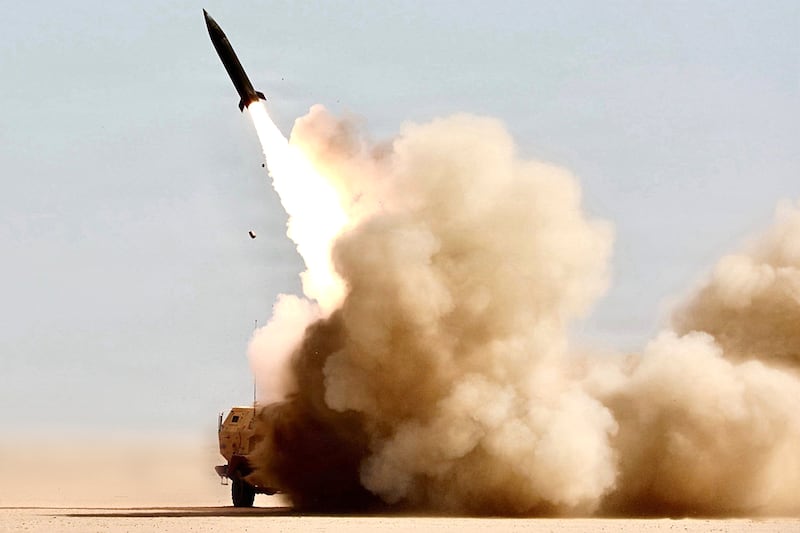
The BBC reported on Friday that the U.S. had used the PrSM to strike Lamerd. The New York Times reported on Monday that at least two PrSMs appear to have hit a residential neighborhood along with the school and sports facility in the general area of a military building. The Times also reported the civilian structures have long been identified by maps just an online search away. The Times put the total death toll in Lamerd at 21.
The Lamerd strike was the same day that a U.S. Tomahawk missile killed 175 people at a girls’ elementary school 400 miles away in Minab. This was apparently a targeting error due to consulting outdated maps. And in the aftermath of that horror it was reported that Hegseth had gutted the budget of the Civilian Protection Center of Excellence, which is tasked with limiting the risk of minimizing such deaths via precautions such as double-checking targeting information. He did so over the objections of senior officers in the military who are of the firm belief that defending America means also defending its values.
Hegseth and President Trump continually declare their love for America. But to truly love our country, you have to be willing to admit when it errs, most particularly when children are the victims.
Yet after two missile atrocities in the first hours of the war, Hegseth still rhapsodizes about unending death from above as if that were something a patriot should celebrate.
Somebody online came up with just the right nickname for this self-imagined warfighter who is so disgracefully un-American: Full Metal Jackass.