
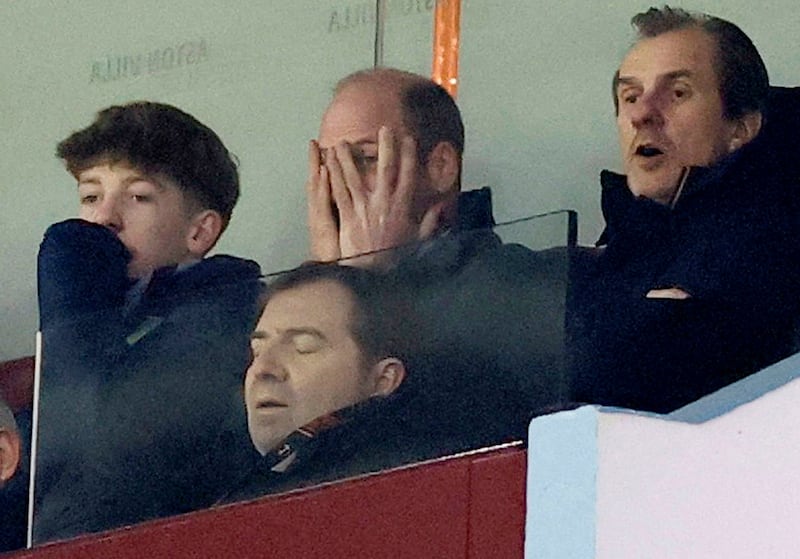
Prince William gave royal watchers a rare insight into his inner world at a soccer cup final between his beloved team Aston Villa and the German side SC Freiburg.
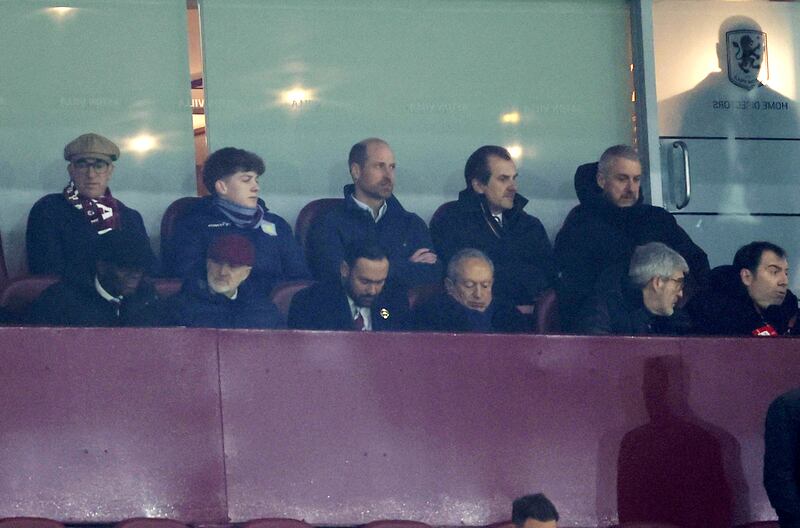
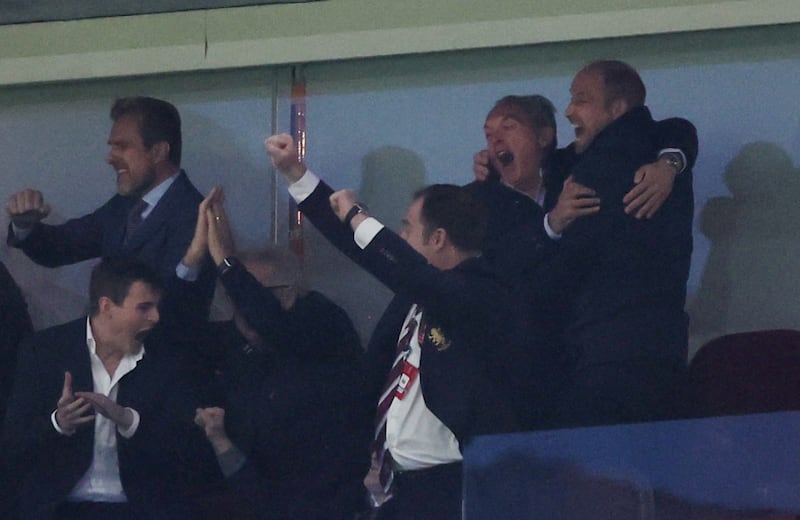
William was joined by what The Daily Mail calls a “loyal band of friends” at the final of the UEFA Europa League in Istanbul on May 20—and his behavior at the match and during subsequent victory celebrations provides a window into the usually sealed world where the real William lives.
We saw William weeping, singing and roaring, his bald head being patted jokingly by his old mate Edward van Cutsem. The prince behaved like any middle-aged man whose club last lifted a European trophy in 1982, the year William was born.
Writing in the Mail, Barbara Davies does a peerless job of unpicking the genuine inner circle out in Istanbul: van Cutsem, the King’s godson and a page boy at Charles’s 1981 wedding; Thomas van Straubenzee, godfather to Charlotte and a friend since prep school; Ben “Dawesey” Dawes, who runs a wine business and sent his children to a state school.

Their meetings are “infrequent but cherished,” Davies writes. Barbecues, beer, a lot of wine. Discreet west London pubs with quiet back rooms, where William is partial to a pint of Stella Artois.
An annual ski trip, and (the detail everyone has run with) the “iffy” Welsh accent William reportedly deploys while wearing a hat and glasses, to throw strangers off the scent. On these nights, talk of his royal role is banned. The friends, the source says, “have no axes to grind” and “know how to behave.”
On the face of it, this is a warm and engaging portrait of the real William.
But.
If you’ll allow The Royalist to read between the lines, Davies’s piece is also a revealing dispatch from the ongoing conflict between William and Charles over what the duties of the Prince of Wales actually are. The Mail, for reasons of access, can’t really tell us the truth about the bitter war simmering between the two courts, but this piece, with its sly digs at William for being lazy, is an interesting exhibit.
Many senior staff at the paper are close to Tobyn Andreae, the former Mail man who is in charge of the king’s communications. The first sign that this warm portrait is in fact a hit job comes in the sub-headline, which promises to reveal “why royal aides are concerned” about William’s “hidden” blokeish ways.

Headlines are written by editors, not journalists, and they reflect a publication’s line.
The stick used to beat William has always been that he is “lazy,” or “workshy.” And, at first glance, the data supports it.
Charles, whatever his critics think of him, absorbed his mother Elizabeth’s first commandment; that royals must be seen to be believed. He has become the most visible monarch in modern history.
The numbers aren’t in dispute. As Prince of Wales, he topped the family leaderboard with 601 engagements in 2011, and 521 in 2019, the last normal pre-pandemic year, ahead even of the tireless Princess Anne. We know all this because Tim O’Donovan, a monarchist insurance broker, spent 40 years counting the Court Circular and publishing an annual tally in The Times of London. He died last October, aged 93; the papers have picked up his burden.
Team Charles emphasize relentlessly that William’s elderly, cancer-stricken, frailer father comprehensively out-publicked the younger prince: 372 engagements in 2024 despite treatment; 532 in 2025, while William slipped to seventh on 202. William’s critics also note that his personal best is just 220, hit in 2018 and 2019. This, they say, is who he is.
Team William candidly argues that he sees the job differently. He disdains performative monarchy—the appearance-counting, the diary stuffed with engagements that exist only to be counted. He believes in impact. Earthshot, Homewards, mental health. Fewer things, done more deeply.
The royal figures’ approval ratings with the public speak for themselves: Charles’s never-ending tour, plus the patina of being king, have pushed his rating to a record high of around 60 percent, but William and Catherine outstrip him by a mile, in the high seventies.
Hero or Villan?
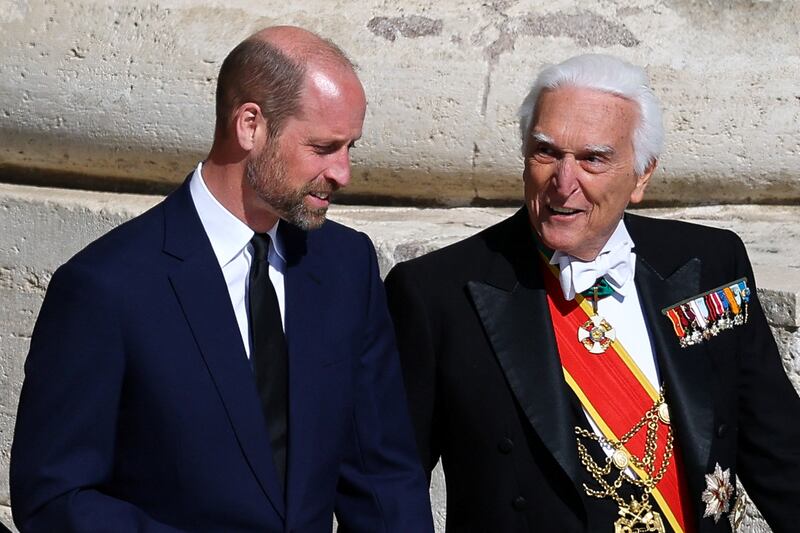
Simply showing up has become a genuine flashpoint. Nowhere was this clearer than during a private row about the last pope’s funeral.
As I exclusively reported at the time, William initially demurred about going, because he wanted to watch an important Aston Villa match.
Writing in the Mail, Davies now reports growing concern in royal and government circles about William’s reluctance to travel abroad unless the destination interests him personally.

The Foreign Office, one source tells her, has struggled to get him on a plane. His big overseas trips have all been for Earthshot, while he’s made eight visits to watch rugby or football.
I can add to this: William is currently refusing to commit to going to the USA this summer to support England in the FIFA World Cup, citing the end of George’s final term at junior school. I’m told he’s resisting unless England reach the quarter-final.
This is the kind of thing that sends Charles bonkers. He insists that personal wishes and personal family life come second to duty.
William and Catherine feel the two are indivisible.
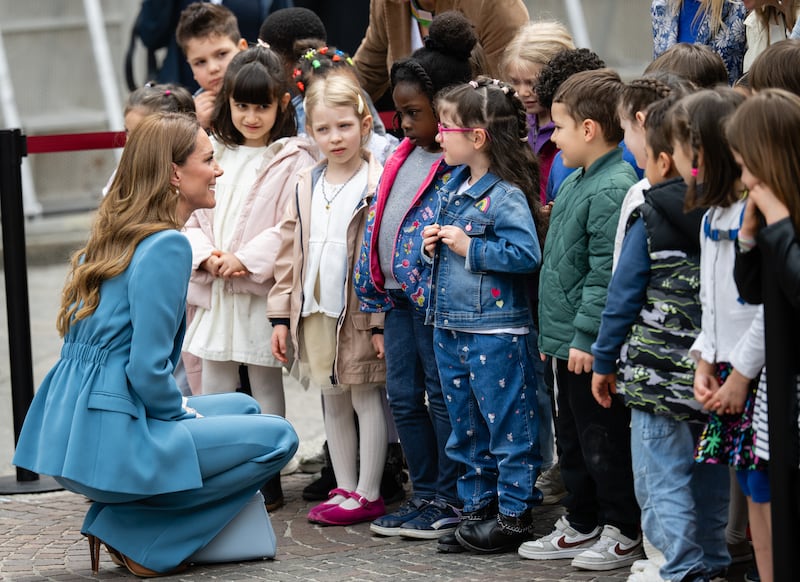
Catherine’s choice of early childhood as her life’s work is her way of saying that raising the first generation of untraumatized royal children is the single most important thing for the monarchy’s survival.

I think that what so infuriates Charles, a jealous man who, while on tour in Australia, once complained to Diana that she shouldn’t block the cameras’ view of him, is that William and Catherine so plainly connect with the public. The Waleses are loved. Just look at the polls.
You can see the same instinct in how they live. William reportedly finds the formality of his father’s households “stifling,” and has stripped it back, with “fewer flunkeys wandering around,” in the Mail’s words.
Office staff are kept out of sight; a cook is sometimes redundant because William or Kate just cook by themselves.
Most of it is downstream of the Middletons, from whom William, the story goes, had to learn to load a dishwasher and lay a table.
It carries into the parenting. I have friends whose children are at school with the Wales kids, and the line is always the same: they show up to everything, Kate never misses a match, no makeup on the school run, relentlessly cheerful.
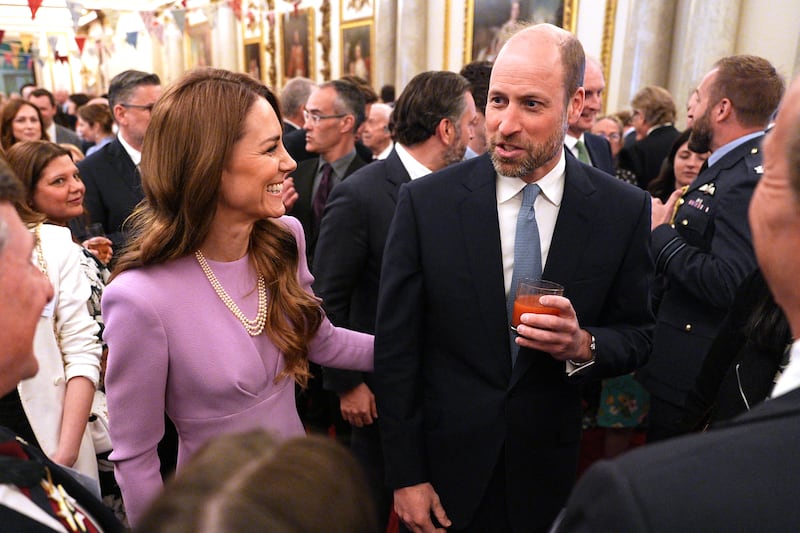
One parent told me: “They are like caricatures of middle-class parents. I went to the house for a kid’s birthday party, and they were the ones organizing the games and playing rounders. Any of us lot would get an entertainer in and sit in the house drinking rosé.”
Compare that to a queen who would return from long tours to find her children attached to their nannies and would shake their hands to greet them, or a Charles who played polo the afternoon Harry was born. William and Kate have moved, deliberately and aggressively, in the opposite direction.

But, and this is the point, all of that is the small stuff. The dishwashers, the disguises, the engagement counts. It’s the cozy, visible face of the divide. The real war between father and son is uglier, and it’s about two men: Harry and Andrew.
When Charles and Harry met in London last September for the first time in 19 months, almost nobody thought it would happen, because William has made it abundantly clear he doesn’t want to see his brother, doesn’t want to hear from him, and doesn’t want anyone else in the family engaging with him either.
For Charles to defy that, so publicly, exposed a split at the heart of the palace. A conciliatory faction is forming around Theo Rycroft, the incoming deputy private secretary, acting as a counterweight to the hawkish Clive “The Wasp” Alderton, whose dislike of Harry is reciprocated.
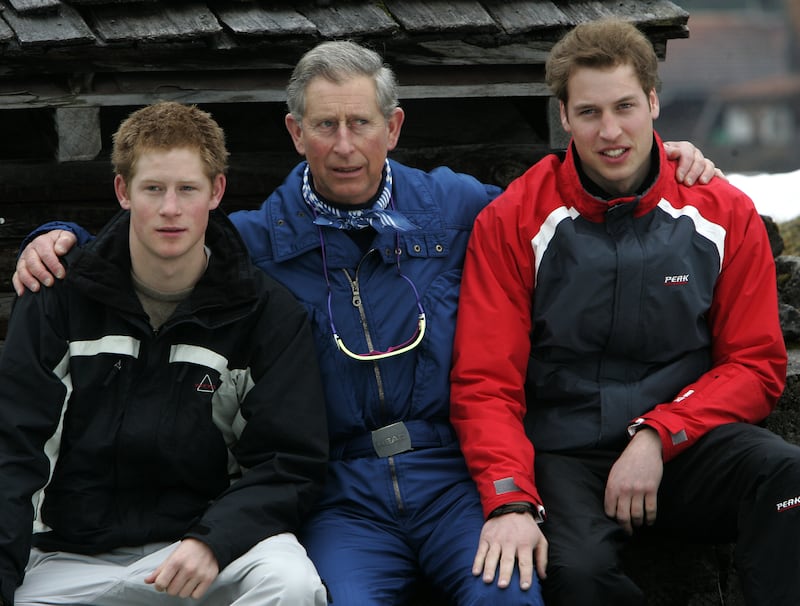
A friend of the king’s told The Royalist that Charles was “delighted” to see Harry. But William was not.
For him, Harry’s betrayal, above all the allegation that Catherine asked bigoted questions about a child’s skin color, is a permanent, irreversible sin. He reads Harry’s possible rehabilitation exactly as he read Andrew’s, as a very bad idea. He believes Andrew Lownie’s recent exposé has now vindicated him.
Once you’re out, you’re out.

That is the real dynamic at the center of the monarchy. The king is willing to forgive, while his heir is unwilling to forget. Charles believes the institution is sustained by ceaseless, visible service and a sovereign who forgives in the name of family.
William believes it will survive by doing less but better, by ring-fencing a private self, and by drawing absolute, unforgiving lines around who gets to belong.
Want more royal gossip, scoops and scandal? Follow all Tom Sykes’ reporting at The Royalist on Substack or listen to The Royalist podcast on YouTube.