After the shots rang out. After someone shouted, “Get down!” After what seemed like an eternity staring at my colleagues’ shoes. After watching Trump’s cabinet rushed out—terror etched on many of their faces—by men with their fingers on their triggers. After a Capitol Police officer asked me if I’d seen the congresswoman he thought might have been at the next table. After being told to leave, and trooping up an elevator past men in ballistic helmets with long guns going down the other elevator. After gathering with my colleagues and trying to process what happened, I went to the elevator and pressed 10, because I wanted to go to my room.
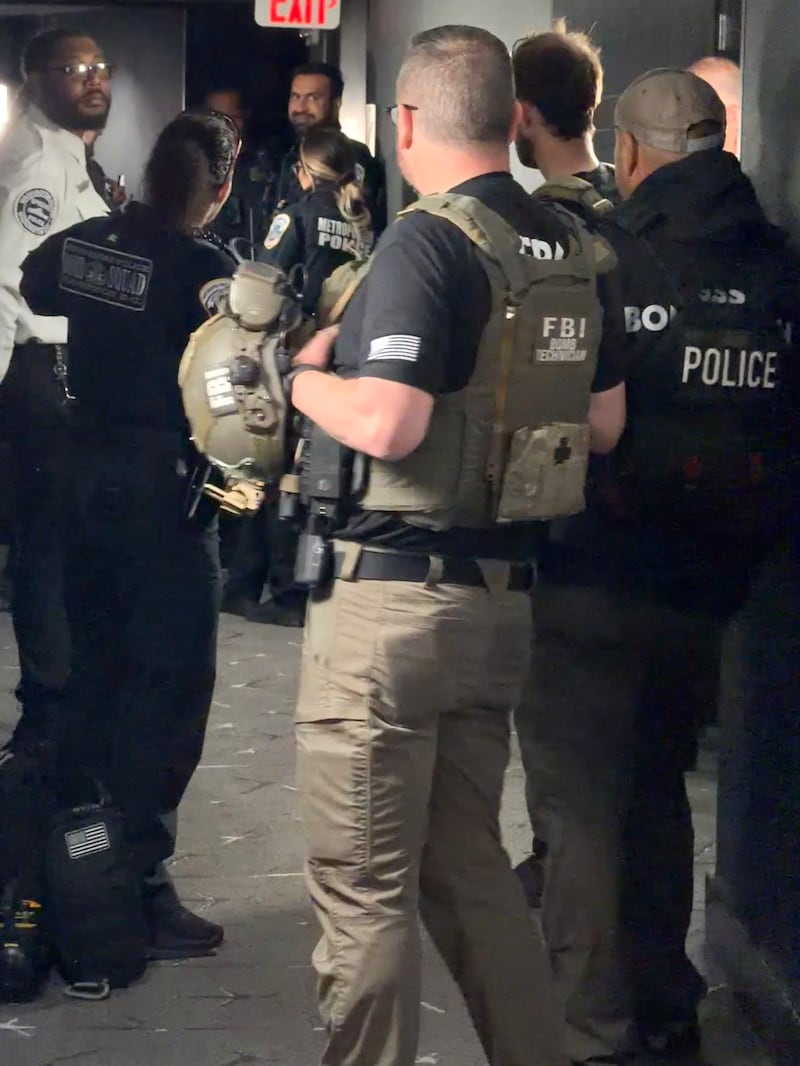
When I walked down the darkened, sinuous corridor to room 10235, one door short of the very end, I was stopped by a polite man in a suit and an earpiece. “Sorry, sir, you can’t come through,” he said. And I saw that further down the turn of the corridor behind him were at least five men, one in an FBI bulletproof vest, another with a Secret Service Police windbreaker.
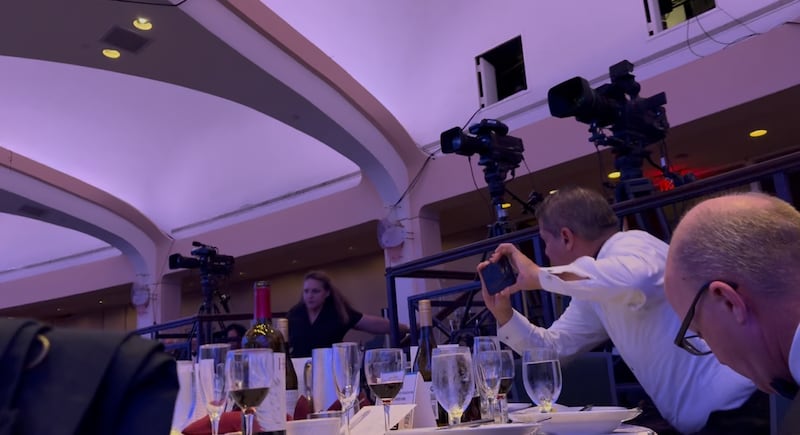
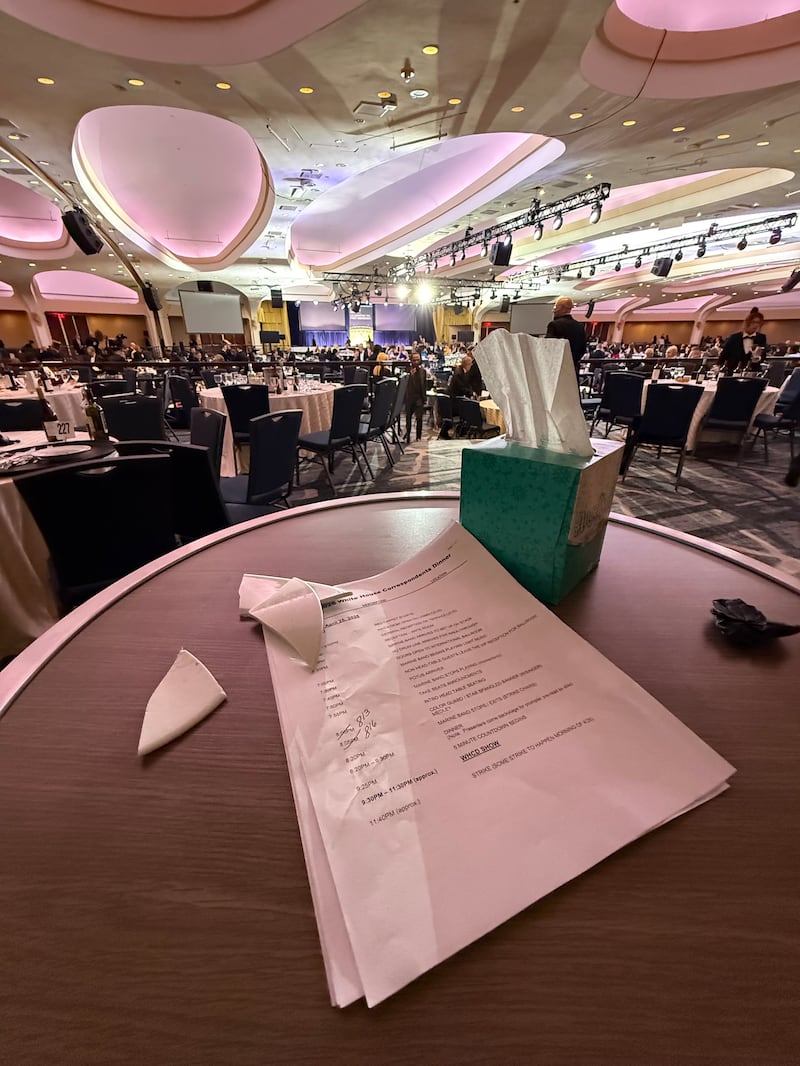
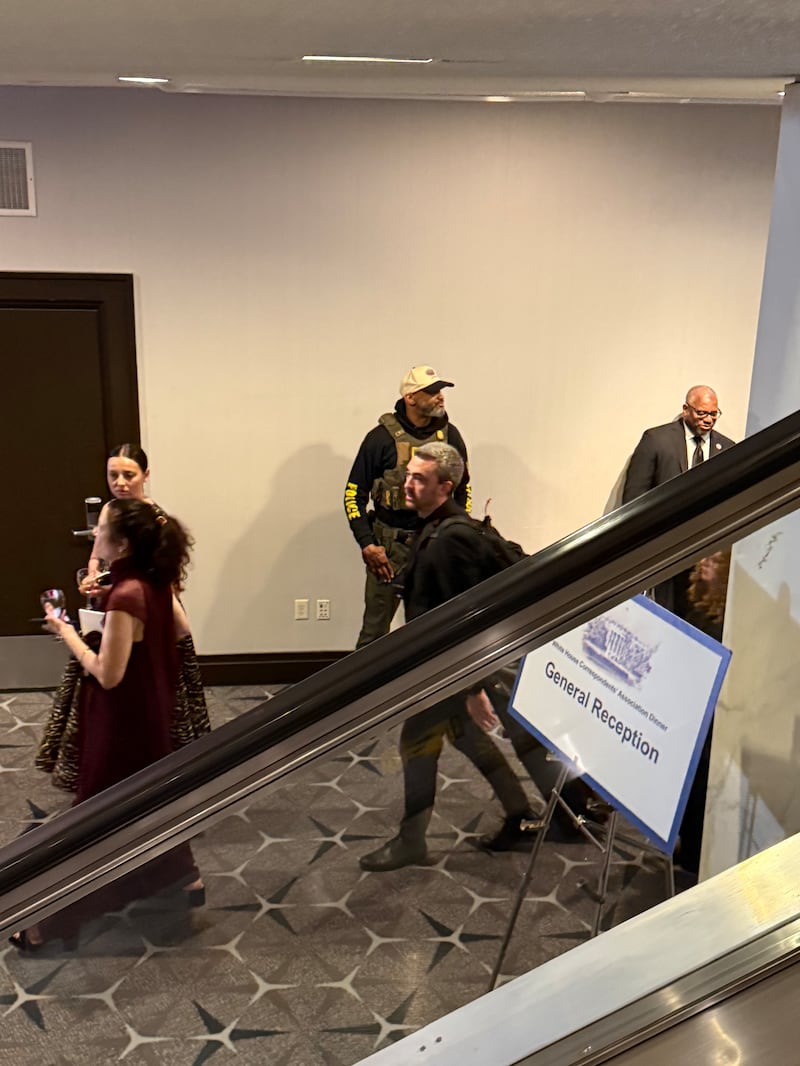
The man who stopped me, wearing a Hilton security badge, told me, “Come back in 20 minutes, it’s for all our protection.” I assumed they had thrown a protectee into a room. Odd, I thought. But the evening was already more than odd. I went back down on the elevator, and we gathered around a laptop to listen to Donald Trump dismiss the security risk, a gunman charging the ballroom I was in, as a fact of life.
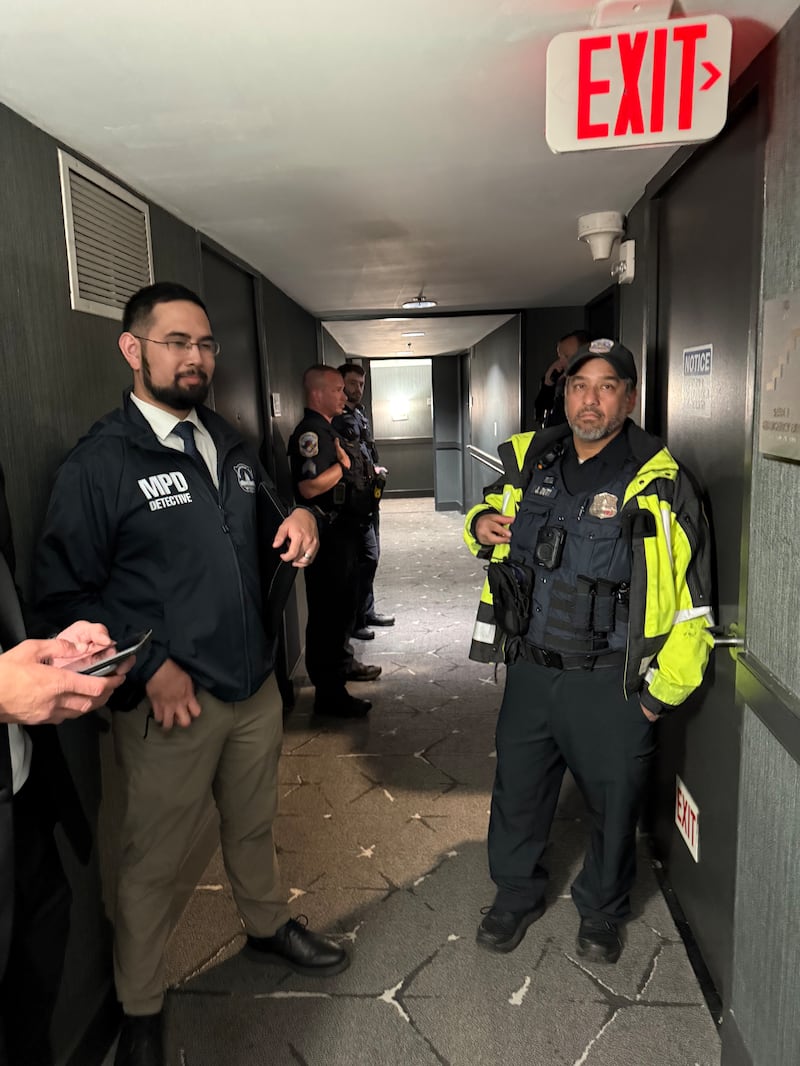
When I went back upstairs to get into 10235, the 20 minutes I’d been asked to wait were long gone.
The Hilton worker was much nearer the elevator this time. There were many more uniformed men behind him. “I’m sorry, sir, I can’t let you go further,” he said. “I know you were here earlier.”
“When do you think I can get back in?” I asked. “I don’t know, sir,” a man in a Metropolitan Police uniform next to the Hilton worker said. “We’re waiting on a judge.”
In that moment, I had a flash of realization: The police needed a judge because they needed to search the room. Already, security sources had said that they were working on the theory that the gunman had been a hotel guest.
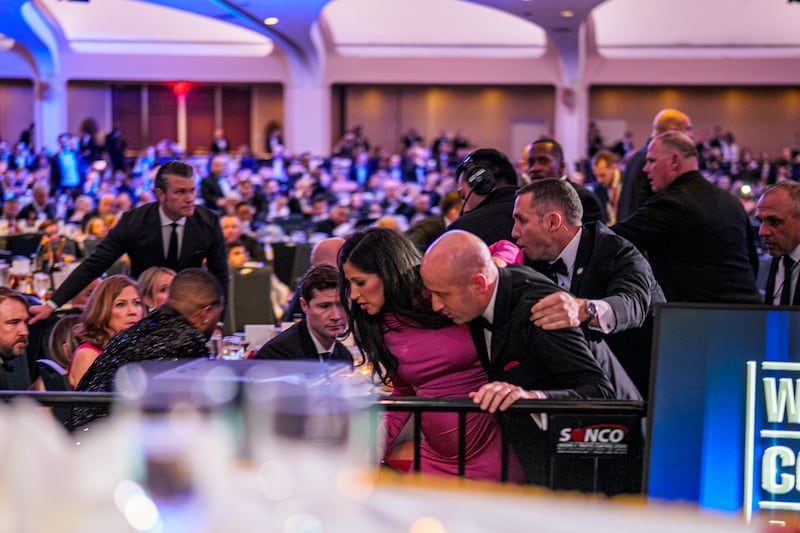
I knew then that I had been next door to the man who wanted to turn the White House Correspondents’ Association dinner into a mass shooting. Maybe I had slept the night with an assassin in the next room.
“He was next door to me?” I asked the Hilton worker. “I can’t tell you anything, sir,” he said. An officer in a Metropolitan Police Department “detective” windbreaker turned to me and said, “I’m sorry, sir.”
Another officer said, “Sir, just to let you know, this will be an FBI crime scene when they get here. We’re waiting for a judge. When exactly did you check in?”
That was apparent confirmation that, yes, the gunman had been the guest next door—and that I might actually be a witness to this whole case.
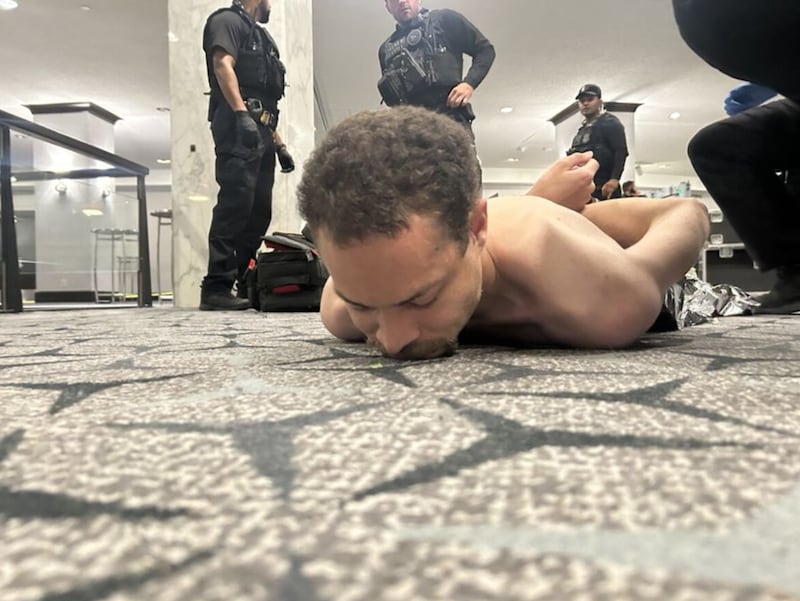
And it was then that I began to piece together the security fiasco that had taken place in the room next door.
Quite simply, a man who wanted to kill people—many people, maybe me, maybe my colleagues—had checked into the Washington Hilton, just like I had. He had used his access to move from floor 10 to the ballroom lobby, just like I had. And he had left a room which police had closed off, but which for all they feared could now be filled with explosives.
I asked the detective another question. “Do you want to talk to me? I mean, I was next door.”
I gave him my business card, then told him the only things I could think of that might be relevant. I knew when I had checked in. I knew when housekeeping had been in my room in the morning. I had seen no guests in the rooms beside mine at the end of the corridor.
Then I was left incredulous by what he did. The detective said to the Hilton worker, “I need the cleaning logs for the room.”
They hadn’t thought of this? It was almost three hours since I had been lying on a floor, the echo of gunshots in my head.
“We’ll be in touch, sir.”
When I returned to the first floor, I went outside and made a phone call. To my utter disbelief, uniformed men and women trooped past me in vests marked “Bomb Squad.” And one said to the other, “Do you think they’ve got a layout of the corridor and the room?”
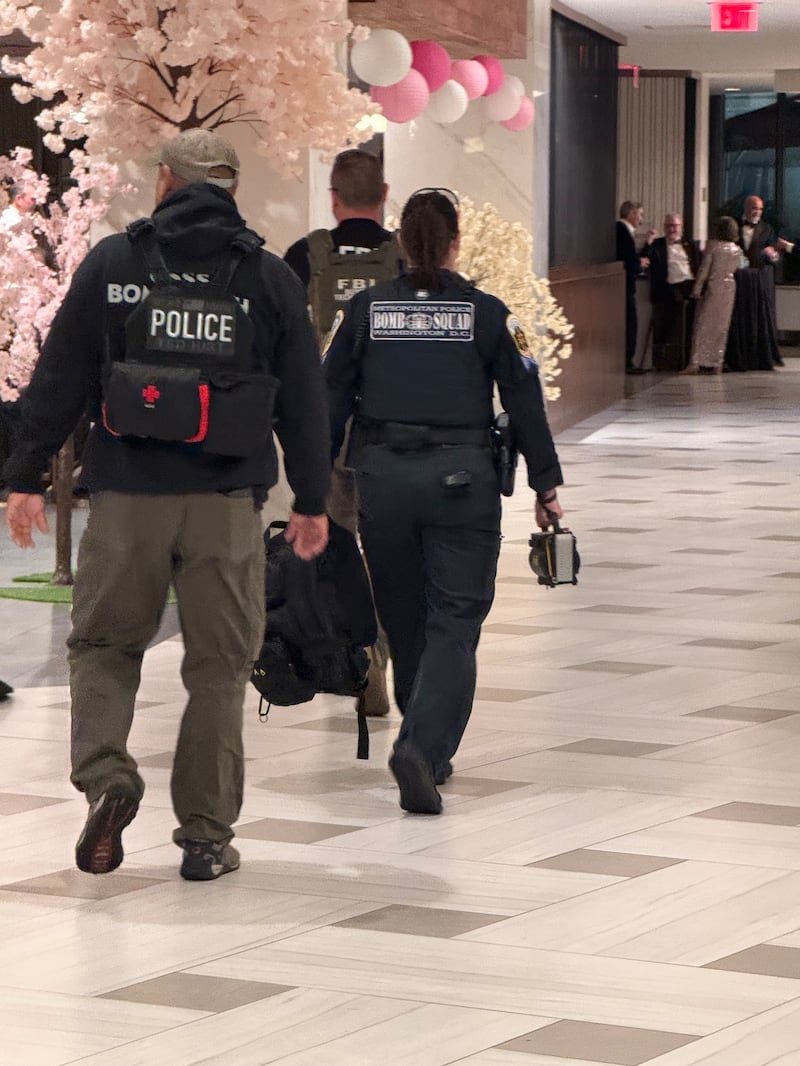
I had first gone to my room two hours after the shooting. Another hour had gone by. And only now was law enforcement taking seriously the possibility that the room next door to 10235 had been booby-trapped.
Unbelievably, my colleague went up to his room on the 10th floor a few minutes later. He watched as even more of the bomb squad passed him. One asked the other, “Is it clear above? Clear below?”
It does not take a security expert to unravel the layers of failure that happened at a Washington, D.C. hotel on Saturday night.
How on earth could someone with a disassembled long gun check into a room at a hotel where the president was going to speak? I can answer that: Nobody even looked at my luggage on Friday afternoon. Worse, my colleague arrived on Saturday at 5 p.m. Nobody looked at his luggage either: No magnometers, no hand checks, no I.D. checks. Nothing.
How on earth could that person get downstairs and assemble a long gun? I can answer that too. I moved up and down from Floor 10 all day. Nobody ever stopped me and asked me anything. I have never shown my I.D., except to the clerk who checked me in; I have never been searched or frisked when I checked in, or moved in and out of the hotel. To get down from my room to the dinner, I simply flashed my ticket. It could have been a photocopy.
The only time I went past a checkpoint was at the same magnetometers that Cole Allen, 31, sprinted past with his gun.
Another colleague was outside; I texted them a copy of their ticket. That allowed them to get into the hotel as far as those same magnetometers, entirely unchecked.
How on earth could that be considered safe?
And how could agents not have realized, after they knew who Cole Allen was, that the gunman had been a hotel guest, and that even after he had been neutralized, that other people might be in danger? How could it take three hours—yes, three hours—to wonder if the bomb squad should come round?
The Washington Hilton has seen the attempted assassination of a president before. I walked past the plaque commemorating that spot a few hours before the shooting.
I didn’t expect that I would be living through history again, in the room beside 10235.