Japan’s first-ever female Prime Minister gave a masterclass in restraint as Donald Trump made a cringeworthy joke about the bombing of Pearl Harbor.
The 79-year-old president made the awkward remark at a bilateral meeting to discuss the war in Iran, days after he singled out Japan and other U.S. allies for not joining the escalating conflict in the Middle East.
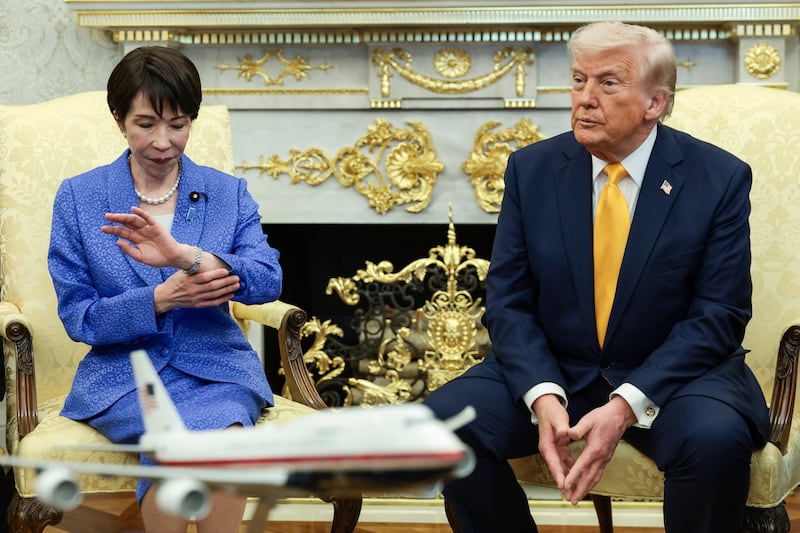
Sitting next to Japanese leader Sanae Takaichi in the Oval Office on Thursday, Trump called on a “beautiful reporter” from Japan to ask a question.
The male journalist, after apparent confusion over Trump’s description, asked the president why he didn’t tell America’s allies in Asia and Europe that he was planning to strike, given “we are very good friends.”
Trump answered by invoking a topic that most American presidents try to avoid during such diplomatic meetings: the Japanese attack on Pearl Harbor, which triggered the United States’ entry into World War 2.
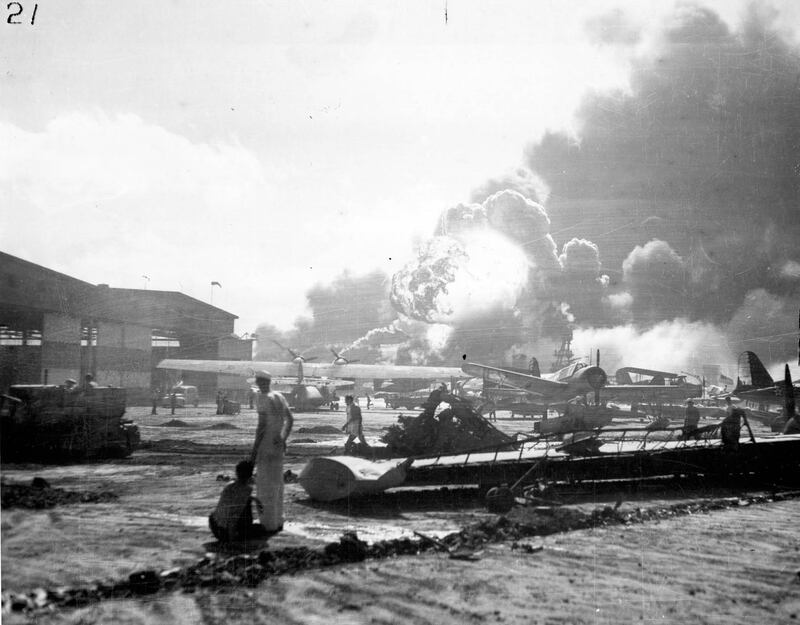
Sailors stand amid wrecked planes at the Ford Island seaplane base, watching as the destroyer USS Shaw explodes in the center background during the Japanese attack.
U.S. National Archives and Records Administration/Reuters“You don’t want to signal too much, you know?” Trump said.
“When we go in, we went in very hard, and we didn’t tell anybody about it because we wanted surprise. Who knows better about surprise than Japan?
“Okay, why didn’t you tell me about Pearl Harbor? You believe in surprise, I think much more so than us.”
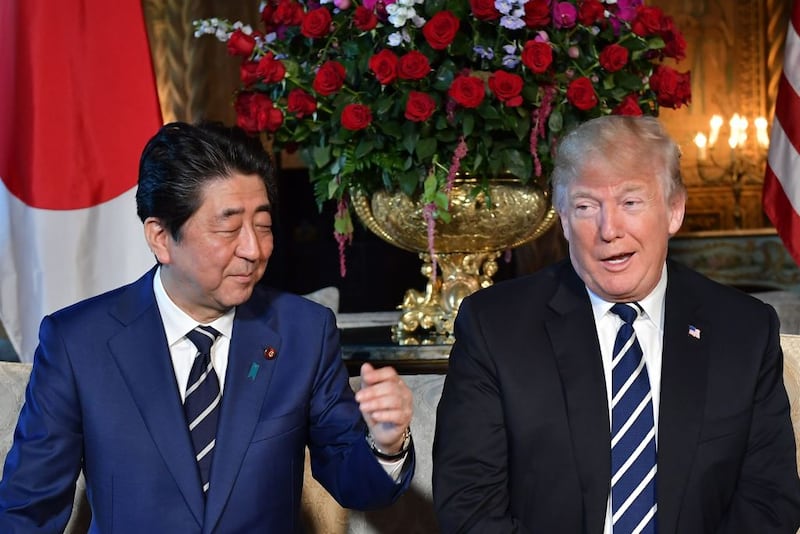
Takaichi, the 68-year-old who was closely aligned with the late Trump ally Shinzo Abe, sat awkwardly, clasping her hands with her eyes widening as the president spoke, clearly taken aback with his remarks. His comment draw laughs at first, followed by silence when he mentioned Pearl Harbor. An audible gasp could also be heard from the back of the room.
Trump had not yet been born when Japan launched its aerial attack on the U.S naval base in Hawaii, which resulted in the deaths of more than 2400 Americans.
Four years later, in another surprise series of retaliatory attacks, the Japanese cities of Hiroshima and Nagasaki were bombed by the U.S. in August 1945, marking the first and only use of nuclear weapons in wartime.
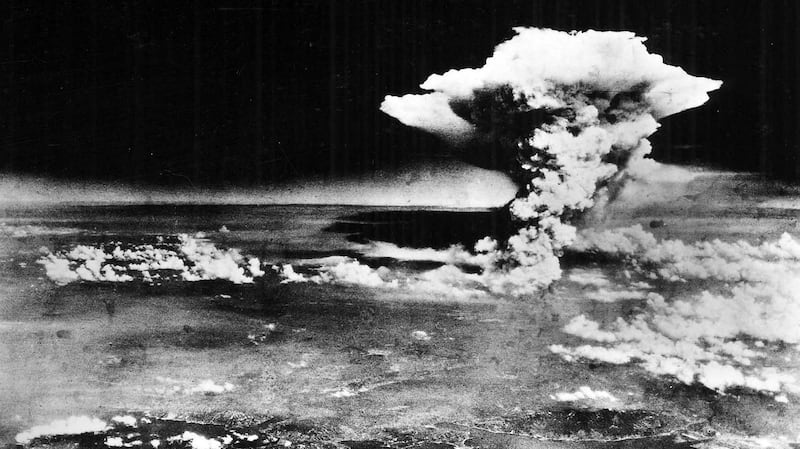
"An aerial photograph of Hiroshima, Japan, shortly after the \"Little Boy\" atomic bomb was dropped. Dated 1945"
Universal History Archive/GettyBut not everyone thought Trump’s comments were awkward.
“One of the great responses to a reporter in history!” wrote the president’s son, Eric Trump, with two laughing emojis.
Thursday’s Oval Office meeting marked the start of a crucial trip for Takaichi, who came to Washington seeking to reaffirm the US-Japanese alliance as a global energy crisis deepens three weeks into Trump’s war in Iran.
“We are actually experiencing a very severe security environment, and also the global economy is now about to experience a huge hit because of this development,” the softly-spoken Prime Minister told Trump through an interpreter.

The president, who often talks about his friendship with Abe, has forged a good relationship with Takaichi and commended her on Thursday for her historic landslide victory in Japan’s snap election last month.
But tensions escalated earlier this week, when Trump put out an incendiary post naming Indo-Pacific allies such as Japan and Australia for not helping him unblock the Strait of Hormuz, the world’s most vital oil chokepoint.
The Strait has been at a standstill since Trump launched his strikes on Iran on February 28, resulting in soaring energy prices and more pain at the pump for consumers.
Asked on Thursday if he wanted Japan to do more to help resolve the crisis, he said: “Look, I expect Japan to step up, because we have that kind of relationship. We have 45,000 soldiers in Japan, and we spend a lot of money in Japan.”