Ukrainian drone attacks have plunged Russia into a fuel crisis affecting roughly 50 million people—about 35 percent of the population—on a scale not seen since the final years of the Soviet Union, according to a new Financial Times analysis.
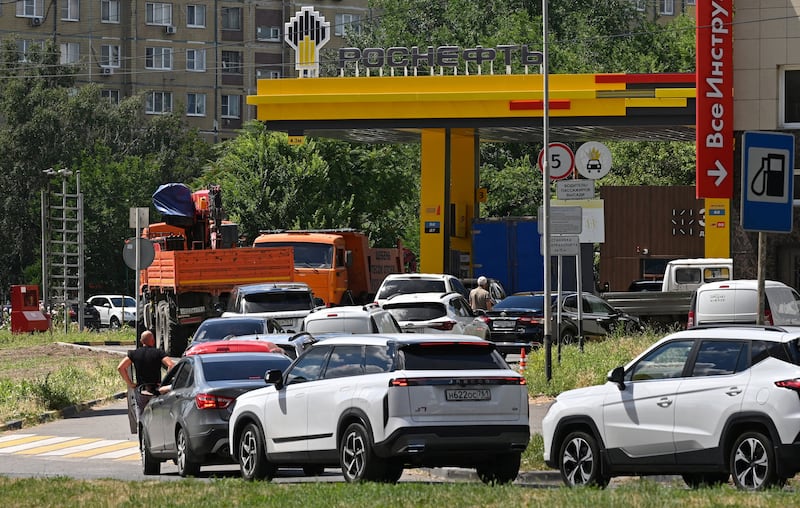
Waiting times at gas stations in some regions have stretched to several days. Social media has been filled with footage of fistfights breaking out in lines. One southern region has deployed Cossacks in traditional fur hats to keep order at gas stations. A Siberian governor ordered officials to provide hot meals to people waiting in line. Others have begun selling their spots in the line on social media. Several regional governments have introduced odd-even license plate rationing to manage demand.

The pressure has been building since May, when Ukraine significantly stepped up drone strikes against Russian oil infrastructure. Ukraine has now hit Russia’s 10 biggest refineries, including its largest—in the Siberian city of Omsk, roughly 1,500 miles from the front line—in a strike that independent Russian investigative outlet Agentstvo estimates has brought approximately 85 percent of Russia’s refining capacity within drone range.
“There are simply many more drones at one target now than before, physically punching through the defenses, like a medieval cavalry wedge,” a senior Russian energy executive told the FT. “The defenses that used to work cannot sustain such pressure. This is the new normal.”
The crisis forced President Vladimir Putin—who typically keeps his distance from domestic difficulties—to address it publicly. “Right now we’re observing a certain shortage, but it’s not critical,” Putin said last week.
The scenes on the ground tell a different story. Videos from Moscow show lines snaking from nearly every gas station. Muscovites told BBC News that if there was no queue, “that meant the garage had run out of fuel entirely and was closed.”
One resident, Yekaterina, said there was “panic because everybody thinks there will be no oil.” Another, Elmar, described the situation as “very bad,” saying fuel prices were rising while supplies shrank. “You are wasting hours to fill up,” he said. A third motorist, Valery, captured the absurdity plainly: “I have no desire to get used to queues.”
In one Siberian region, police detained a man who had bought a police uniform online and tried to use it to jump the gas line. In another, a social media video showed a motorcyclist riding past a line, prompting a driver to try to attack him, only to be hit with pepper spray in response.
By July 8, local authorities had imposed fuel restrictions in most Russian regions, with three declaring a “high alert”—the step below a state of emergency. The first region to feel acute strain was Russian-annexed Crimea, now under an official state of emergency, with region-wide blackouts and fuel available only via electronic ration coupons.
Russia is the world’s third-largest oil producer, with energy accounting for roughly 30 percent of the country’s budget revenues. The industry has simultaneously been under pressure from Western sanctions imposed after Russia’s full-scale invasion of Ukraine in February 2022.
Moscow moved this week to ban diesel exports and promised to increase imports of refined oil products. Authorities have also allowed refineries to release lower-grade fuel onto the domestic market.