Jimmy Carter was the anti-Trump. It is almost impossible to imagine two men who were as different as James Earl Carter Jr. and Donald John Trump.
That contrast may seem a bit paradoxical. After all, who could be more cut from a MAGA cloth than a rural, red-state evangelical who dedicated his life to making America great?
But then again, Trump has precious little in common with most of his supporters. Still, the differences between our 39th president and the man who was our 45th and will be our 47th chief executive are so extensive that they make the two men almost mirror images of one another.

Carter, who died on Sunday, devoted his entire life to public service. Donald Trump is the only person who was ever elected U.S. president without any public service experience.
Carter’s family settled in the Colony of Virginia in 1635. Trump’s paternal grandfather, a former brothel owner, was stripped of his German citizenship after he evaded serving in the military and, therefore, had to settle in the United States. Trump’s mother was also a recent immigrant to the U.S., as were two of his wives.
Trump, of course, famously avoided military service himself. Carter attended the Naval Academy during World War II. Trump’s academic records have been unavailable for scrutiny but he has been described as a mediocre student. Carter graduated from Annapolis in the top 10 percent of his class. While Trump often talked of his mastery of science by virtue of the fact that his uncle taught at MIT, Carter was actually a nuclear engineer.
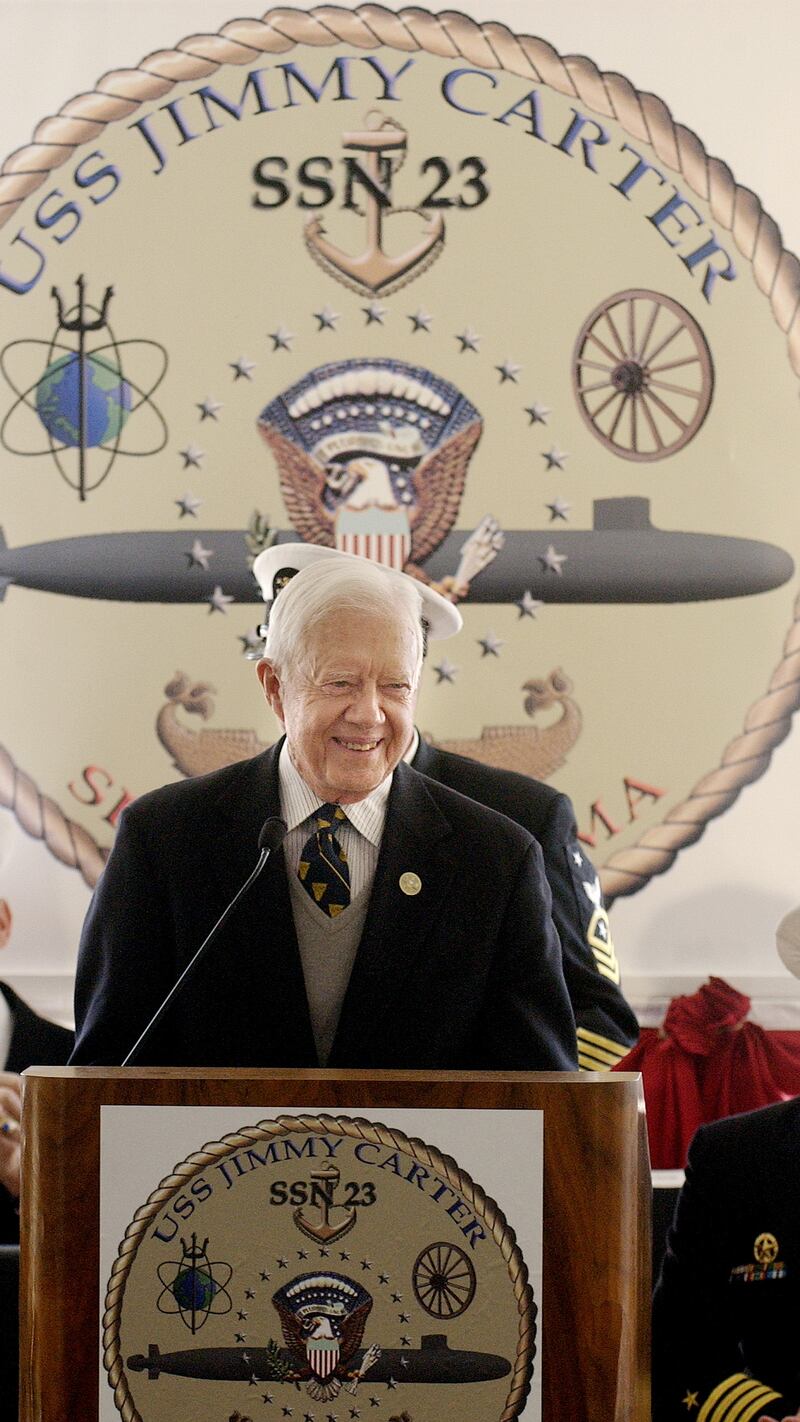
Carter inherited little from his parents, and after serving in the Navy turned a struggling peanut farm business into a success. Trump inherited the equivalent of hundreds of millions of dollars from his father and turned it into a series of businesses, many of which failed. Trump-owned businesses declared bankruptcy six times.
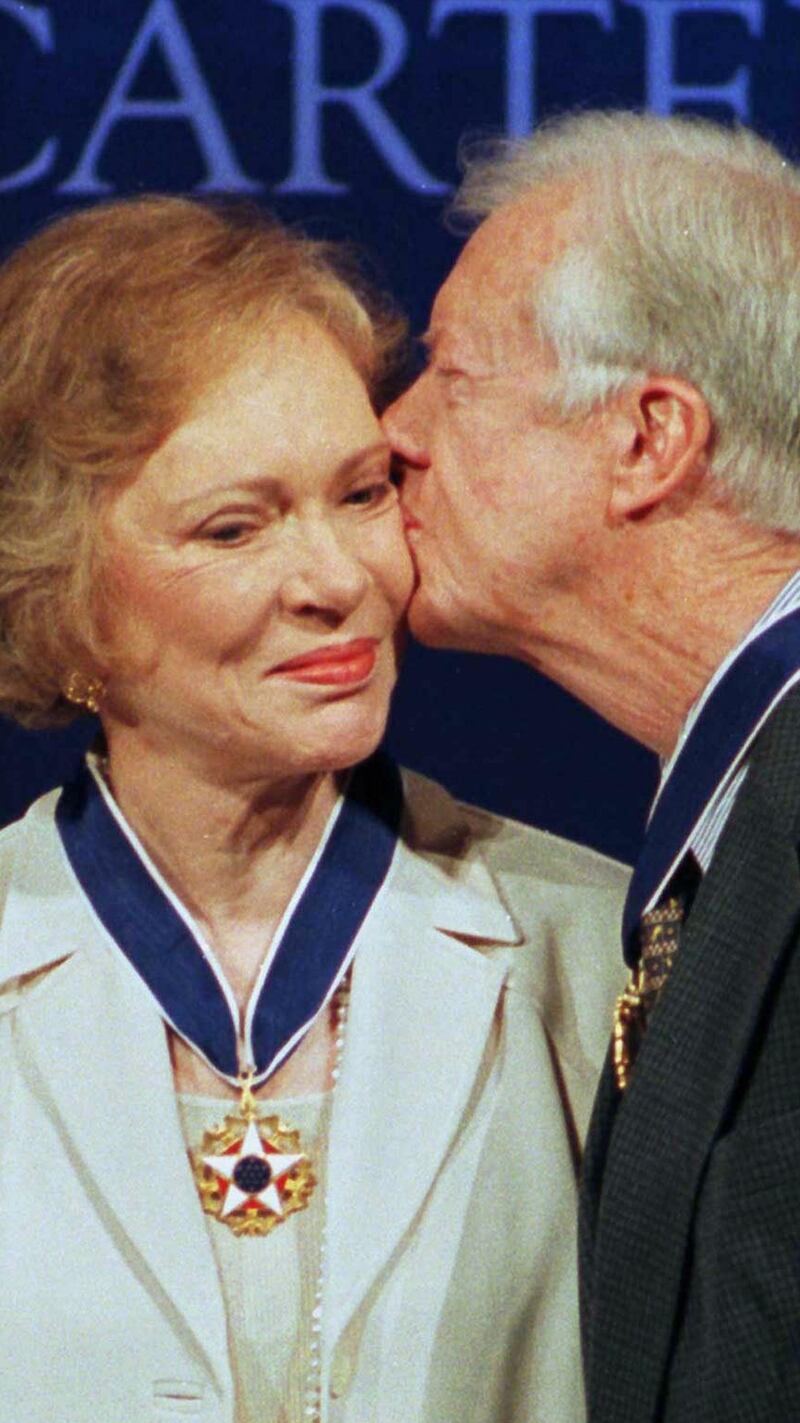
Carter met and fell in love with Rosalynn Smith while still at the Naval Academy. They married in 1946 and remained devoted to one another until she died in November of 2023 at age 96. They were married 77 years, longer than any other presidential couple. Trump has been married three times. The Carters were true partners in all aspects of their life, from raising children to running the family business—Rosalynn did the accounting. When Carter was president, his wife was a key adviser, his views on respecting and empowering women also flowing from the central role in his life played by his mother Lillian.
Carter worked his way up in Georgia politics, first as a state senator and later, after one failed gubernatorial campaign, as governor. While Carter ran as a centrist from the Deep South, when he took office in 1971, he asserted that it was time to end racism. His term as governor was marked by a focus on fiscal responsibility, education reform, preserving the environment and working for civil rights. Needless to say, Trump not only had no pre-White House preparation for work in government, his record is antithetical to Carter’s on each of the aforementioned issues.
In the end, after spending most of my life studying and writing about presidents, I can tell you both that nothing matters so much in our leaders as their character and that no two presidents conveyed that lesson to me more clearly than did Jimmy Carter and Donald Trump.
Carter ran for president in the wake of scandals of the Nixon era arguing that America needed a president who was as good as its people. His core message was anti-corruption and pro-values. While president, Carter achieved much more in his first term than did Trump his first time around. While, to be fair, both men did achieve progress on Middle East peace while in office—Carter through the Camp David Accords and Trump through the Abraham Accords—Carter also was responsible for the normalization of relations with China, the signing of the treaty returning control of the Panama Canal to the people of Panama, and toughening America’s stance against Russia, including opposing its aggression in Afghanistan.

Trump has been schizoid on China, surrounding himself with China hawks yet taking a more transactional approach (such as ultimately opposing a ban on TikTok and embracing the pro-China views of Elon Musk). In Panama, Trump apparently wants to reassert control of the canal despite no grounds to do so under international law. And on Russia, his soft spot for Vladimir Putin is well established.
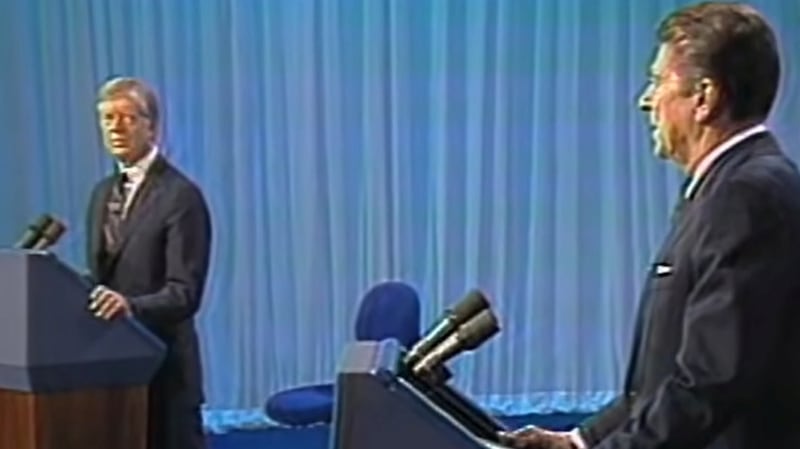
Carter faced real challenges with his Iran policy, in part because of his ill-considered decision to offer refuge to the Shah and in part because of the U.S. embassy hostage crisis that followed. That crisis dragged on and weakened Carter politically, in part because those close to Carter’s 1980 opponent, Ronald Reagan, worked behind the scenes to persuade the Iranians not to release the hostages until Carter left office. This echoes Trump’s willingness to accept overseas help in winning elections both in 2016 and 2024.
Carter promoted diversity in his administration. Trump has actively opposed it. Carter was one of the first to promote new, cleaner energy technologies. Trump has opposed those. Carter resisted the imperial trappings of the presidency. Trump has sought parades and grandeur wherever he could find them. Carter was committed to using U.S. power to promote human rights. Trump has defended a war criminal like Putin. Carter immersed himself in intelligence reports. Trump has shown little interest in doing the homework associated with the presidency. Carter inherited an economy heading into stagflation and took strong measures to defeat inflation, for which Reagan later got credit. Trump ballooned the deficit and his only major economic “achievement” last time around was a major tax cut that benefited the rich at the expense of the middle class and poor Americans.
Of course, Carter truly distinguished himself in his post-presidency. While Trump’s years since he last served were spent defending himself against legal charges and promoting an even more extreme set of political views, including those that threatened some of our core democratic institutions. Carter has become universally known as the greatest of all America’s ex-presidents. He won the Nobel Prize for his work fighting disease and helping those in need via the Carter Center. He built houses for Habitat for Humanity and taught Sunday School, two things that it is impossible to imagine Trump doing. Further, on critical issues from apartheid in South Africa to Israel’s mistreatment of Palestinians, Carter took on the establishment and spoke hard truths about injustices when few others had the courage to do so.
In dying, just three weeks before Trump resumes office, Carter in the end performs one more vital service: He reminds us that what is important in our leaders is not measured by vote totals, or approval ratings. Indeed, by his example throughout his 100 years on this earth, he reminds us that as much as we might assess presidents by what they do, in the end their legacies and their contributions to our society are defined as much or more by who they are.
In the end, after spending most of my life studying and writing about presidents, I can tell you both that nothing matters so much in our leaders as their character and that no two presidents conveyed that lesson to me more clearly than did Jimmy Carter and Donald Trump. As we bid farewell to Carter, I hope all of us understand and appreciate the differences between the two and recognize that Jimmy Carter’s greatest legacy and lesson was that he was a good man.
The Daily Beast Podcast episodes are released every Thursday. Like and download on Spotify, Apple Podcasts, YouTube, or your favorite podcast app. And click here for email updates as each new episode drops.