Democratic senators pounced on their Republican colleagues from the very start of Judge Brett Kavanaugh’s confirmation hearing for the Supreme Court. The calls for more time to review the nominee’s record and complaints about the nomination process threw Judiciary Committee chairman Sen. Chuck Grassley (R-IA) off his game and briefly derailed the hearing Tuesday morning. But the demonstration was a pale pantomime of what real minority power would have looked like if the judicial filibuster for Supreme Court nominees were still in effect. In lieu of power, Democrats made a brief display of effort on Tuesday. It’s not likely to take them very far.
Welcome to Rabbit Hole.
Kavanaugh makes his pitch: Kavanaugh finally got his chance to address the committee after hours of windy opening statements from committee members and protests from members and attendees died down. It’s a safe bet that Kavanaugh has already locked down the votes of the Republican caucus. What’s left on the table are the handful of votes from Senate Democrats in red or purple states who are up for reelection in November. His opening statement stressed his moderate credentials in what seemed like a move designed to squeeze the handful of Democratic maybe votes.
Kavanaugh regaled senators with stories of how his mother’s role as one of the first female prosecutors inspired him with a love of the law. He stressed that his court clerks are drawn from a diverse background, that he devotes time to teaching in a Washington, DC Jesuit school for low-income students, and that he was hired to teach at Harvard by Obama-appointed Supreme Court Justice Elena Kagan.
The Condi bump: It’s noteworthy that the White House lined up two women and one man to introduce (and endorse) Kavanaugh to the committee—an implicit rebuke to Democratic concerns about reproductive rights. Former Secretary of State and fellow Bush White House veteran Condoleezza Rice introduced him first followed by Ohio Senator and Republican moderate Sen. Rob Porter, and self-described “liberal feminist” Lisa Blatt, who’s argued before the court frequently.
Looking forward: If you’ve seen any recent Supreme Court nomination hearing, it’s most often a game of senators trying in vain to pull specific answers out of reluctant nominees who are reluctant to give answers. The committee didn’t have time to get into questions on Tuesday before adjourning but don’t expect Kavanaugh to be much more forthcoming. As he wrote in a 2008 law review article “It is equally plain that judicial nominees do not have to answer substantive questions that might impinge on their ability to make independent judgments once confirmed. The Senate thus has not required nominees to commit themselves—directly or indirectly—on particular cases or issues.”
Parkland snub: Kavanaugh's dissent in Heller v District of Columbia that argued assault rifle bans are unconstitutional made gun control proponents nervous about his nomination. Among those proponents is Fred Guttenberg, whose son was murdered with an AR-15 semi-automatic rifle in the Parkland high school gun massacre. Guttenberg, present for the hearing, said he introduced himself to Kavanaugh but the nominee “pulled his hand back, turned his back to me and walked away.” You can watch footage of the snub here as Kavanaugh turns on his heel and gets an attaboy back pat from fellow Ken Starr investigation vet Rod Rosenstein.
The snub was damaging enough to warrant a response from the White House. Trump press secretary Raj Shah donned his ESPN play-by-play announcer hat to tweet out a slow motion replay of the incident from another angle. Kavanaugh didn’t engage with Guttenberg, according to Shah’s fairly unconvincing interpretation, because “security intervened.”
Another vote: The death of Sen. John McCain at least theoretically raised the possibility that Republicans would be missing one vote off its 51-49 party-line majority to confirm Kavanaugh. Democrats would still have to get all of their caucus to vote against Kavanaugh—a feat far from guaranteed—and peel off another Republican “no” vote to prevent a tie-breaking vote from Vice President Pence. That’s a far-fetched scenario but lest any Senate votes be left in doubt, Arizona Gov. Doug Ducey announced that he will appoint former Arizona Republican senator Jon Kyl to fill McCain’s seat. Kyl, in addition to being devoutly conservative, has been acting as the White House-designated “sherpa” to guide Kavanaugh through the nomination process and drum up support in the upper chamber.
Paperwork: One of the most oft-mentioned complaints from Democrats was the fact that they have yet to receive thousands of pages of documents dating from Kavanaugh’s time as a staff secretary to George W Bush. The estimates changed depending on the speaker but the consistent theme was that Democrats focused on the percent of Kavanaugh’s paperwork still outstanding while Republicans preferred to highlight the large number of pages already delivered.
Absent any levers to compel the documents, Democrats appealed to a sense of posterity (and vanity) from their colleagues and the nominee. “It’s only a matter of time before you have to answer for what’s in those documents,” Sen. Richard Blumenthal (D-CT) warned his colleagues. Imploring Kavanaugh to ask for a postponement of his own hearing, Blumenthal said that without full disclosure, “there was always be a taint” over Kavanaugh’s nomination.
Speed reading: Democrats complained that the Trump administration dumped over 42,000 pages of documents from Kavanaugh’s time in the Bush White House in the wee small hours of Monday night. When Sen. Grassley suggested that Republicans that his committee staff had already read through them, Sen. Whitehouse objected on the ground of the limits of human capability. “For the record, that’s a rate of 7,000 pages per hour. That’s superhuman,” he quipped. After the break, the issue came up again from Sen. Amy Klobuchar (D-MN) “No one can review 42,000 documents in one evening no matter how much coffee you drink.”
About that Trump tweet: Trump’s Twitter feed once again intruded on the business of the day. On Monday, Trump lashed out at Attorney General Jeff Sessions for not interfering with two Justice Department investigations of Republican congressman in order to protect his party’s majority in the midterm elections. Two all-but-committed Kavanaugh votes among Republicans on the committee said the tweet would prompt them to question the nominee about his views on judicial independence.
Sen. Jeff Flake (R-AZ): “That is why a lot of people are concerned about this administration and why they want to ensure that our institutions hold.”
Sen. Ben Sasse (R-NE): "They were wrong and they should be condemned" and added that he assumed Kavanaugh would similarly condemn them.
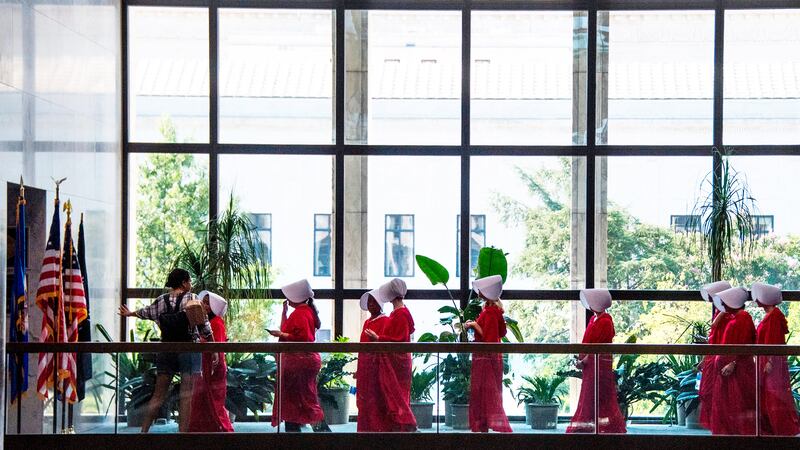
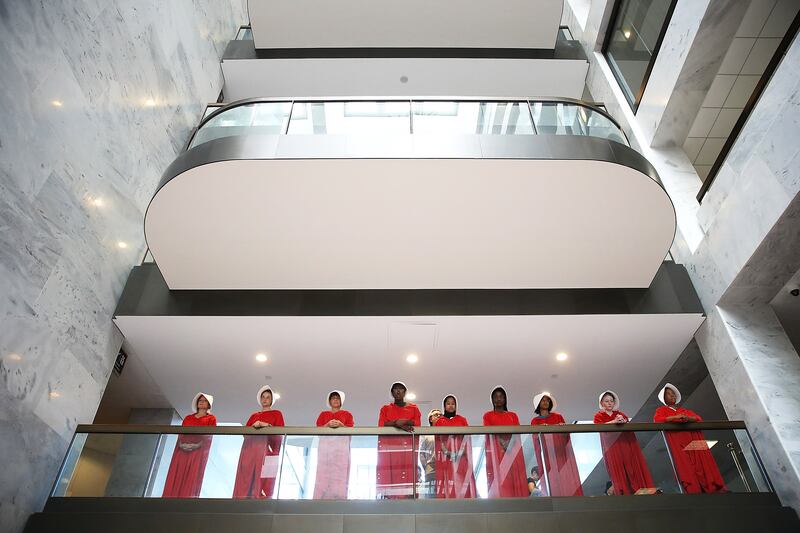
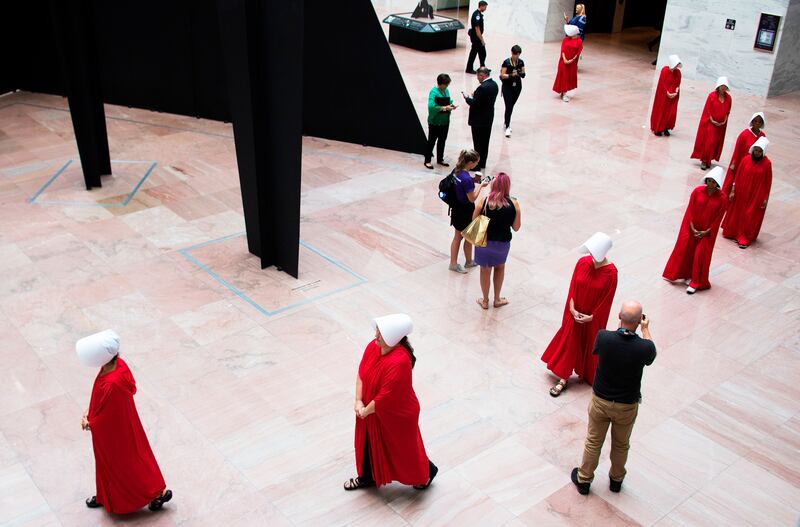
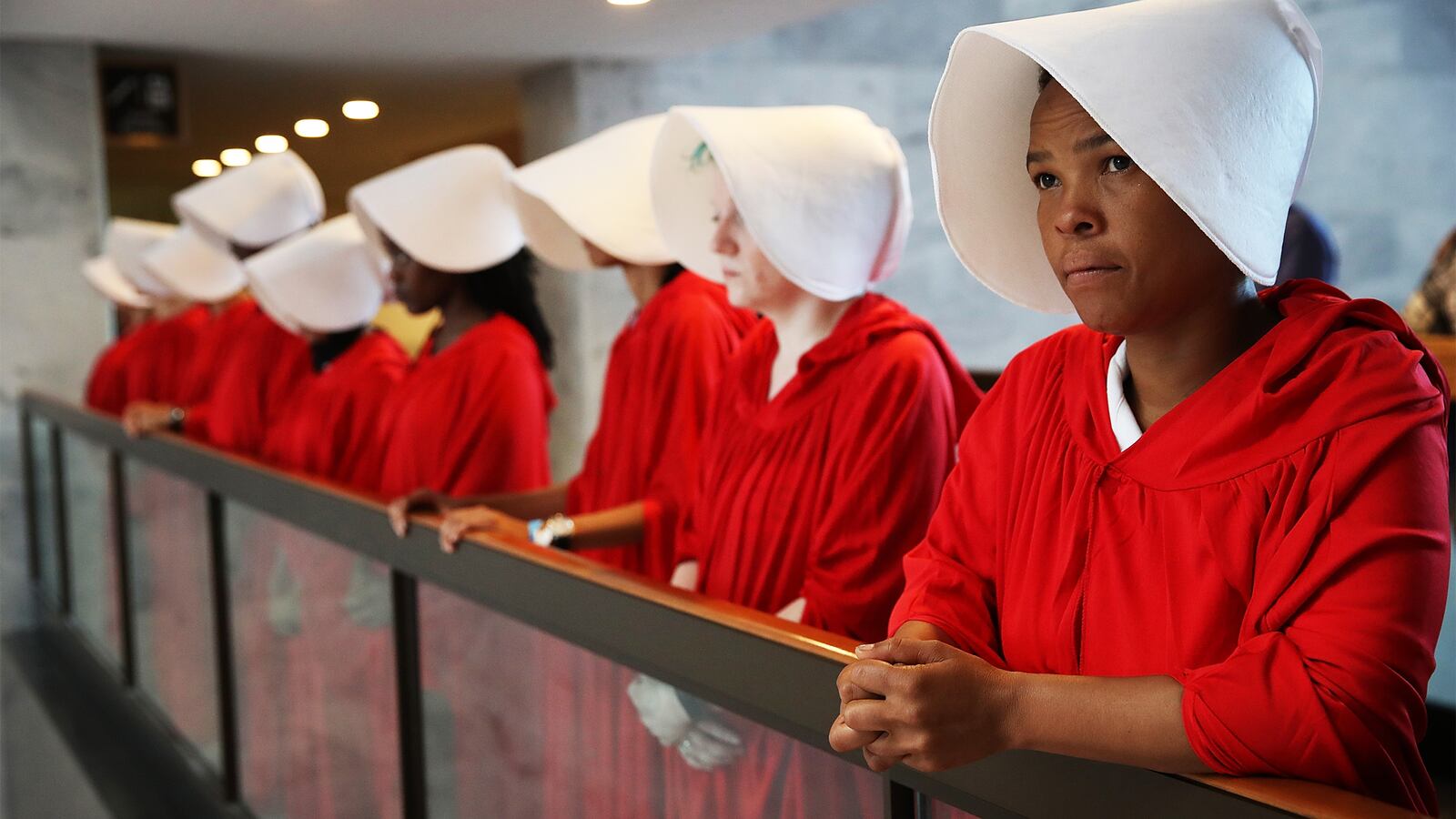
Protesters: As is the custom for most high-profile hearings covered on cable news, protesters in the committee room briefly disrupted the proceedings. Activist Linda Sarsour shouted out “this is a mockery and a travesty of justice” and ”cancel Brett Kavanaugh. Adjourn the hearing” in the opening minutes. Other protesters donned costumes from the feminist dystopian fiction novel and TV show, The Handmaid’s Tale.
Take me out to the ball game: On the subject of Supreme Court nominee document dumps, Rabbit Hole has one of its own. Since Kavanaugh raised eyebrows racking up thousands of dollars in debt for Nationals baseball tickets, we decided to request the judge’s financial disclosure forms from the D.C. Circuit court. You can take a dive through his disclosures for 2012, 2013, 2014, 2015, 2016, and 2017 on The Daily Beast’s documentcloud account.
Head here to go deep on the story that everyone is obsessing over—all for Beast Inside members only.